

The PowerMentor Institute for Freedom and Justice advances individual liberty, constitutional government, justice, and the right of people to self-determination. We support those seeking freedom from authoritarian and totalitarian control and believe a constitutional republic is essential to protecting individual rights, limiting government power, and preserving liberty. Through rigorous research, AI, and emerging technologies, we provide independent, evidence-based insight to strengthen informed leadership and the pursuit of freedom and self-determination.

The Karen People, Y’wa, and the Prophecy of the Lost Golden Book
Long before the arrival of Christian missionaries, the Karen people preserved an extraordinary spiritual tradition concerning one supreme Creator, the loss of divine knowledge, and the promised return of a sacred book. This tradition presents the Karen not as a people without knowledge of God, but as a people who remembered that their ancestors had once possessed a clearer revelation and were awaiting its restoration.
At the center of this tradition was belief in a singular Creator known as Y’wa, sometimes rendered as Ywa or Ywah. Y’wa was understood as the source of creation and the giver of divine knowledge to humanity. The Karen tradition held that human beings had once known the Creator and possessed knowledge of His truth, but that this knowledge had later been lost.
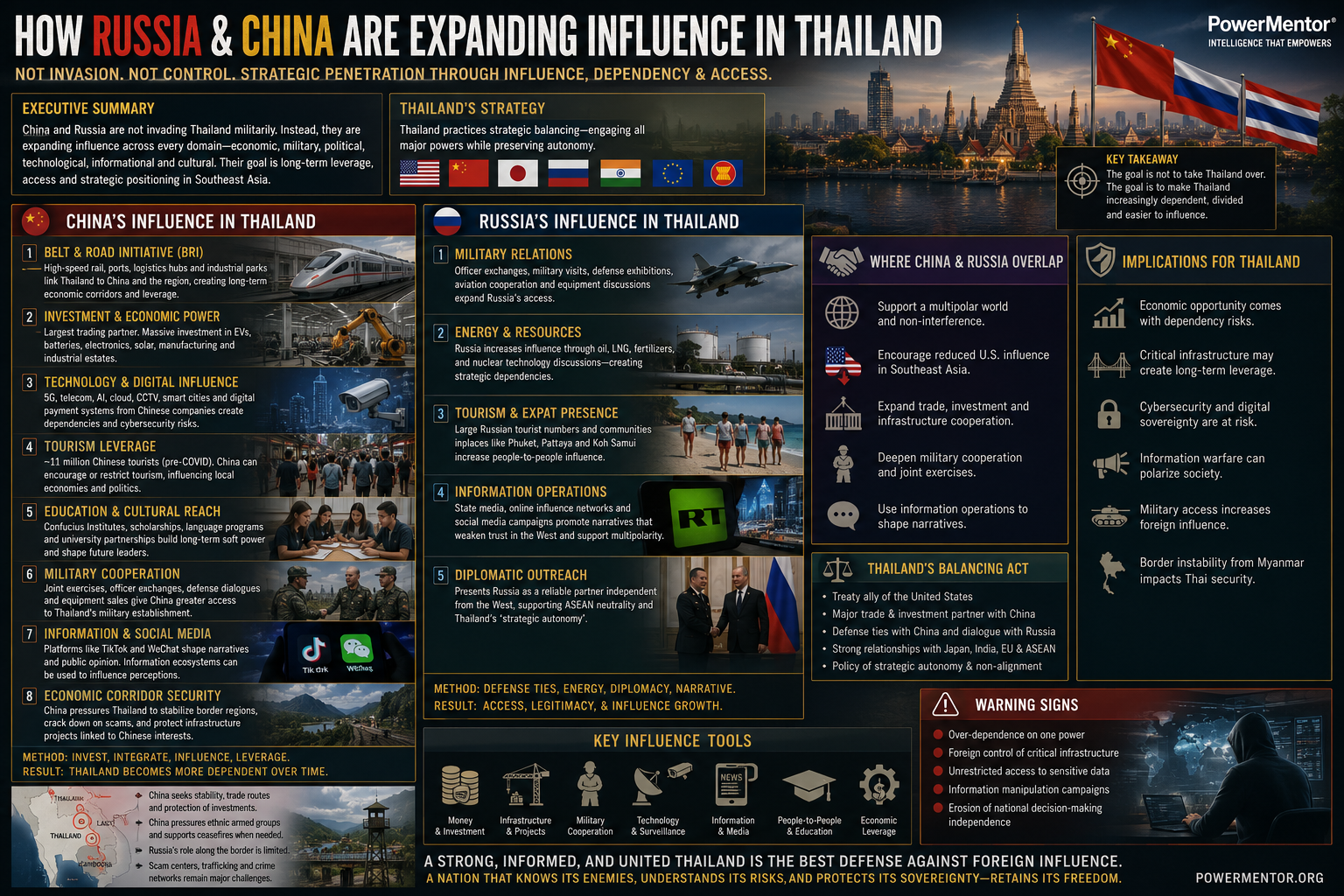
China and Russia's Influence in Thailand: A Strategic Deep Dive
The term "infiltrate" can imply covert or illegal penetration. While there are isolated espionage cases involving many countries, there is no public evidence that China or Russia have infiltrated the Thai government or military in the sense of controlling it.
A more accurate description is that both countries are expanding their influence, but they do so in very different ways.
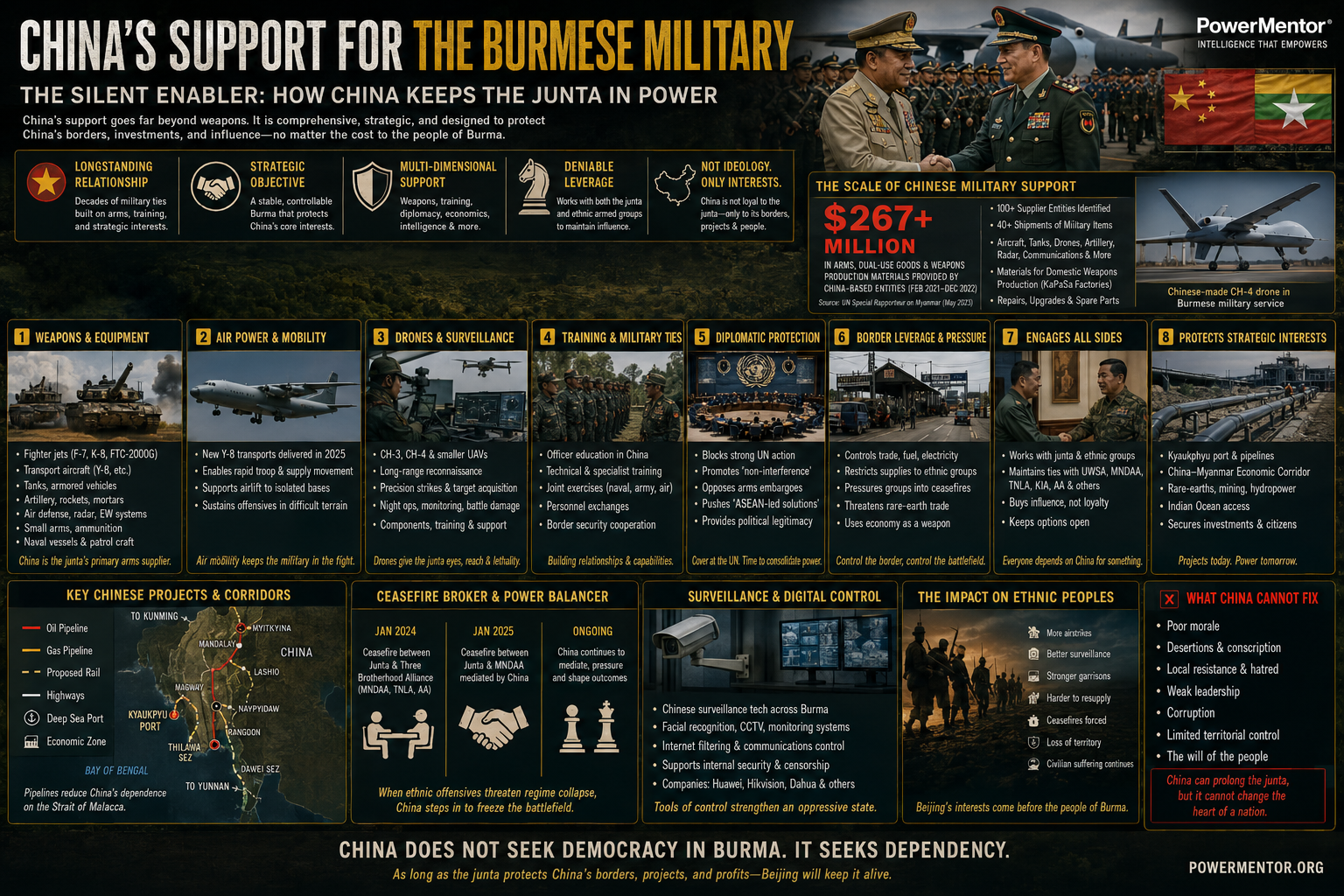
China’s Support for the Burmese Military: Deep-Dive Assessment
China’s relationship with Burma’s military is more complicated—and potentially more powerful—than Russia’s.
Russia primarily acts as an arms supplier, trainer and military partner. China operates across nearly every level of the conflict:
Weapons and replacement parts
Aircraft, drones and naval systems
Military training and exercises
Diplomatic protection
Economic and border pressure
Control over trade routes
Influence over several ethnic armed organizations
Protection of strategic infrastructure
Political rehabilitation of the military government
China does not appear emotionally or ideologically committed to Min Aung Hlaing. Beijing supports the Burmese military because it currently regards a functioning central government as necessary to protect Chinese borders, trade, pipelines, investments and access to the Indian Ocean.
Its real objective is not necessarily a decisive junta victory. It is a controllable Burma that cannot threaten China’s interests.
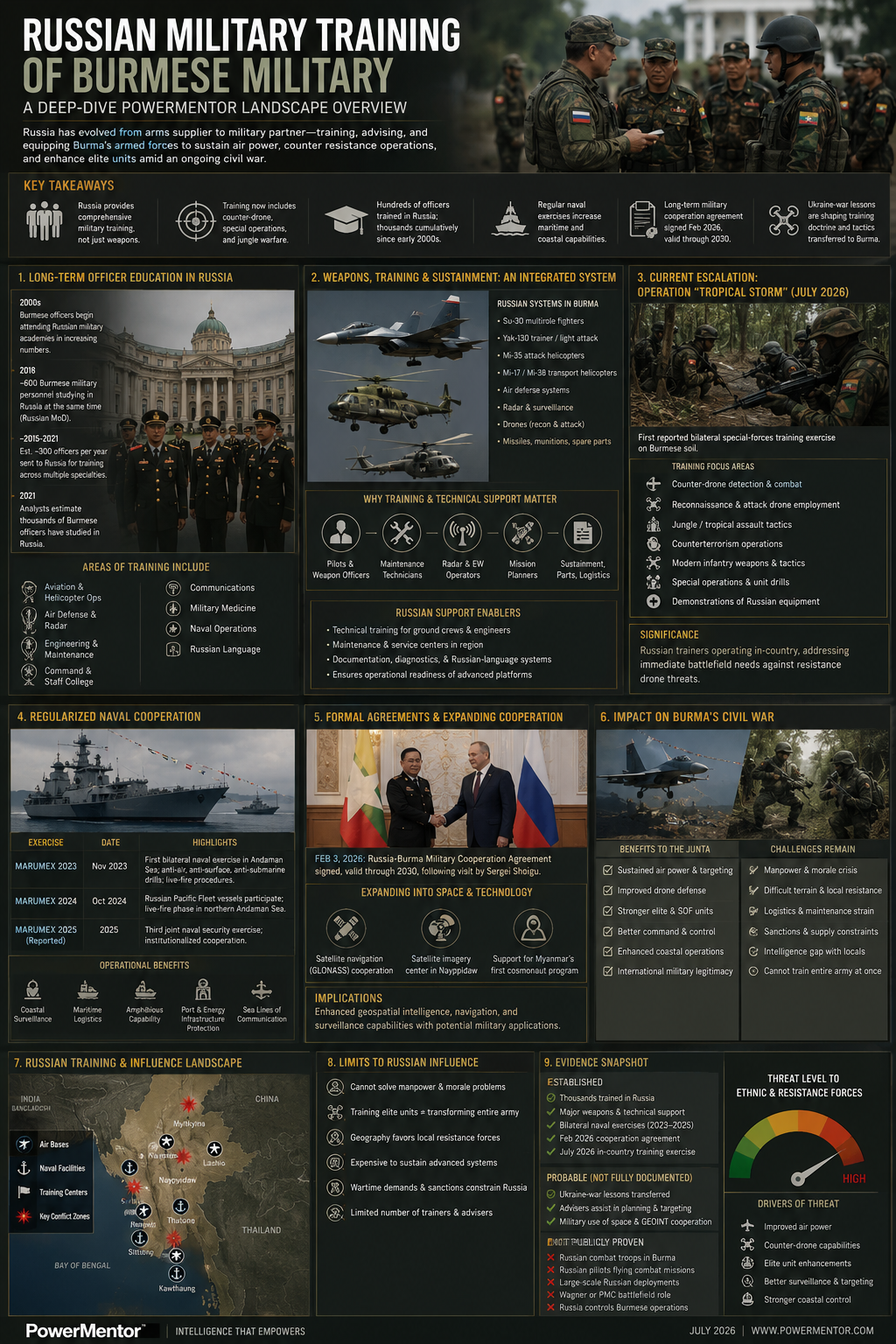
Russian Military Training of Burma’s Armed Forces: Deep-Dive Assessment
Russia is no longer merely selling weapons to the Burmese military. It is helping develop the personnel, doctrine, maintenance systems, operational skills, and institutional relationships needed to employ those weapons.
The relationship has evolved through three broad stages:
Long-term officer education in Russia
Weapons-linked technical and operational training
Direct combined exercises inside Burma and at sea
The most important recent development is the reported “Tropical Storm” exercise in Naypyidaw, running July 6–17, 2026, in which Russian personnel are training Burmese special-operations forces in counter-drone warfare, tropical assault tactics, counterterrorism and the operation of Russian military equipment. This appears to be the clearest public indication yet of Russian ground-force trainers working directly with Burmese combat personnel inside the country.
That said, there is still no publicly verified evidence that large Russian combat formations are deployed alongside Burmese troops in front-line combat operations. The available evidence points instead to instructors, advisers, naval personnel, technicians and military educators.
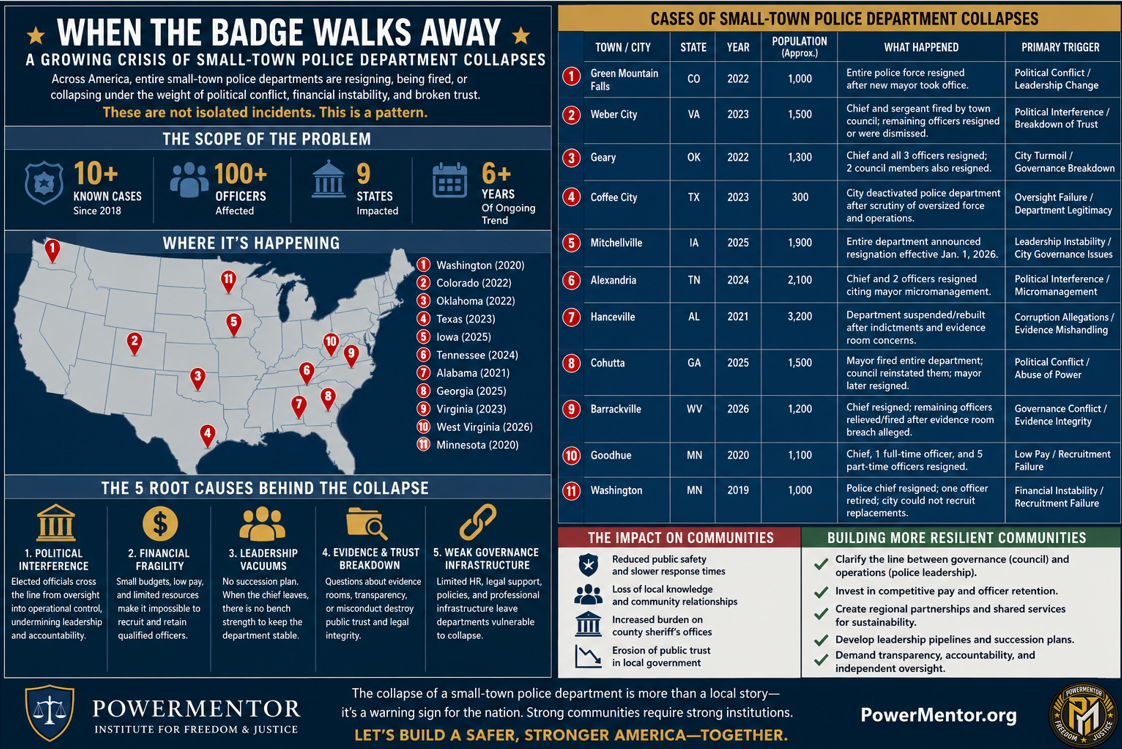
When the Badge Walks Away: America's Growing Crisis of Small-Town Police Department Collapses
When Americans think about policing crises, their minds often turn to major metropolitan areas. Headlines frequently focus on large cities struggling with violent crime, officer shortages, or public demonstrations. Yet, quietly unfolding across rural America is a different kind of crisis—one that receives far less national attention but carries profound implications for public safety and local governance.
Over the past several years, a growing number of small-town police departments have experienced complete organizational collapse. In some communities, every officer has resigned. In others, entire departments have been dismissed by elected officials. Some have ceased operations because they could no longer recruit or retain officers, while others have become consumed by political conflict or allegations involving evidence management and departmental oversight.
Although each community has its own unique story, the similarities between these incidents are becoming increasingly difficult to ignore. They suggest that many of America's smallest police agencies are operating within a system that has become increasingly fragile.
The recent events in Barrackville, West Virginia, provide one of the clearest examples of this emerging pattern.

The Great Disconnect: Why Americans Are Becoming Strangers Next Door: How the Collapse of Neighborhood Socializing Is Reshaping America
There was a time in America when neighborhoods were more than collections of houses—they were communities.
Children rode bicycles until sunset. Neighbors borrowed tools, shared meals, watched each other's children, checked on elderly residents, and gathered for block parties. When someone experienced hardship, the community often stepped in before government agencies ever became involved.
Today, much of that social fabric has quietly unraveled.
A recent report by the American Survey Center at the American Enterprise Institute (AEI), Strangers Next Door: The Decline of Neighborhood Socializing and the Class Divide in Belonging, documents one of the most significant cultural shifts occurring in the United States: Americans are spending dramatically less time interacting with their neighbors, and younger generations are experiencing this decline at unprecedented levels.
This isn't simply a story about loneliness.
It is a story about trust, belonging, resilience, civic engagement, mental health, democracy, and the future of American communities.
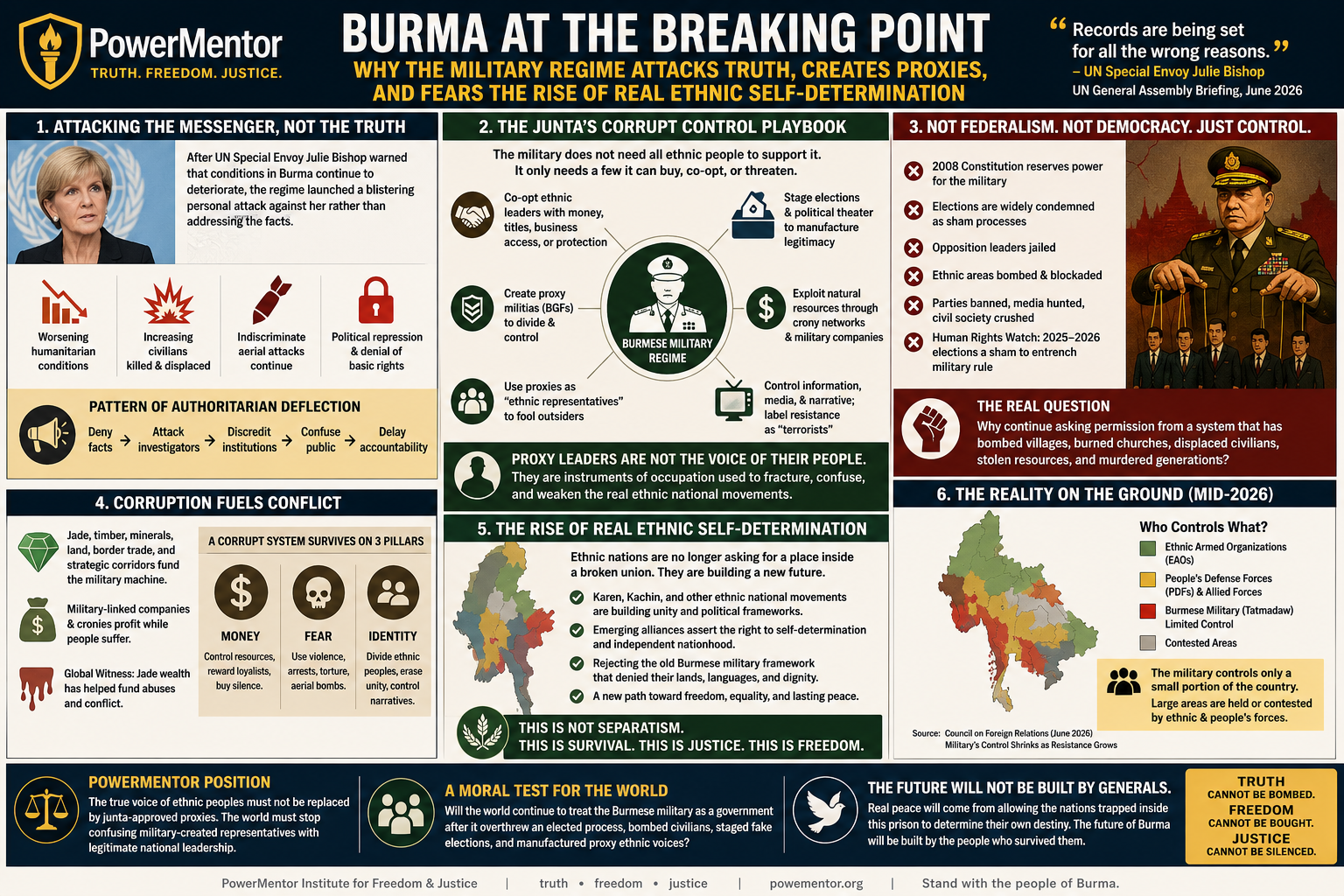
Burma at the Breaking Point: Why the Military Regime Attacks Truth, Manufactures Proxy Leaders, and Fears the Rise of Real Ethnic Self-Determination
The Burmese military regime’s attack on UN Special Envoy Julie Bishop is not an isolated outburst. It is part of a much older pattern: when the generals cannot defeat the truth, they attack the messenger. Bishop warned that conditions in Burma continue to deteriorate and that “records are being set for all the wrong reasons,” directly challenging the regime’s false claim that its military-controlled political process has restored stability.
But the deeper issue is legitimacy. The Burmese generals are no longer simply fighting armed resistance. They are fighting the collapse of the entire political illusion they built: fake elections, fake peace processes, fake federalism, and fake ethnic representation.
For decades, the military has claimed to represent national unity while violently suppressing the very nations that make up Burma: Karen, Kachin, Chin, Karenni, Arakan, Mon, Shan, and others. These ethnic peoples are not fringe communities. They occupy large historic homelands and have fought for recognition of their language, land, faith, culture, and political rights for generations.
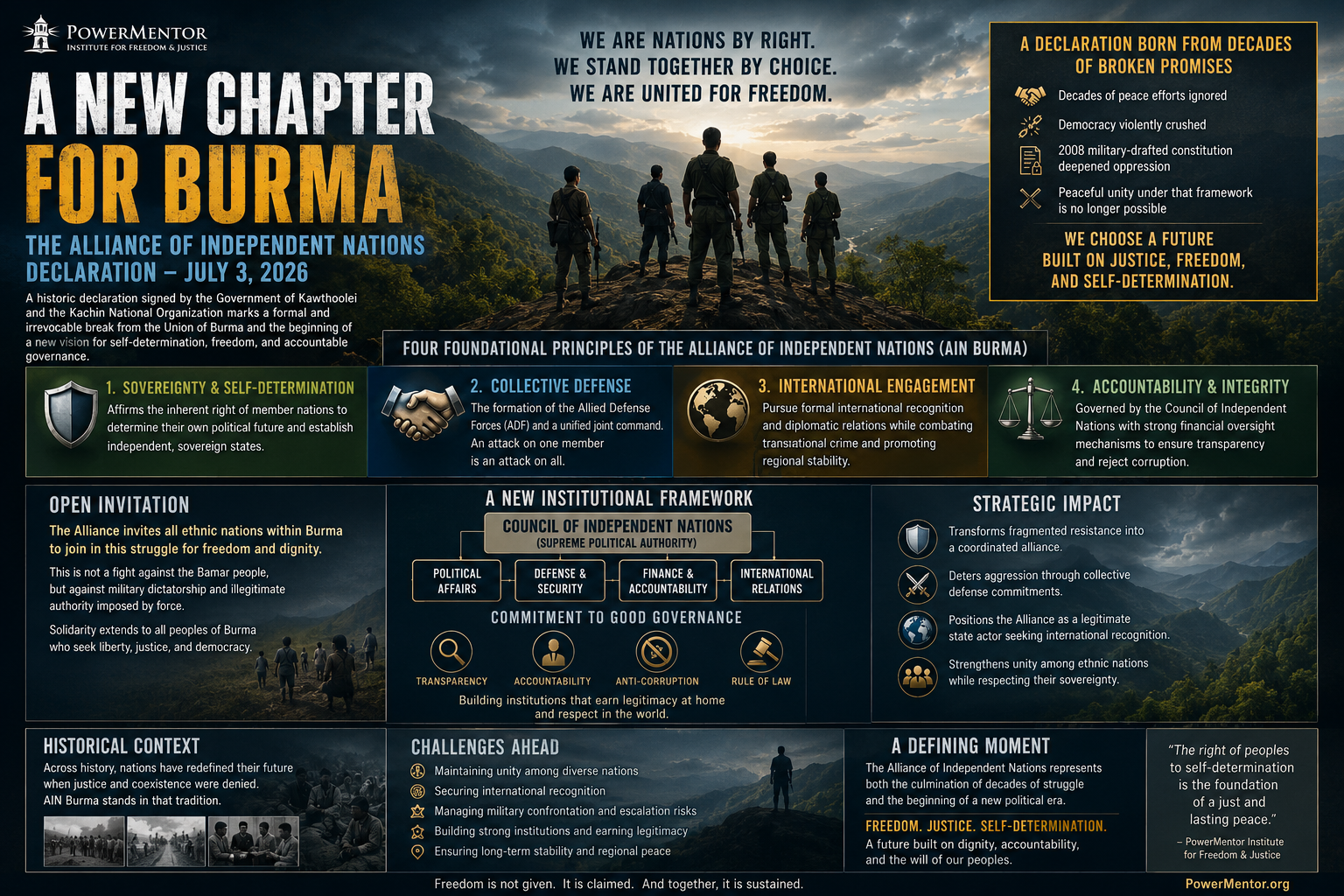
The Alliance of Independent Nations: A Historic Turning Point for Burma's Ethnic Nations
On July 3, 2026, history took a dramatic turn. Two of Burma's most influential ethnic organizations—the Government of Kawthoolei (representing the Karen people) and the Kachin National Organization (KNO)—signed the Declaration of the Alliance of Independent Nations (AIN Burma). More than another political statement, this declaration represents a formal and permanent rejection of the Union of Burma and the beginning of a new vision for the future of the country's ethnic nations.
For decades, ethnic nationalities sought peace through dialogue, federal reform, and negotiated power-sharing. Yet repeated agreements were broken, democratic movements were violently suppressed, and the 2008 military-drafted constitution centralized power under the Burma military rather than providing meaningful autonomy. The AIN Declaration reflects the conclusion reached by its founding members: the existing political framework is no longer capable of delivering justice, freedom, or lasting peace.

Myitsone Dam Returns: Why Many Ethnic Peoples See More Than a Hydropower Project
After nearly 15 years of suspension, Burma (Myanmar)'s government has announced plans to revive the Myitsone Hydropower Project in Kachin State—a massive China-backed development that could become one of Southeast Asia's largest hydroelectric dams. Supporters view the project as a solution to Burma's ongoing electricity shortages and a catalyst for economic growth. Yet for many ethnic communities, particularly the Kachin people, the announcement revives decades of unresolved concerns over land rights, environmental stewardship, cultural preservation, and self-determination.
At PowerMentor, we believe that understanding the perspectives of all stakeholders is essential to achieving lasting peace and sustainable development. While governments may view Myitsone through the lens of national infrastructure, many ethnic peoples view it through the lens of history, lived experience, and the future of their ancestral homeland.
A Project Built on Ancestral Land
The proposed Myitsone Dam would be constructed at the confluence of the Mali and N'Mai Rivers, the headwaters of the Irrawaddy River. Beyond its strategic importance, this location holds profound cultural, historical, and spiritual significance for many Kachin communities.
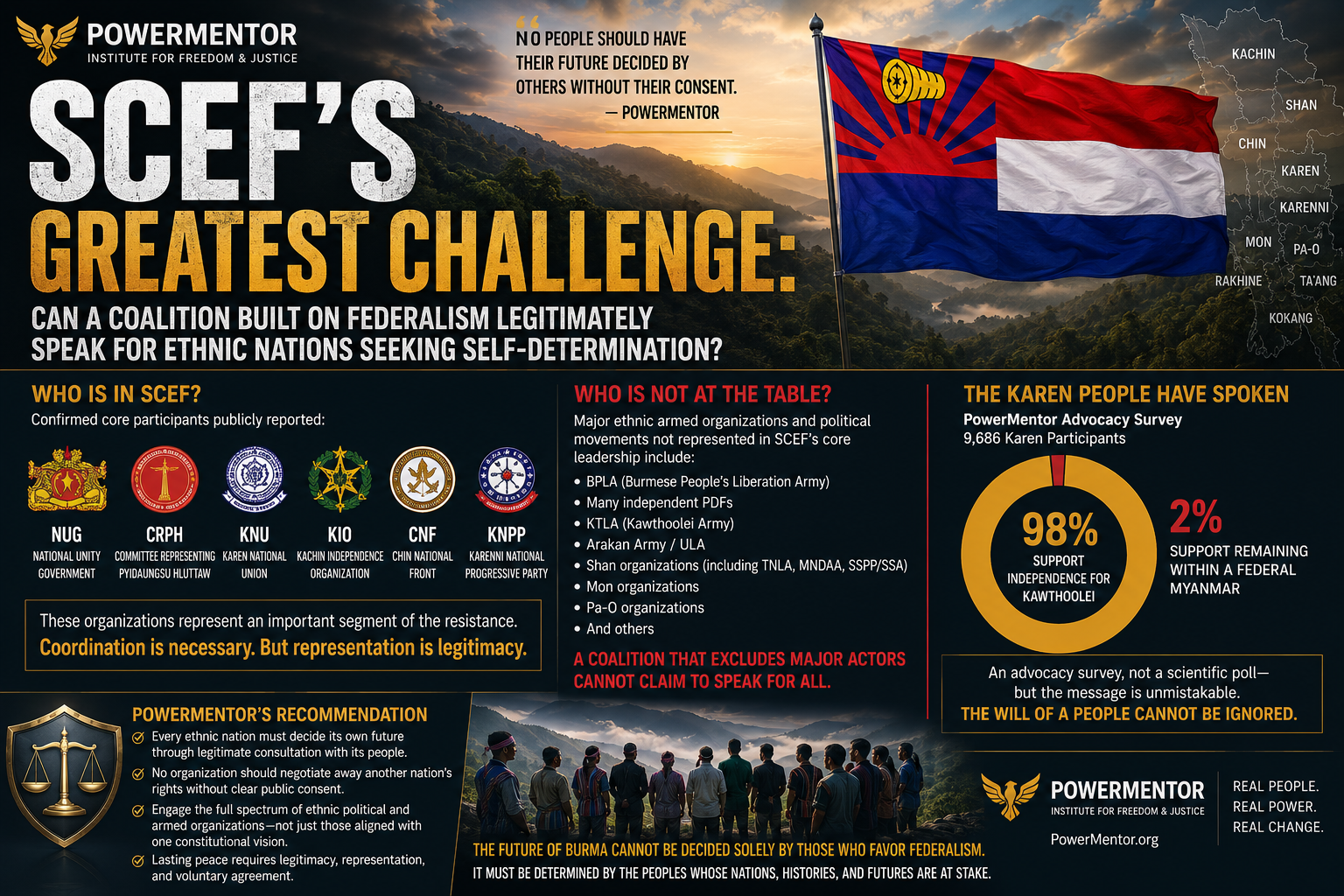
SCEF's Greatest Challenge: Can a Coalition Built on Federalism Legitimately Speak for Ethnic Nations Seeking Self-Determination?
The creation of the Steering Council for the Emergence of a Federal Democratic Union (SCEF) has been presented by many observers as an important milestone in Burma's resistance movement. At first glance, the initiative appears promising. It seeks to strengthen coordination among resistance forces, improve political unity, and develop a common strategy against the military regime.
Its founding members include the National Unity Government (NUG), Committee Representing the Pyidaungsu Hluttaw (CRPH), Karen National Union (KNU), Kachin Independence Organization (KIO), Chin National Front (CNF), and Karenni National Progressive Party (KNPP), along with associated leadership structures. Collectively, these organizations represent an important segment of the resistance.
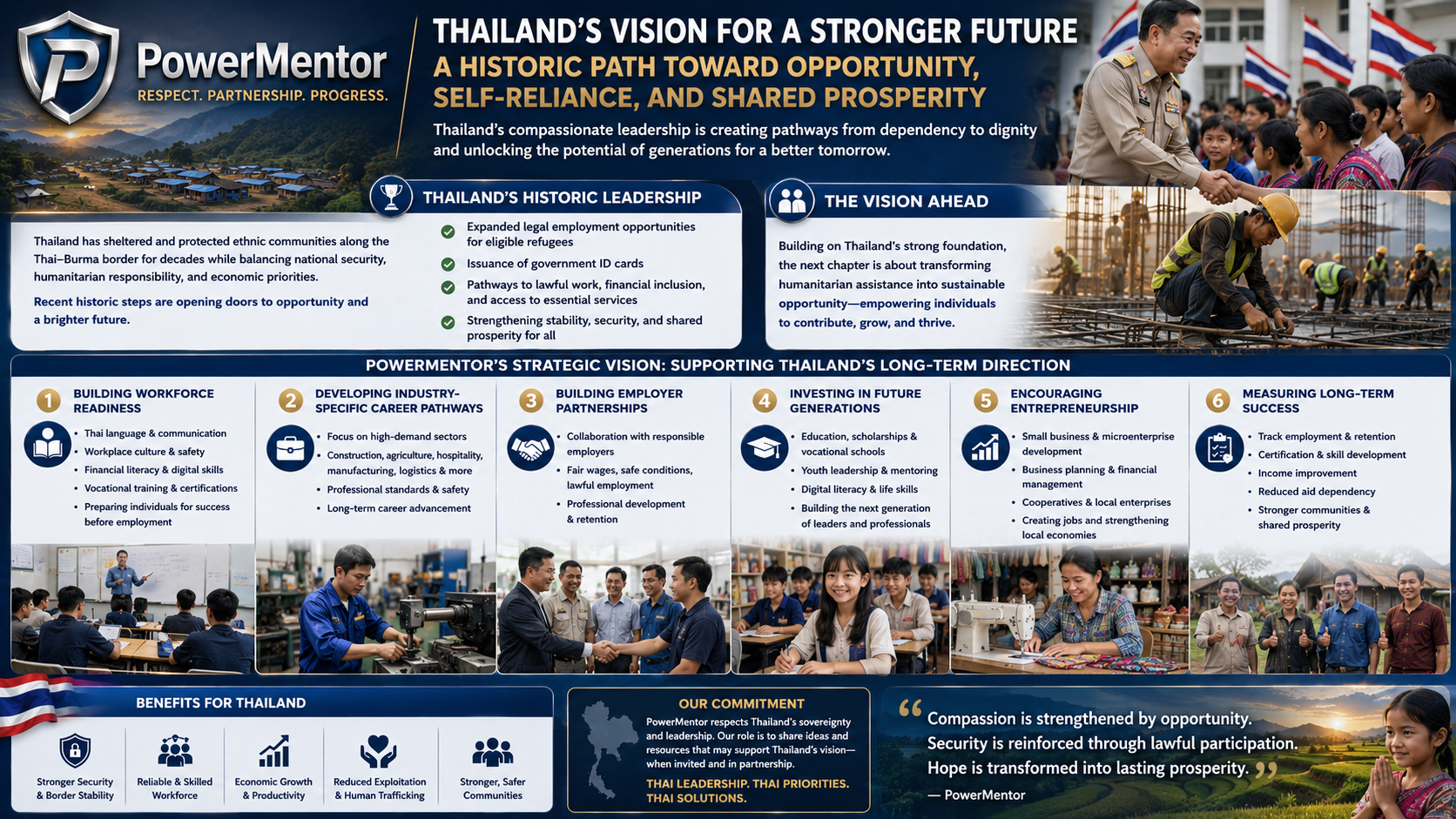
Thailand's Vision for a Stronger Future: A Historic Path Toward Opportunity, Self-Reliance, and Shared Prosperity
For more than four decades, the Royal Thai Government has carried one of Southeast Asia's most significant humanitarian responsibilities by providing refuge to hundreds of thousands of people displaced by conflict in Burma. Throughout changing political environments, Thailand has consistently balanced national security, border stability, humanitarian responsibility, and economic priorities while extending protection to Karen, Karenni, Mon, and other ethnic communities living along the Thai-Burma border.
Today, Thailand is demonstrating a new level of leadership by moving beyond long-term humanitarian assistance toward policies that encourage self-reliance, lawful employment, and economic participation. These initiatives represent an important evolution in public policy—one that recognizes both the dignity of displaced people and Thailand's long-term national interests. PowerMentor commends the Royal Thai Government for taking thoughtful and courageous steps toward solutions that benefit both Thailand and the ethnic communities it has generously hosted for so many years.
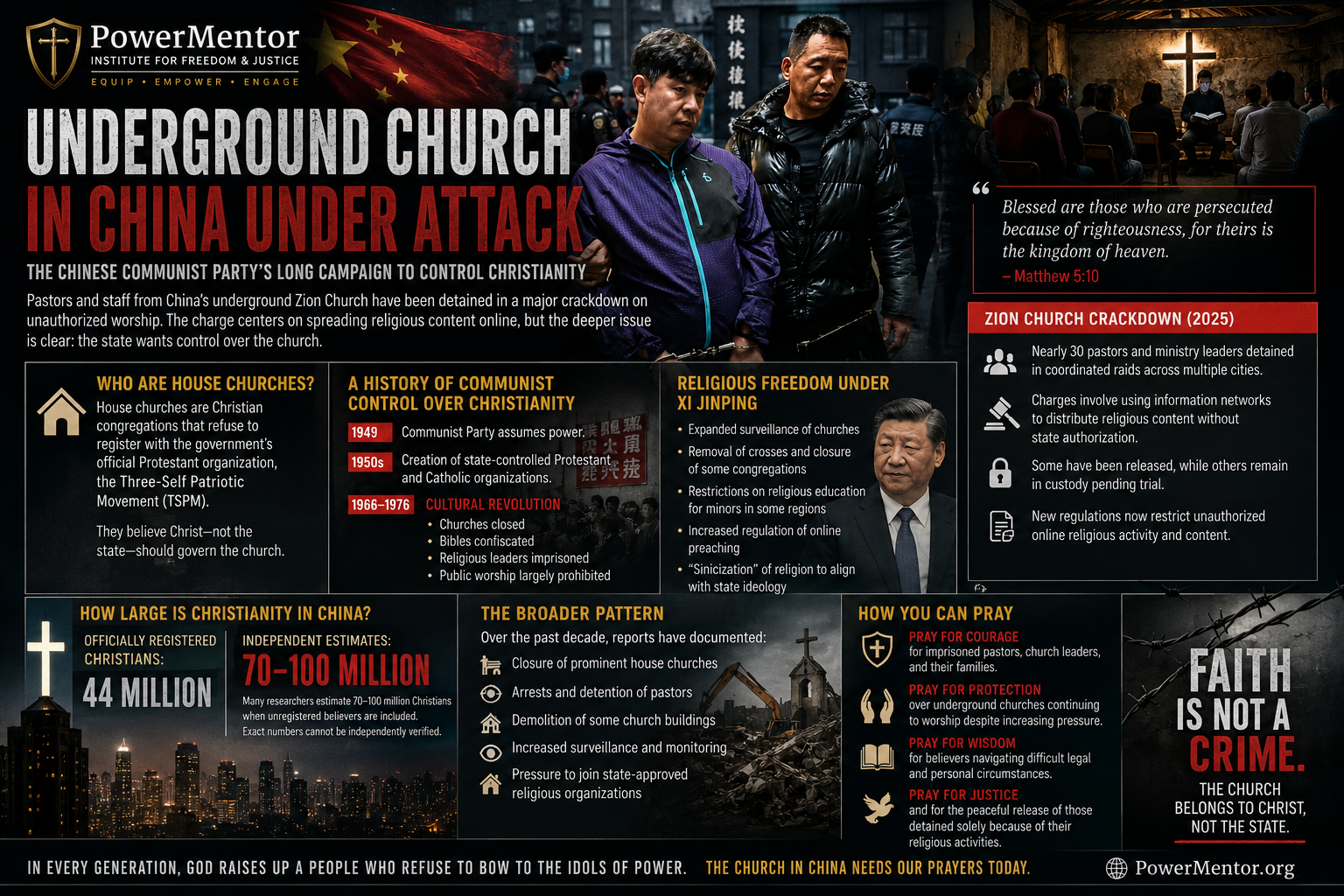
Underground Church in China Under Attack: The Chinese Communist Party's Long Campaign to Eliminate Christianity
The detention of pastors and ministry leaders from China's underground Zion Church is more than an isolated criminal case. It reflects a longstanding policy by the Chinese Communist Party (CCP) to bring every aspect of religious life under state supervision. According to reports, authorities accused church leaders of illegally distributing religious content online after new regulations tightened restrictions on internet-based religious activities. Human rights organizations argue that the underlying issue is not merely online content but the government's insistence that religious organizations remain subject to Communist Party oversight.
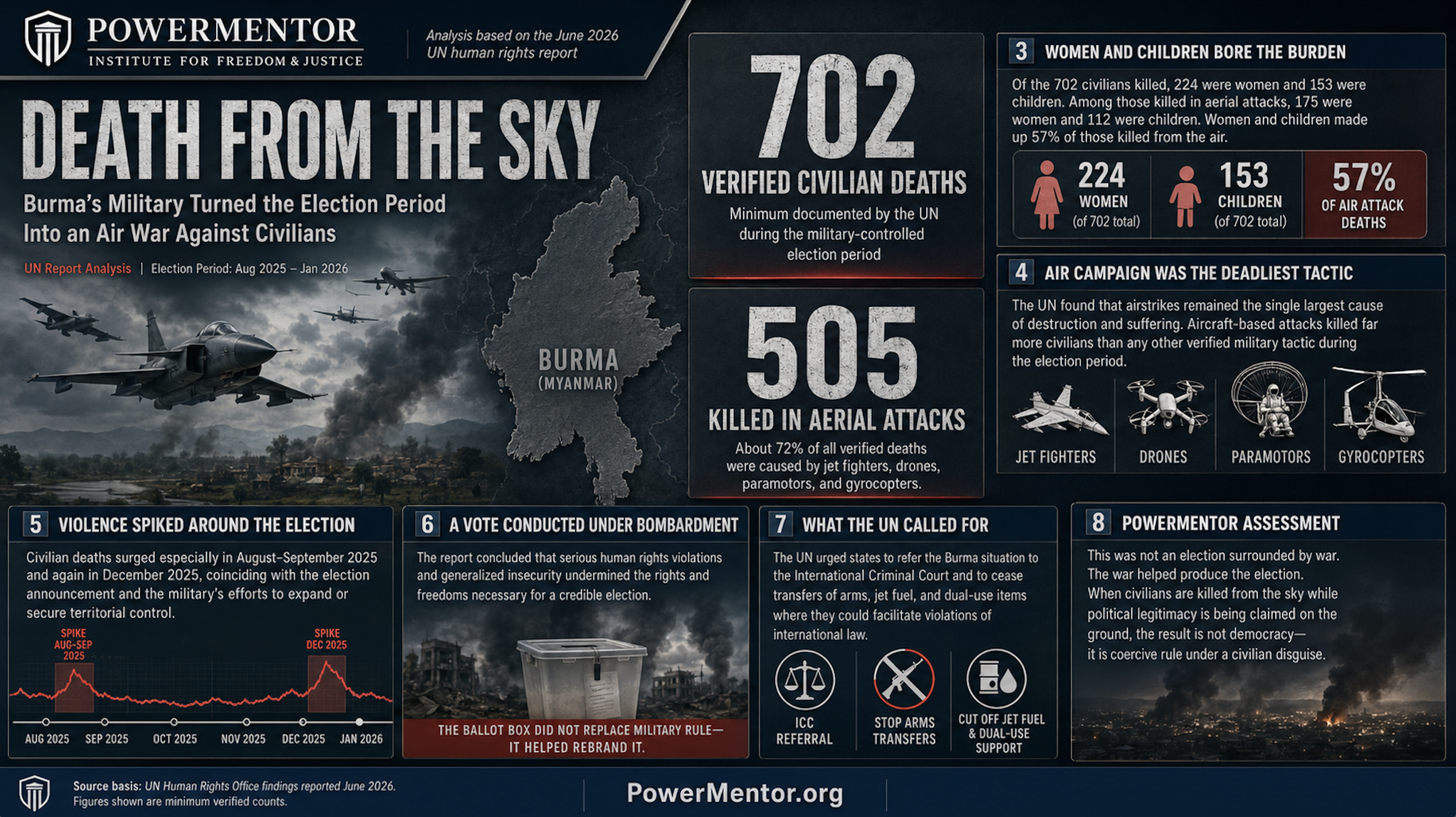
DEATH FROM THE SKY: BURMA’S MILITARY TURNED ITS SHAM ELECTION INTO AN AIR WAR AGAINST CIVILIANS
The military-controlled election in Burma was presented as a political transition, but a new United Nations report reveals a far darker reality. During the six months surrounding the election process, the Burma military killed at least 702 civilians, with aircraft responsible for the overwhelming majority of verified deaths. Rather than creating the conditions necessary for citizens to choose their government freely, the military expanded its territorial campaign, attacked communities from the air and conducted voting beneath a climate of violence, displacement and fear.
The report covers the period from August 2025, when the military announced the election process, through the end of voting in January 2026. According to the UN Human Rights Office, the military was responsible for the verified deaths of 224 women and 153 children. These numbers expose the fundamental contradiction behind the election: a government cannot claim democratic legitimacy while its armed forces are bombing the population it supposedly seeks permission to govern.

RESPECT YOUR ELDERS: THE COMING SOCIAL SECURITY BLAME GAME
America is rapidly approaching a moment of truth regarding Social Security, government spending, and the promises made to generations of hardworking Americans. For decades, politicians knew the system faced long-term financial pressures. Actuaries issued warnings. Economists highlighted demographic challenges. Fiscal conservatives repeatedly called for reforms. Yet rather than addressing the problem while solutions were manageable, Washington chose the politically convenient path of postponement. Now that the financial realities are becoming increasingly difficult to ignore, many conservatives believe a dangerous new strategy is emerging: redirecting public anger away from government failures and toward America's seniors.
Across social media, popular culture, and political commentary, a growing narrative by the Left portrays Baby Boomers as selfish, entitled, and responsible for many of the economic challenges facing younger Americans. Rising housing costs, student debt, inflation, retirement insecurity, and even Social Security's future funding challenges are increasingly being linked to older generations. This narrative is emotionally appealing because it provides a simple villain. However, simple villains rarely explain complex problems, and in this case the facts tell a very different story.
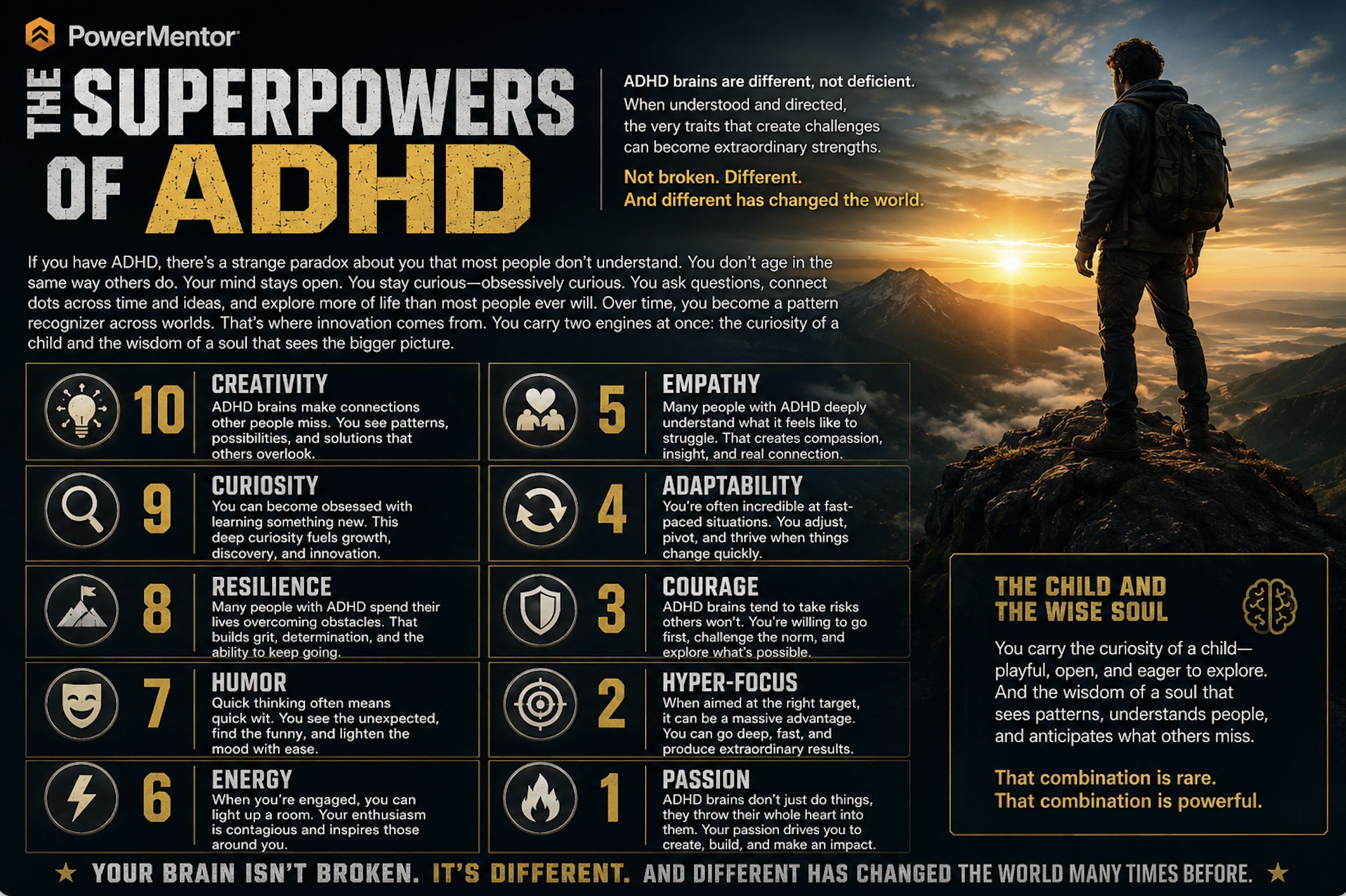
The Superpowers of ADHD: Why a Different Brain Can Be an Extraordinary Advantage
For most of modern history, ADHD has been described almost entirely through the language of deficits. We hear words like distracted, impulsive, forgetful, restless, disorganized, and inattentive. While those challenges are real and should never be minimized, they represent only part of the story. What often gets lost in the conversation is that many of the same neurological characteristics that create struggles can also create extraordinary strengths.
The truth is that countless entrepreneurs, innovators, inventors, artists, explorers, first responders, leaders, and visionaries possess traits commonly associated with ADHD. Their brains process information differently. They often see opportunities others miss, connect ideas others never relate, and remain curious long after others have stopped asking questions. ADHD is not a lack of intelligence. It is not a lack of capability. It is a different operating system that comes with both challenges and advantages.
The question is not whether ADHD creates obstacles. It does. The real question is whether those obstacles are the entire story. They are not.
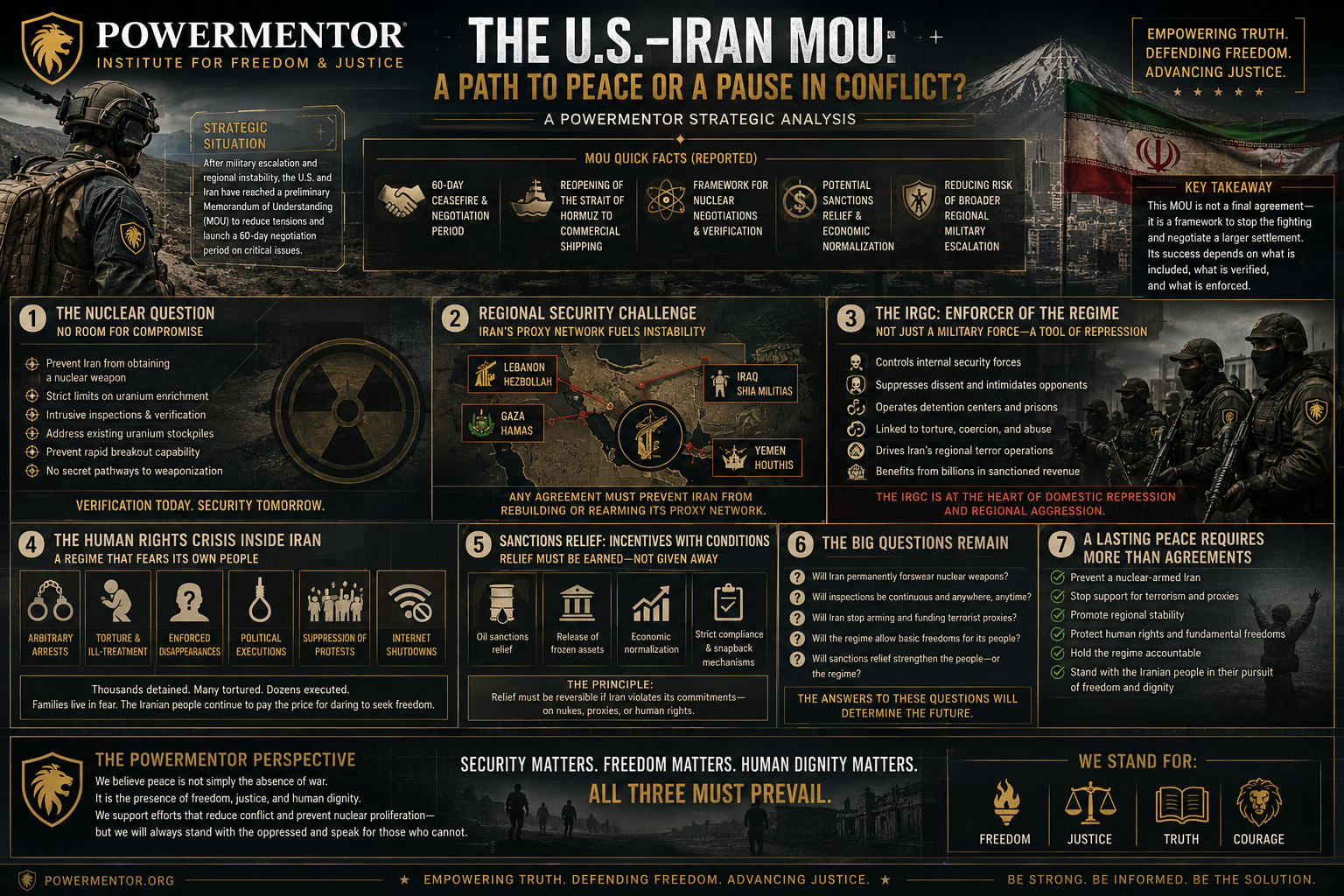
The U.S.–Iran MOU: A Path to Peace or a Pause in Conflict?
The recently announced Memorandum of Understanding (MOU) between the United States and Iran represents one of the most significant developments in Middle East diplomacy in years. Following months of escalating conflict, military strikes, and growing concerns over Iran's nuclear ambitions, both nations have reportedly agreed to a framework intended to reduce tensions and open the door to broader negotiations.
Supporters view the agreement as an opportunity to prevent a larger regional war and stop Iran from obtaining a nuclear weapon. Critics warn that any agreement which fails to address Iran's history of deception, support for proxy groups, and systematic human rights abuses may merely postpone future conflict.
The reality is that both perspectives contain important truths.
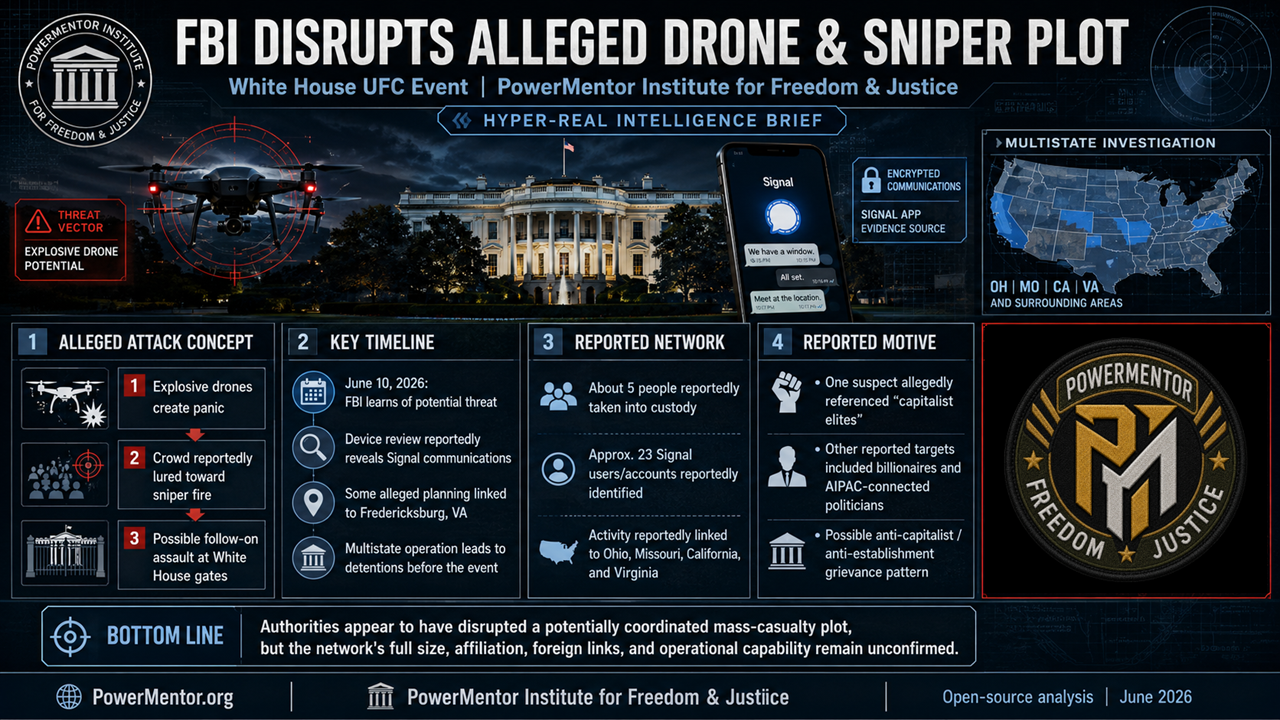
FBI Disrupts Alleged Explosive-Drone and Sniper Plot Against White House UFC Event
Federal authorities say they disrupted an alleged multistate attack plot targeting the UFC Freedom 250 event held at the White House on June 14, 2026. The reported plan was not limited to one explosion or one attacker. It allegedly involved a carefully sequenced operation using explosive-laden drones, manipulated evacuation routes, sniper teams, and a possible second-wave assault against the White House perimeter.
The FBI reportedly learned of the potential threat on June 10, 2026—only four days before the event. A rapid investigation led to several people being taken into custody and exposed a larger Signal messaging network containing approximately 23 participants or accounts discussing elements of the alleged operation.
This case represents a deeply concerning example of how inexpensive drone technology, encrypted communications, firearms, crowd psychology, and coordinated extremist violence can be combined into a potentially devastating attack.
However, several critical facts remain undisclosed. Federal authorities have not yet publicly identified the suspects, confirmed their citizenship, named an affiliated organization, or established that a foreign government directed the operation.
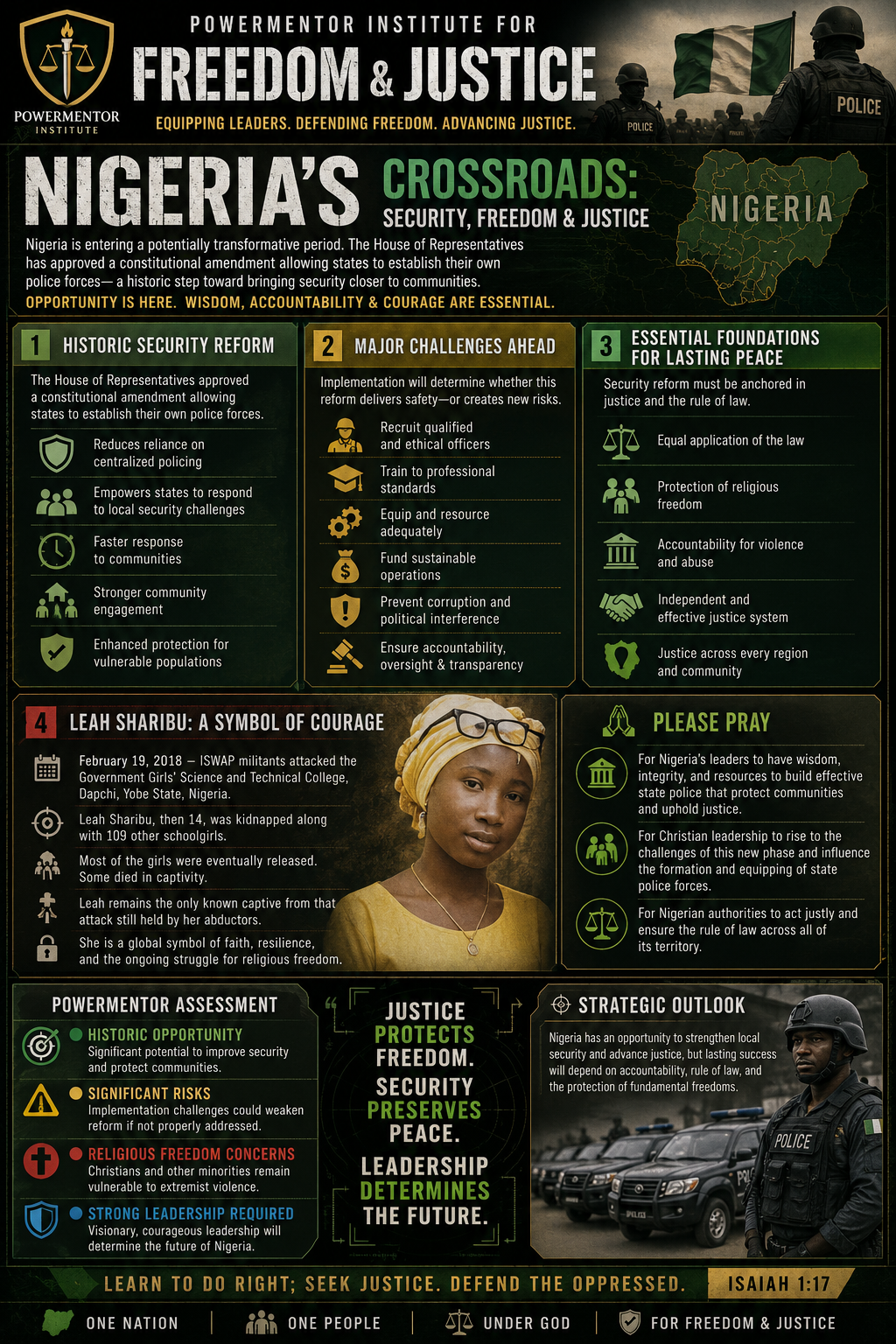
Nigeria at a Crossroads: Security Reform, Religious Freedom, and the Pursuit of Justice
A Nation Facing a Defining Moment
Nigeria, Africa’s most populous nation, stands at a potentially historic turning point. After years of escalating violence, terrorism, kidnappings, and insecurity, the Nigerian House of Representatives has approved a constitutional amendment that would allow individual states to establish their own police forces for the first time in the nation’s history.
This reform represents far more than a change in law enforcement structure. It reflects a growing recognition that local communities often require local solutions and that centralized security systems alone have struggled to address the unique challenges facing different regions of the country.
If implemented effectively, this reform could become one of the most significant security transformations in modern Nigerian history.
Why This Reform Matters
For decades, Nigeria has relied primarily on a centralized national police system. While designed to provide uniform security across the country, many communities have argued that local authorities often lack the resources and authority needed to respond rapidly to emerging threats.
The proposed reform would allow individual states to establish their own police organizations capable of addressing local security concerns.
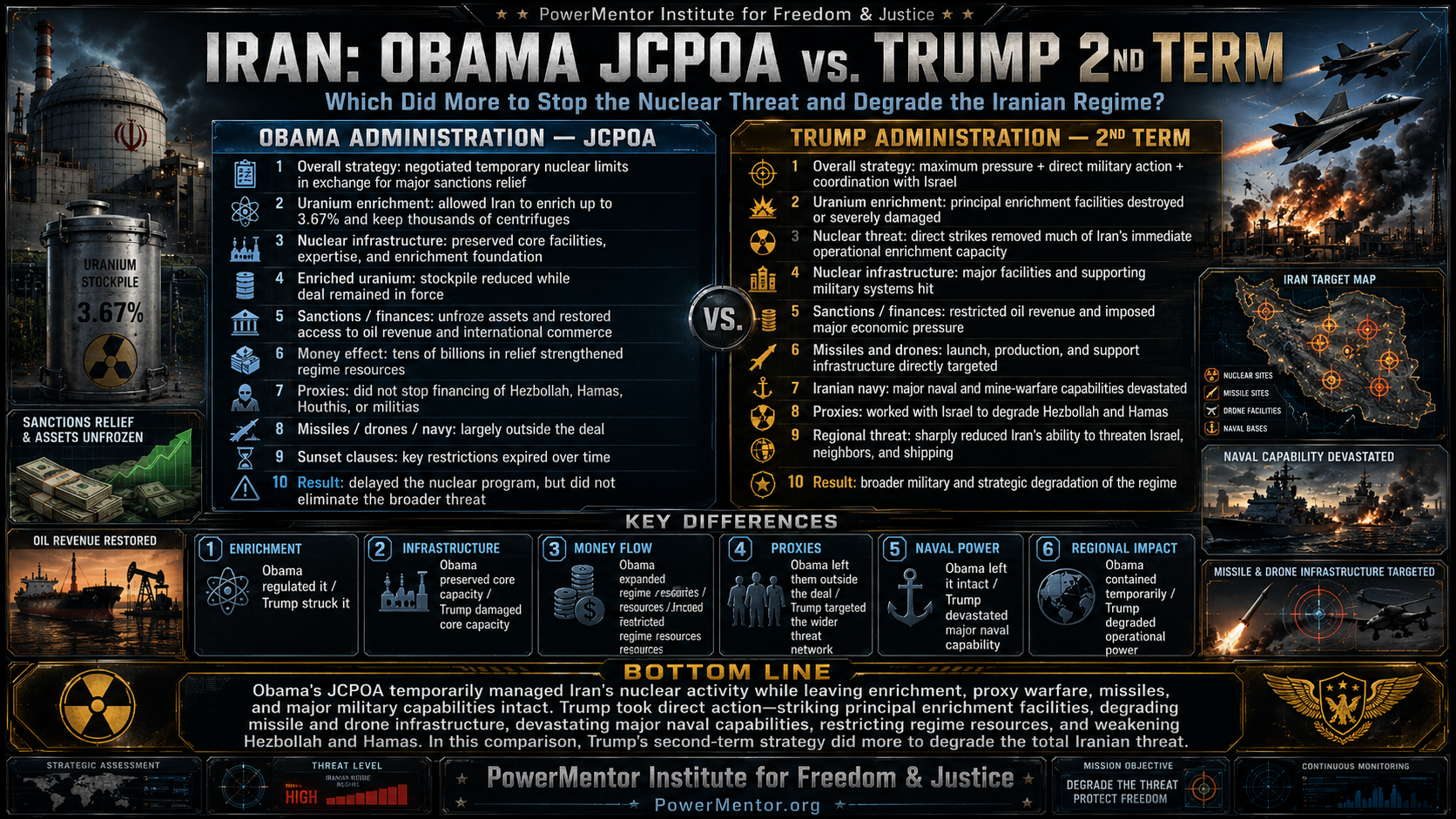
Obama’s Iran Deal vs. Trump’s Second-Term Strategy
Obama’s Agreement Managed the Threat Rather Than Eliminating It
The JCPOA reduced Iran’s uranium stockpile, limited enrichment to 3.67% and temporarily reduced the number of operating centrifuges. However, it did not prohibit enrichment or dismantle Iran’s nuclear knowledge and industrial foundation. Iran was allowed to retain thousands of centrifuges and major nuclear facilities under inspection.
That distinction is essential. Obama’s policy was based on temporary containment. Iran was permitted to maintain the machinery, expertise and infrastructure needed to restart or accelerate enrichment when the agreement weakened or collapsed.
The later accumulation of uranium enriched to 60% demonstrated that the JCPOA had not permanently removed Iran’s nuclear capacity. It delayed the program but did not destroy the foundation from which Iran could rebuild.
Obama’s Sanctions Relief Strengthened the Iranian Regime
The Obama administration lifted major nuclear-related sanctions and restored Iran’s access to frozen assets, oil revenues and portions of the international financial system. Estimates of the total economic value varied, but the relief provided Iran with tens of billions of dollars in accessible resources and renewed revenue.
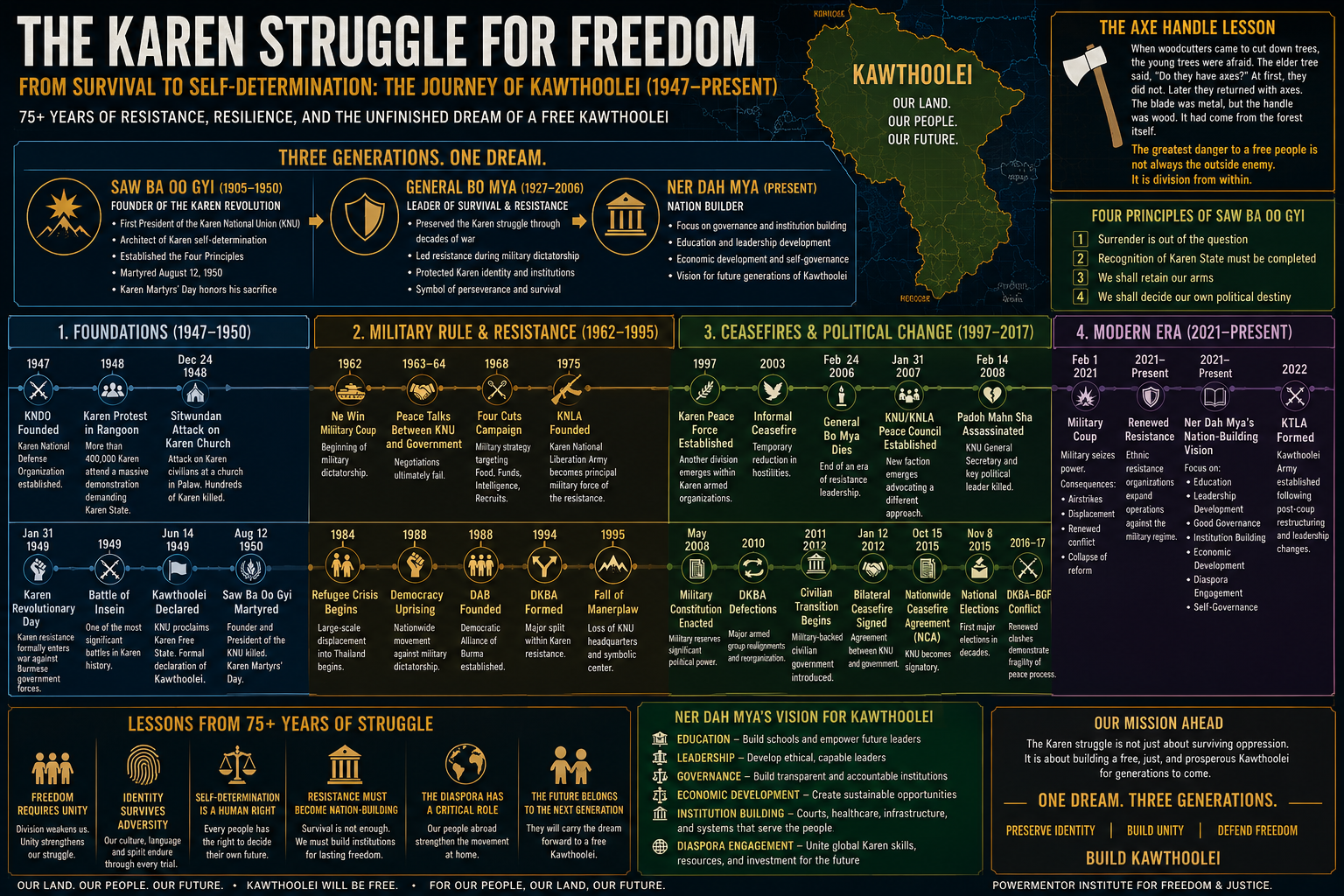
THE KAREN STRUGGLE FOR FREEDOM: From General Bo Mya’s Generation of Survival to Ner Dah Mya’s Vision for Building Kawthoolei
For more than seventy-five years, the Karen people have carried one of the world’s longest and most enduring struggles for freedom. Their story is often reduced to armed conflict, refugee camps, ceasefires, and political negotiations. Yet to understand the Karen struggle only through the lens of war is to miss the deeper story. The Karen journey is ultimately about identity, self-determination, resilience, faith, leadership, and the refusal of a people to surrender their future despite decades of oppression.
The modern Karen movement began in 1947 with the formation of the Karen National Defense Organization (KNDO). This was a defining milestone because Karen leaders understood that their future could not be left entirely in the hands of others. As Burma moved toward independence, the Karen people sought recognition, protection, and the right to determine their own future. The formation of KNDO represented a clear message: the Karen people would not stand defenseless while others decided their destiny.