


The PowerMentor Institute for Freedom and Justice explores leadership, freedom, and democracy issues with a commitment to those seeking freedom and self-determination, empowering those in regions with totalitarian control. We conduct thorough research using AI and other tools to provide the most accurate and insightful information available.
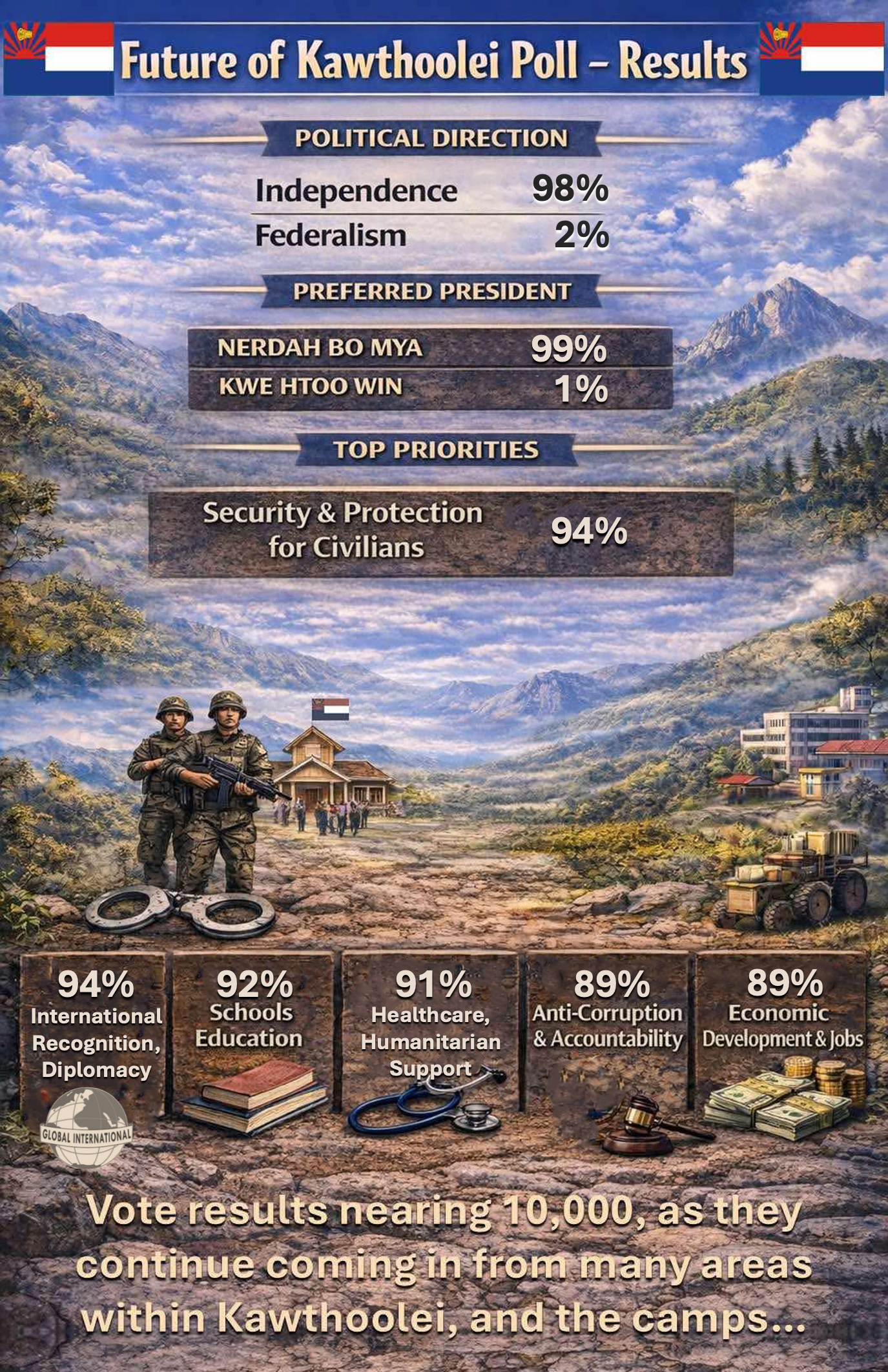
Nearly 10,000 Voices. One Future: Independence.
Based on nearly 10,000 responses, the results are statistically reliable, with a margin of error of approximately ±1 percentage point.
What these results show is clear: the Karen majority desire Independence.
Even more powerful is how these responses were given. In the midst of a sham “election” orchestrated by Burmese generals—where intimidation, surveillance, and punishment are used to silence voices for freedom—those who participated in this poll deserve to be commended for their courage. Speaking up for independence in Burma (Myanmar) is not a casual opinion; for many, it can carry real risk. Yet thousands still chose to speak.

Think very seriously in determining the future generations, because the wrong choice, will be very difficult to undo.
Think very seriously in determining the future generations, because the wrong choice, will be very difficult to undo.
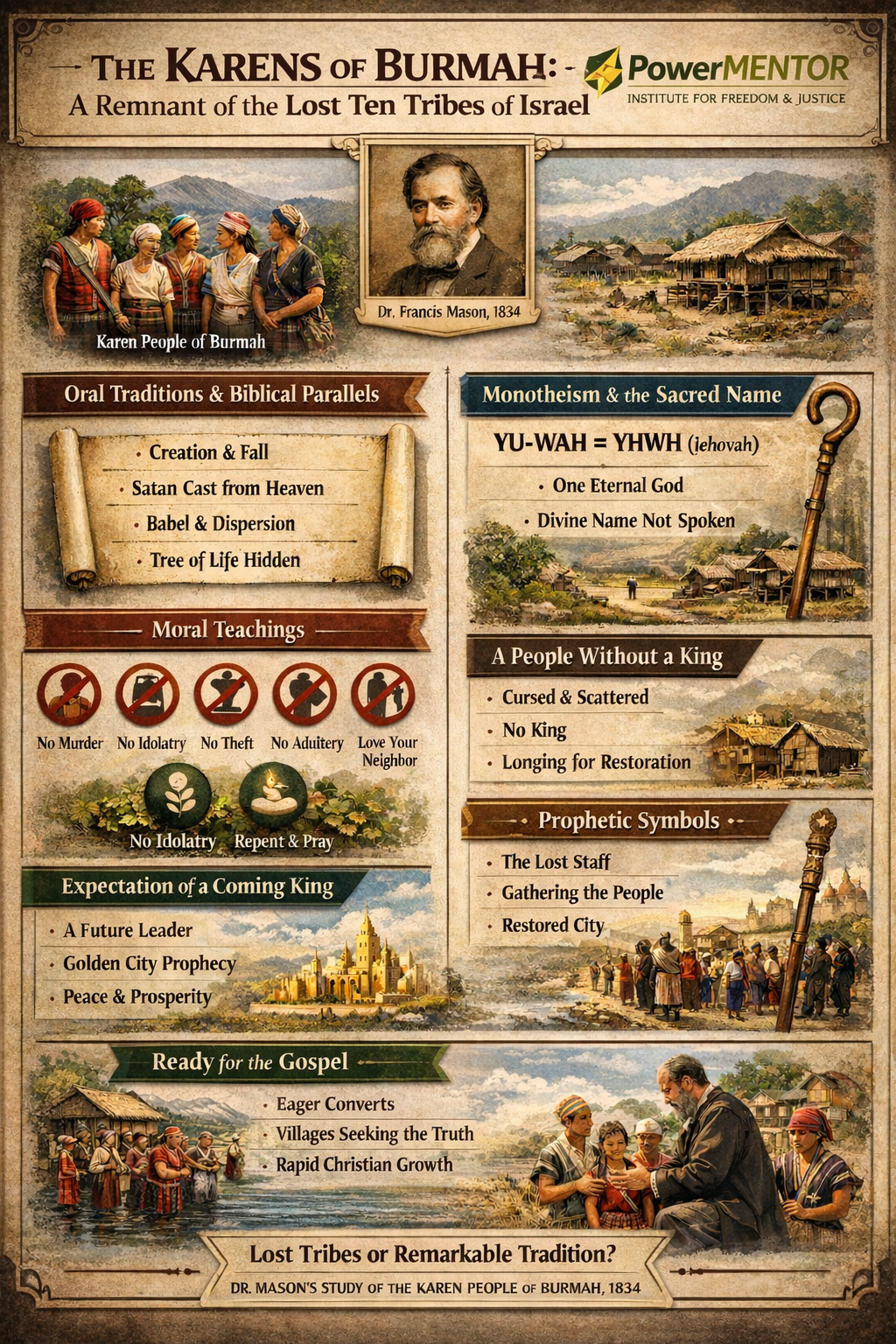
The Karens of Burmah and the Pattern of Exile and Restoration
A Deep Reading of Dr. Francis Mason’s 1834 Argument
In his 1834 paper The Karens of Burmah a Remnant of the Ten Tribes of Israel, Dr. Francis Mason presents a carefully constructed argument grounded not in genetics or archaeology, but in theological pattern, prophetic correspondence, and preserved religious memory. Mason’s claim is not merely that the Karen people resemble ancient Israel in isolated ways, but that their collective self-understanding follows the same covenantal arc described in the Hebrew Scriptures.
At the heart of Mason’s thesis is a single organizing idea:
the Karens understand themselves as a people once favored by God, later rejected because of disobedience, now living in affliction and dispersion, and awaiting divine restoration. This, Mason argues, is precisely how Scripture describes the fate of the Ten Lost Tribes.
Oral Tradition as Covenant Memory
Mason places extraordinary emphasis on Karen oral tradition, describing it as unparalleled among so-called “uncivilized nations.” These traditions are not casual folklore but structured moral and theological instruction, often introduced with the repeated address: “O children and grandchildren!”
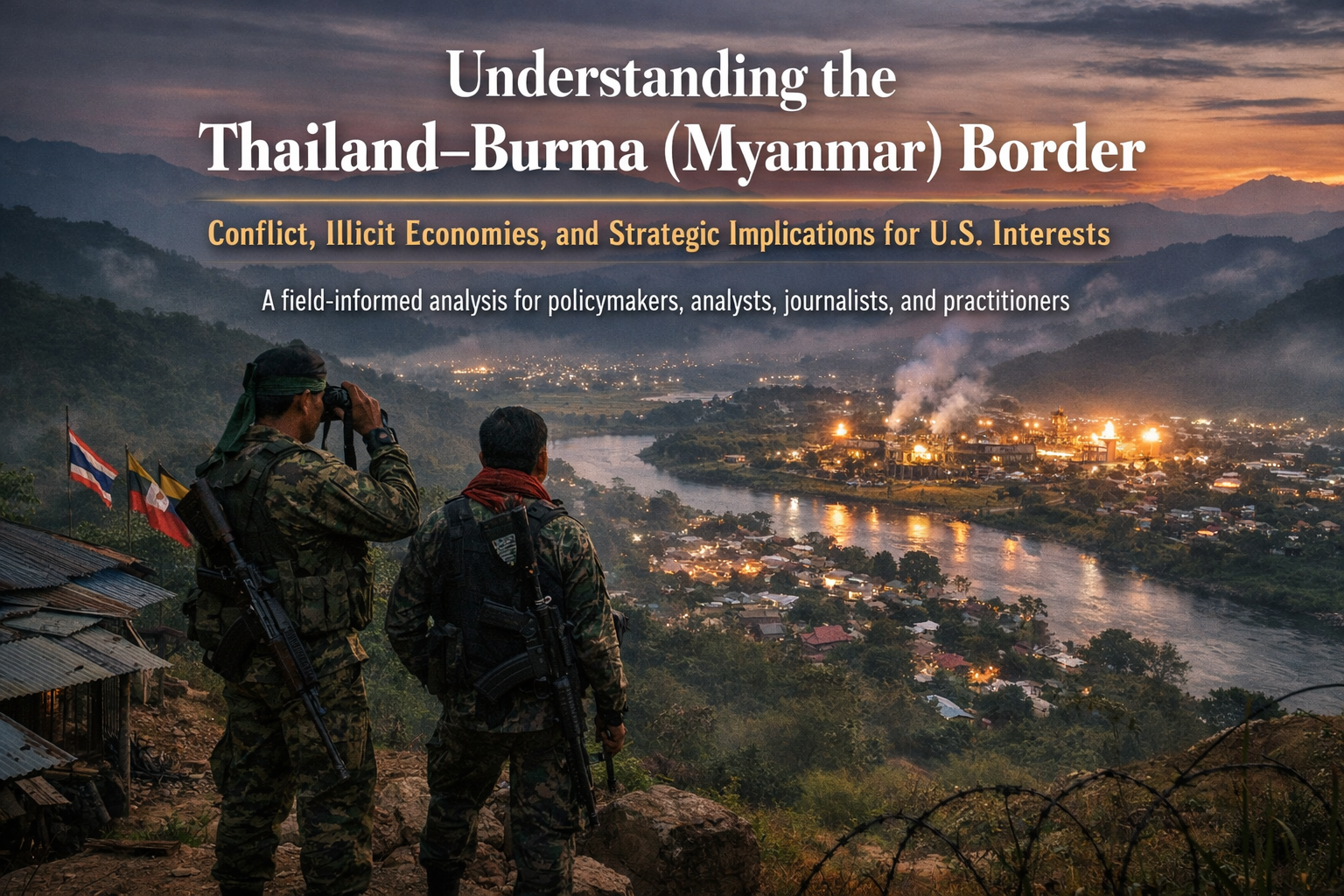
Understanding the Thailand–Burma (Myanmar) Border
Conflict, Illicit Economies, and Strategic Implications for U.S. Interests
A field-informed analysis for policymakers, analysts, journalists, and practitioners
Executive Overview
The Thailand–Burma (Myanmar) border region is one of the most strategically significant yet consistently misunderstood zones in mainland Southeast Asia. Frequently framed as a localized humanitarian crisis or an internal civil conflict, the region is more accurately understood as a convergence point of unresolved governance questions, ethnic autonomy movements, transnational criminal economies, and external power influence.
This analysis is written for U.S. policymakers, congressional staff, analysts, journalists, and practitioners seeking a clear understanding of why instability persists along the border, why conventional frameworks have failed, and why developments in this region have direct implications for U.S. strategic, economic, and security interests.
A central theme of this assessment is an internal fault line that shapes both conflict and opportunity: the unresolved tension between federalism and independence models among ethnic regions, and the emergence of hybrid governance arrangements that may represent the most realistic pathway toward cohesion and stability.
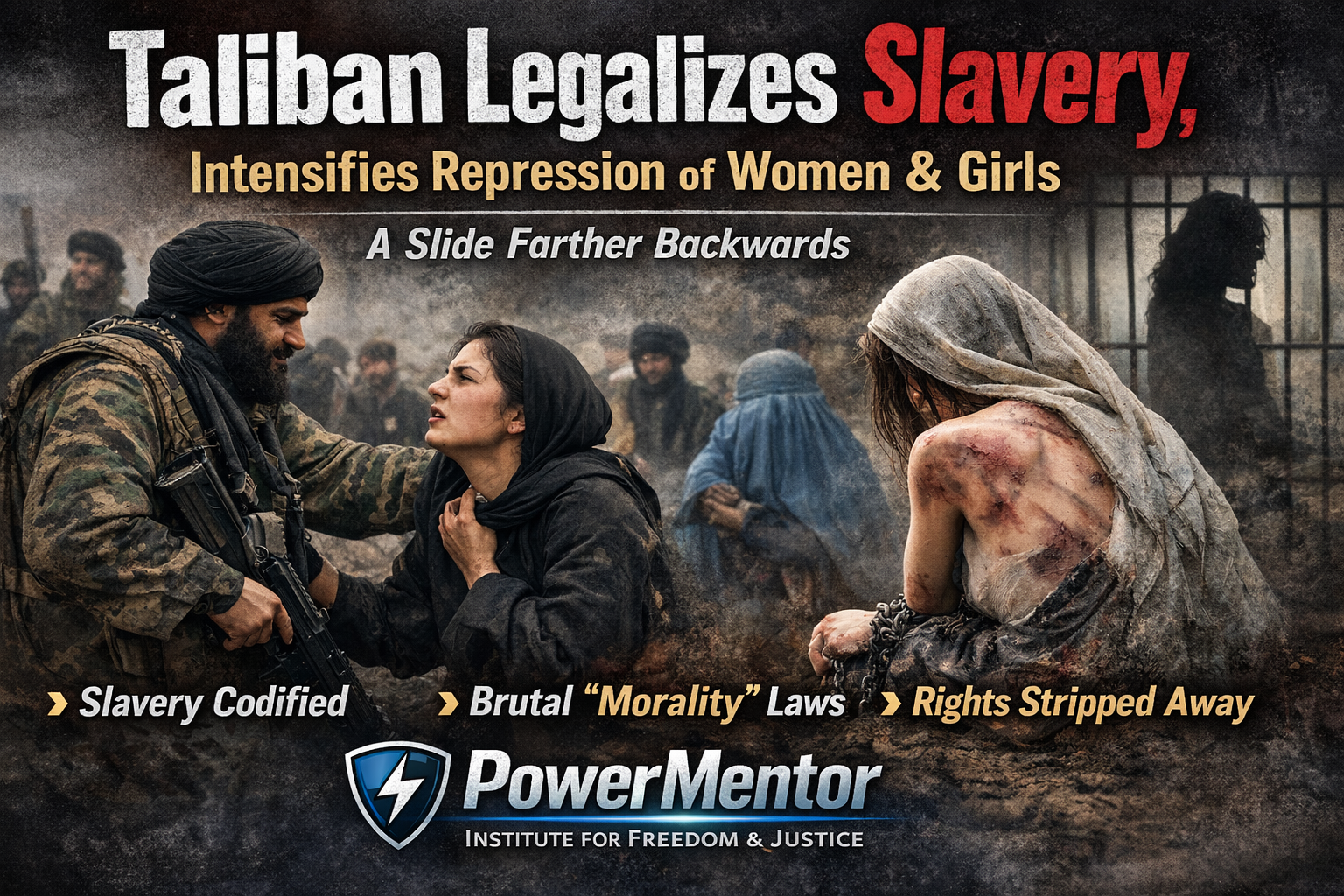
Taliban’s New Legal Code: Institutionalizing Slavery, Class Justice, and Gender Apartheid in Afghanistan
A newly approved Taliban criminal procedure code is being described by legal experts and rights groups as a dramatic escalation in Afghanistan’s collapse of basic human rights—particularly for women and girls. The concern is not only the severity of punishments, but the structure of the law itself: it reportedly normalizes slavery as a legal status, entrenches a class-based justice system, and strips away core due-process protections that normally limit state abuse.
What the Taliban changed—and why it matters
Rights monitors report the Taliban’s “Criminal Procedure Code for Courts” was signed by Taliban supreme leader Hibatullah Akhundzada and circulated for implementation nationwide. Rawadari, a human rights organization that says it obtained the code, describes it as a 119-article framework that reshapes Afghan society into a rigid hierarchy and assigns unequal penalties based on social category.
According to Rawadari and multiple analyses, the code divides people into categories (such as religious scholars, elites, middle class, and lower class), creating different consequences for the same alleged offense. In practice, this means the “rule of law” becomes the rule of status—a system designed to protect the connected and punish the vulnerable.
“Free persons” and “slaves”: the re-entry of slavery into law


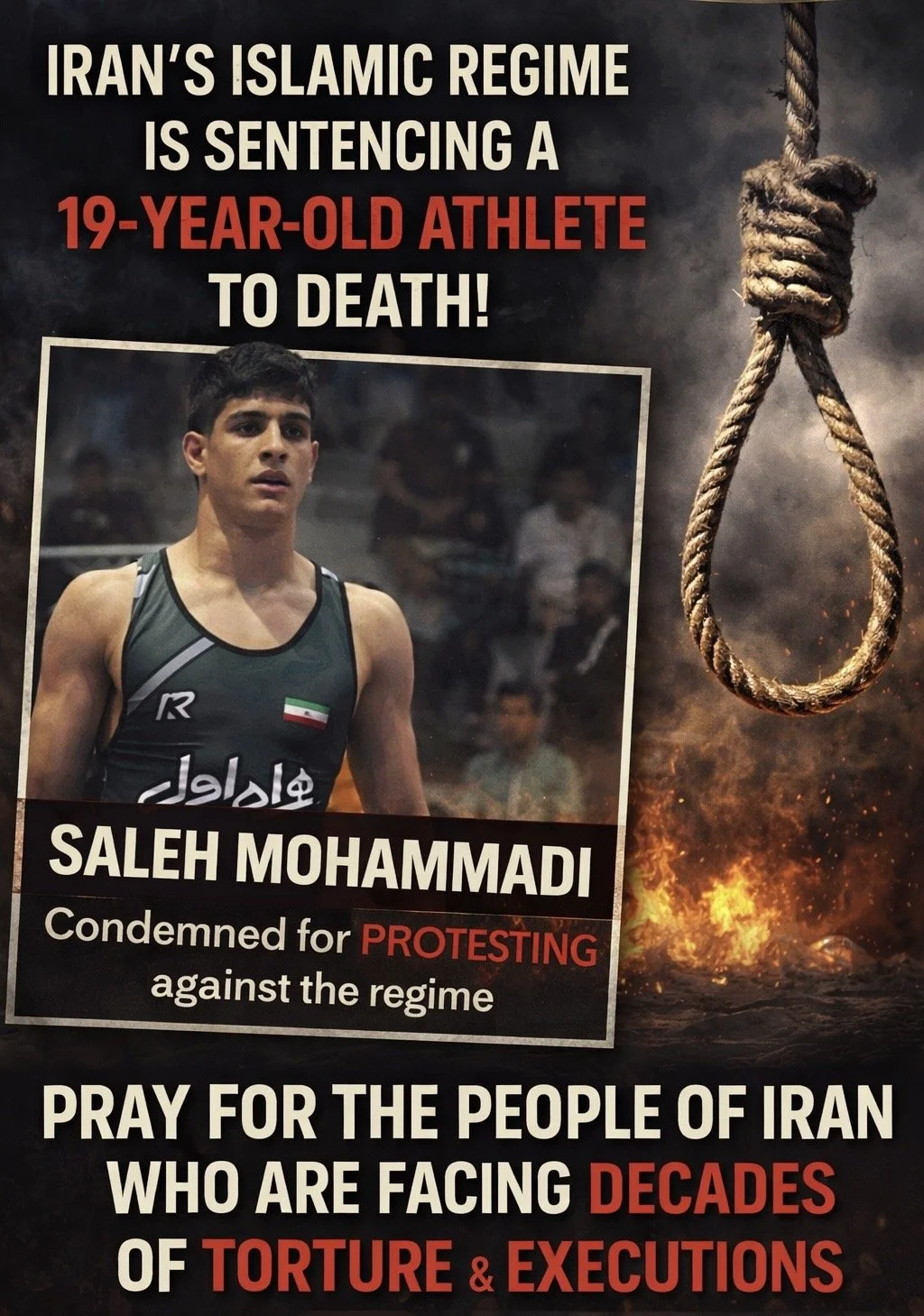
UPDATE: SALEH WAS HUNG AND KILLED TODAY MARCH 19, 2026! Condemned at 19: How Iran’s Regime Uses Death Sentences to Terrorize a Nation
Iran’s Islamic Republic has reportedly condemned Saleh Mohammadi, only 19 years old, to death. The young Iranian wrestler is being held in solitary confinement and faces imminent execution after being charged with “waging war against God”—a religiously framed accusation tied solely to his participation in anti-regime protests.
At 19, Saleh Mohammadi should be training, studying, building a future. Instead, the state is preparing a gallows.
This is not an aberration. It is how the regime governs.
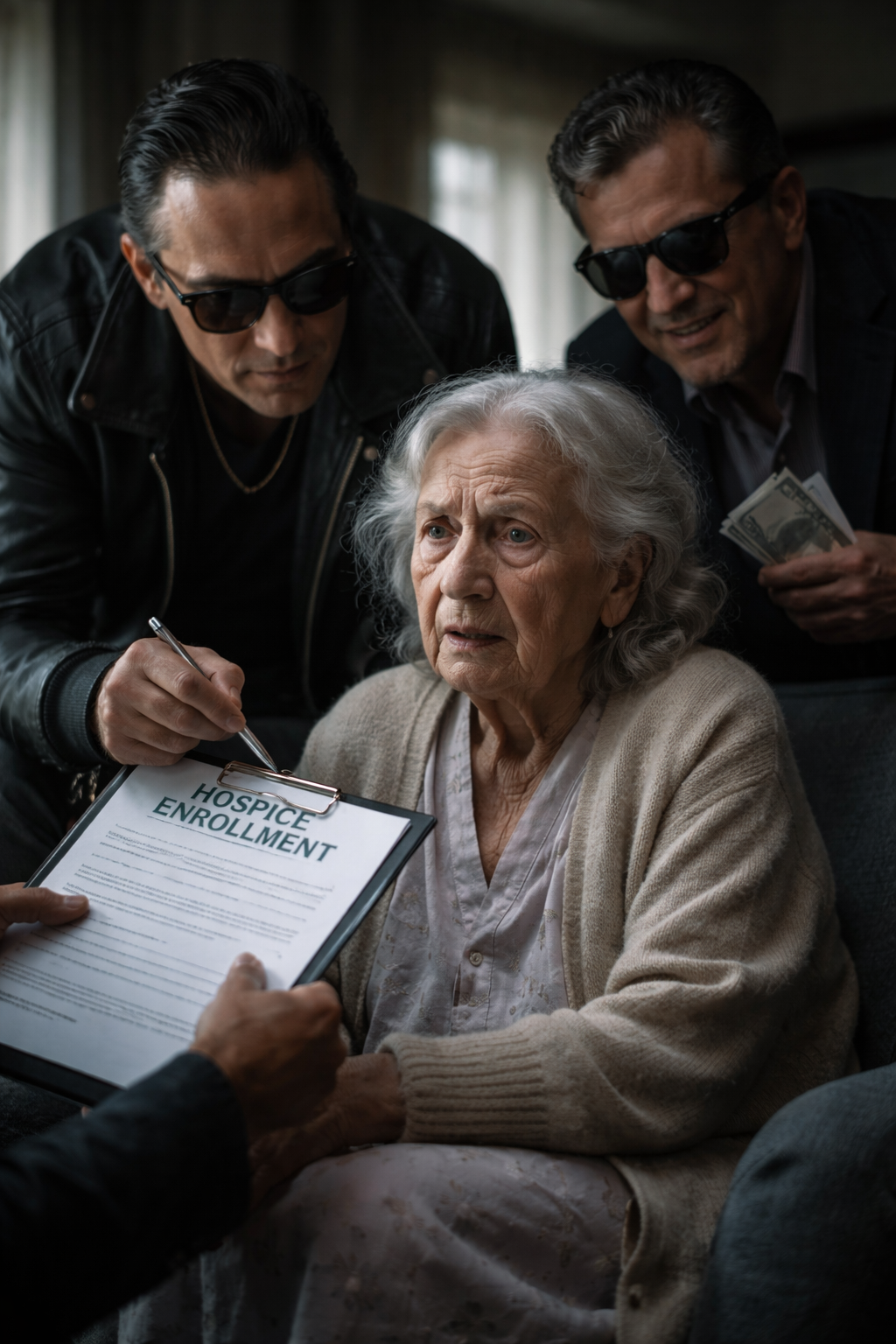
EXPOSÉ: The Van Nuys Hospice “Front” Investigation — How the Scheme Works, How Patients Get Harmed, and How to Protect Your Family
A federal investigation has put a harsh spotlight on hospice and home-care fraud in Los Angeles, after CMS Administrator Dr. Mehmet Oz posted a video exposing a dense cluster of hospices in Van Nuys Los Angeles hospice/home-care fraud totals about $3.5 billion. Oz alleged some of this activity is tied to organized criminal networks and “front” businesses.
This is not a theoretical issue. Hospice fraud can derail care in real time—because once hospice is elected, Medicare rules shift how services are covered for the terminal illness and related conditions.
What follows is a public-facing exposé and warning focused on patient protection, the fraud mechanics, and the enforcement trail—so families can recognize the playbook and avoid being trapped by deceptive enrollment.
1) What’s being exposed in Van Nuys
According to reporting, Oz’s video claims:
A four-block radius in Van Nuys contains “42 hospices”—presented as a red-flag concentration suggesting fraud.
Los Angeles hospice/home-care fraud totals roughly $3.5 billion.
Important: The fraud pattern is real, and patients are the ones who pay first—in lost time, interrupted treatment, and confusion during medical crisis.
Exposé: The China-Based Donor, the Dark-Money Pipeline, and the U.S. Activist Groups Infrastructure Now Under Federal Scrutiny
The record trail points to one central claim
A growing body of investigative reporting and formal congressional inquiries centers on a single point:
A Shanghai-based U.S. millionaire—Neville Roy Singham—financing a network of U.S. organizations that mobilize street actions and messaging campaigns, while operating through nonprofit structures that make the money difficult to trace?
Fox News Digital’s January 30, 2026 report places Singham at the center of the Minneapolis organizing ecosystem it describes, naming Party for Socialism and Liberation (PSL) and The People’s Forum as core groups active in mobilization and communication.
1) Who is Neville Roy Singham, and why investigators keep circling back to him
According to Fox News Digital, Singham is a former U.S. tech mogul who sold his IT consulting company in 2017 for $785 million and later moved to Shanghai.
The same report connects him to:
large-scale funding pipelines into U.S. nonprofits
organizational ecosystems described as “dark money” structures
entities tied to pro-CCP messaging efforts, including references to the “tell China’s story well” formulation associated with a Shanghai media operation
Separately, the House Ways & Means Committee letter cites the New York Times reporting thread about Singham and the “global web” of China-linked propaganda networks tied to U.S. nonprofit funding structures.
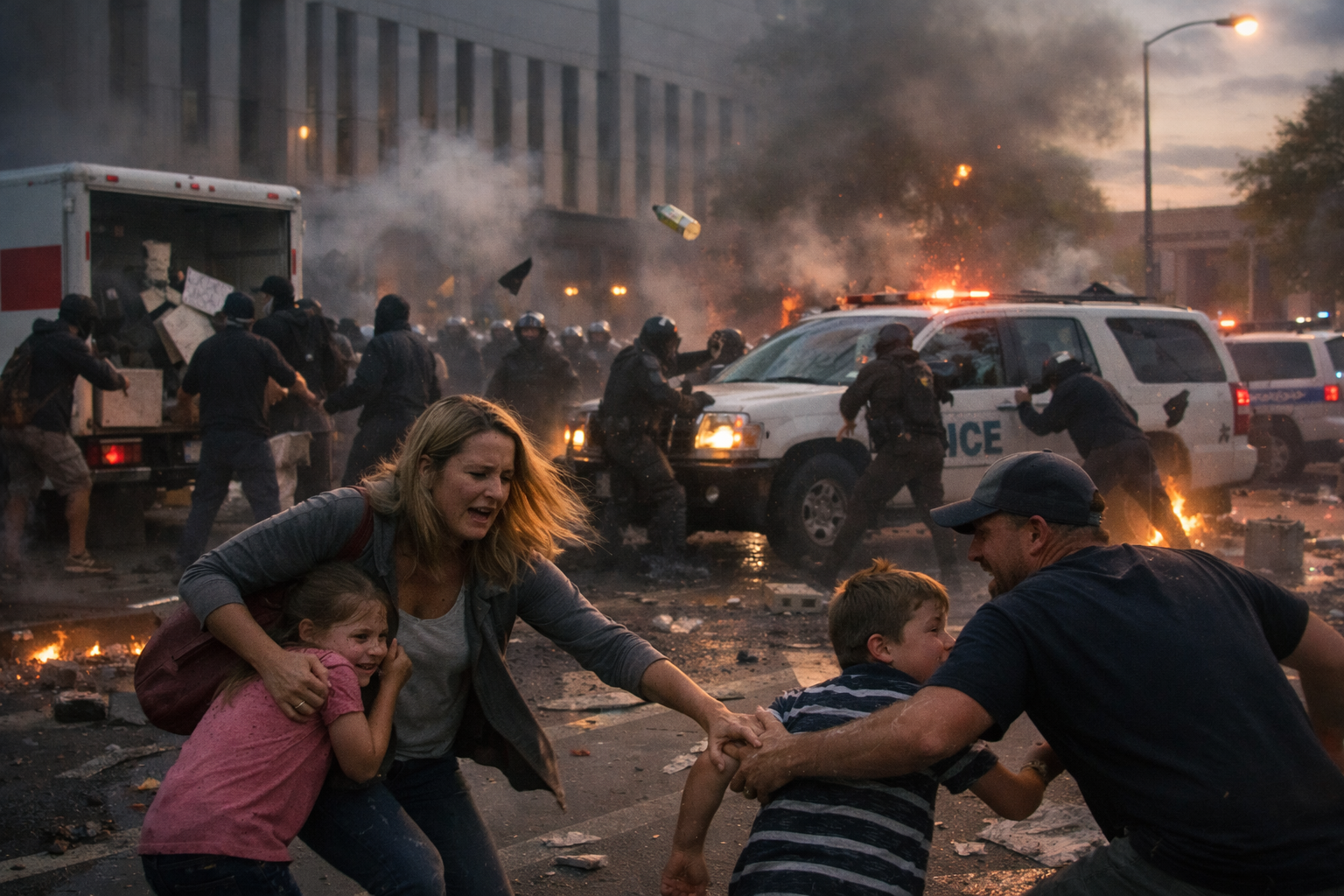
Manufactured Chaos: How So-Called “Peaceful” Protests Are Built to Escalate Into Violence
Across several U.S. cities, including Minnesota and New York, large anti-ICE demonstrations have been presented publicly as spontaneous, community-driven expressions of outrage. However, available evidence and public statements from organizers indicate these events are highly coordinated operations, organized by national ideological networks, trained in disruption tactics, and designed to provoke confrontation.
This is not a warning against lawful protest. It is a warning about risk—to public safety, to families, and to democratic stability.
These Protests Are Not Organic
Video evidence and on-the-ground reporting show professional activists arriving in rented vehicles, including U-Hauls, unloading pre-printed signs, standardized slogans, frozen water bottles used as weapons, and coordinated materials, then moving as a group between federal targets such as courthouses and hotels believed to house federal agents.

When the Worst Days Become the Job: What Policing Does to the Human Behind the Badge
Over a 20-year career, many police officers will move through hundreds of critical incidents—events most people would describe as the worst day of their lives—while the average civilian may experience only a handful of traumatic events across an entire lifetime. The difference is not just exposure. It’s what happens after the exposure.
A civilian who experiences something horrifying—an unexpected death, a violent event, a terrible accident—often has the option to go home, decompress, take time off, and process what happened. Police officers usually don’t. They clear one call and immediately roll into the next. The work doesn’t pause so the nervous system can catch up.
Researchers and law-enforcement wellness literature describe this as cumulative trauma—the stacking effect of repeated high-stress and high-threat exposure across years. Even the estimates of exposure vary depending on how “critical incident” is defined: one FBI Law Enforcement Bulletin article cites an average of 178 critical incidents across a career, compared with two to three traumatic events for the average person. Other policing organizations and training/wellness discussions cite higher “traumatic event” totals (often hundreds) using broader definitions.
The forced “switch” that never turns off
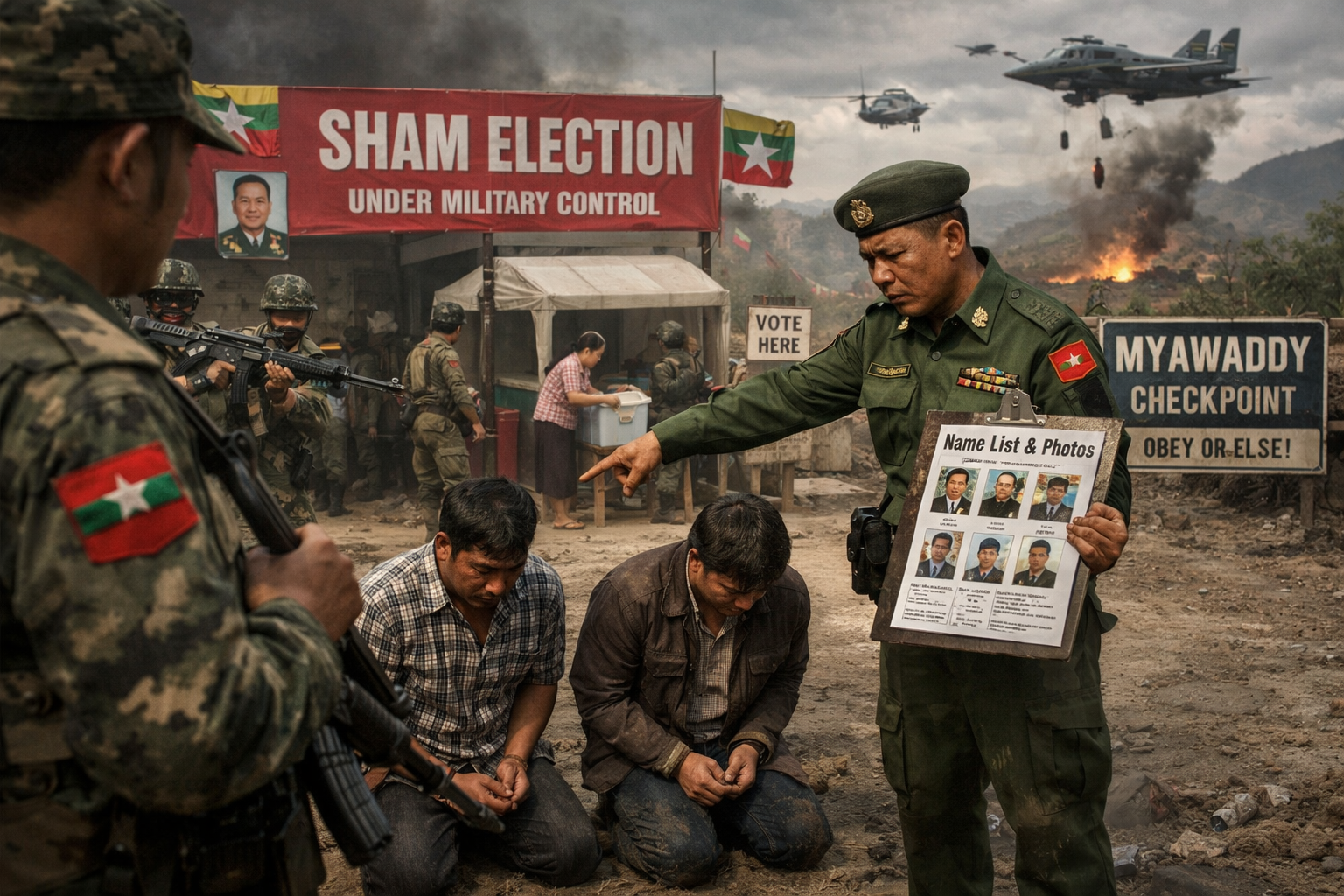
How the Burma Junta Turned “Election Security” Into Control-by-Compliance in Myawaddy
In Myawaddy, a strategic border town in Karen State (Kayin State) on the Thailand frontier, the Burma (Myanmar) military isn’t just trying to “secure an election.” It’s using election security as a pretext to force armed actors into a compliance framework—one built on identity disclosure, movement control, and punitive threats.
Open reporting in late January 2026 describes a clear pattern: the junta leans on local, semi-aligned Karen armed groups to help stabilize a critical trade corridor—then uses that relationship to demand rosters and weapon data, restrict who can operate in town, and warn of air power retaliation if its garrison is hit again.
The mechanism: “Election security” as a compliance trap
1) Deputize local armed groups, then treat them like subordinates
The Irrawaddy reports the junta pressured the DKBA and the KNU/KNLA–Peace Council (KNU/KNLA-PC)—groups that have operated in a gray zone between local power and junta accommodation—within a Myawaddy context that included election support/security dynamics.
Once groups are positioned as “election security partners,” the junta can frame demands as routine coordination rather than coercion.
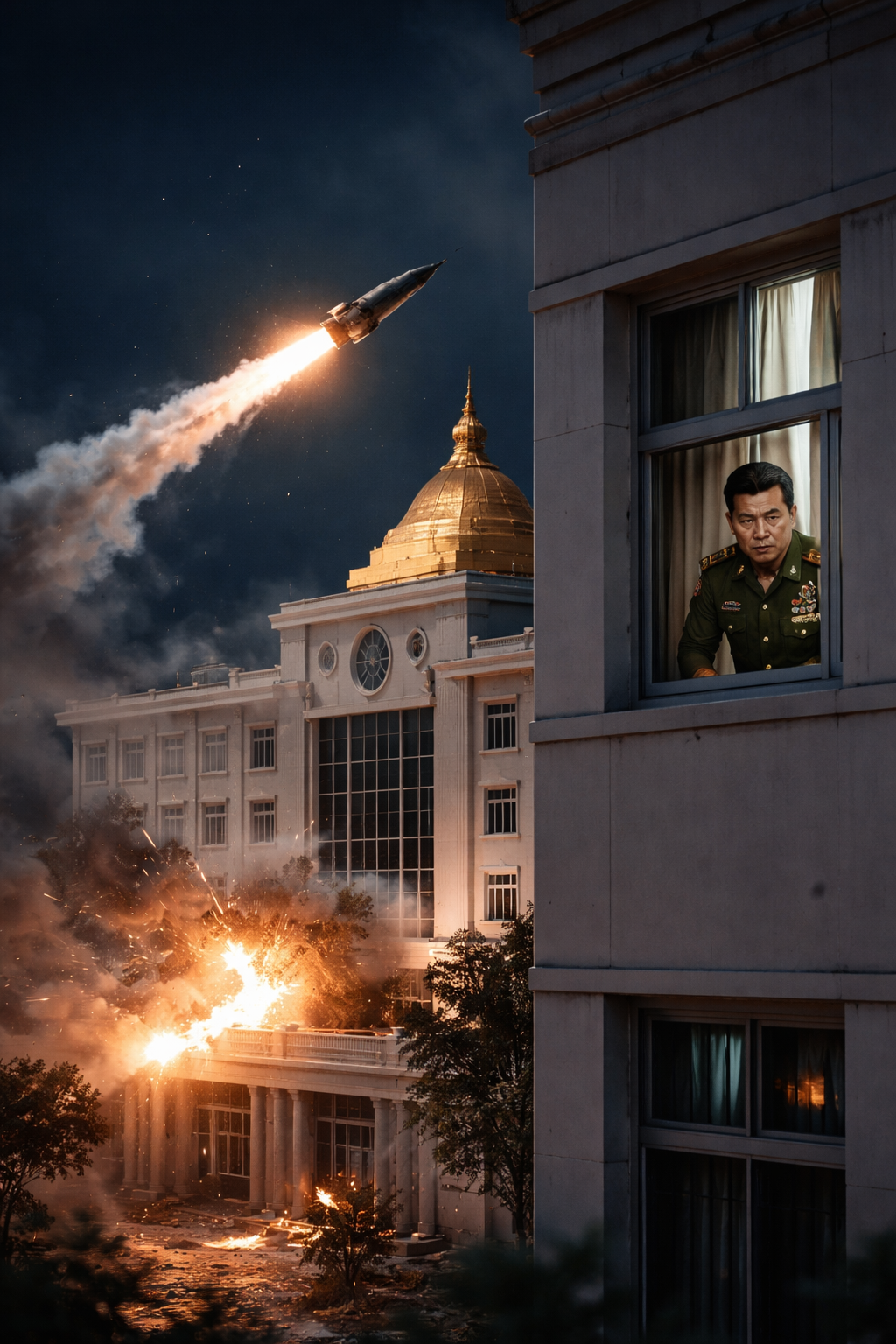
Rocket Attack Reported on Mandalay Military Headquarters Amid Claims Junta Leader Min Aung Hlaing Was Present
In the early morning hours of January 27, resistance-linked channels reported a coordinated rocket attack targeting the Burmese military’s Central Military Command (CMC) in Mandalay—one of the most heavily fortified command centers of the junta. According to claims circulating on public Telegram boards, the attack occurred around 4:30 a.m. and involved multiple resistance groups operating under a joint operation framework.
The posts allege that five 107mm short-range rockets were launched at the CMC complex, with three successfully fired, as part of what was described as “Mission 50” led by Brave Warriors for Myanmar (BWM). Other groups named in the claim include No More Dictatorship (NMD-PDF), Shadow (Mandalay), and Infinity (Ana).
Most notably, the Telegram posts assert—without independent confirmation—that Senior General Min Aung Hlaing, the head of Burma’s military junta, was temporarily staying inside the targeted facility at the time of the attack.
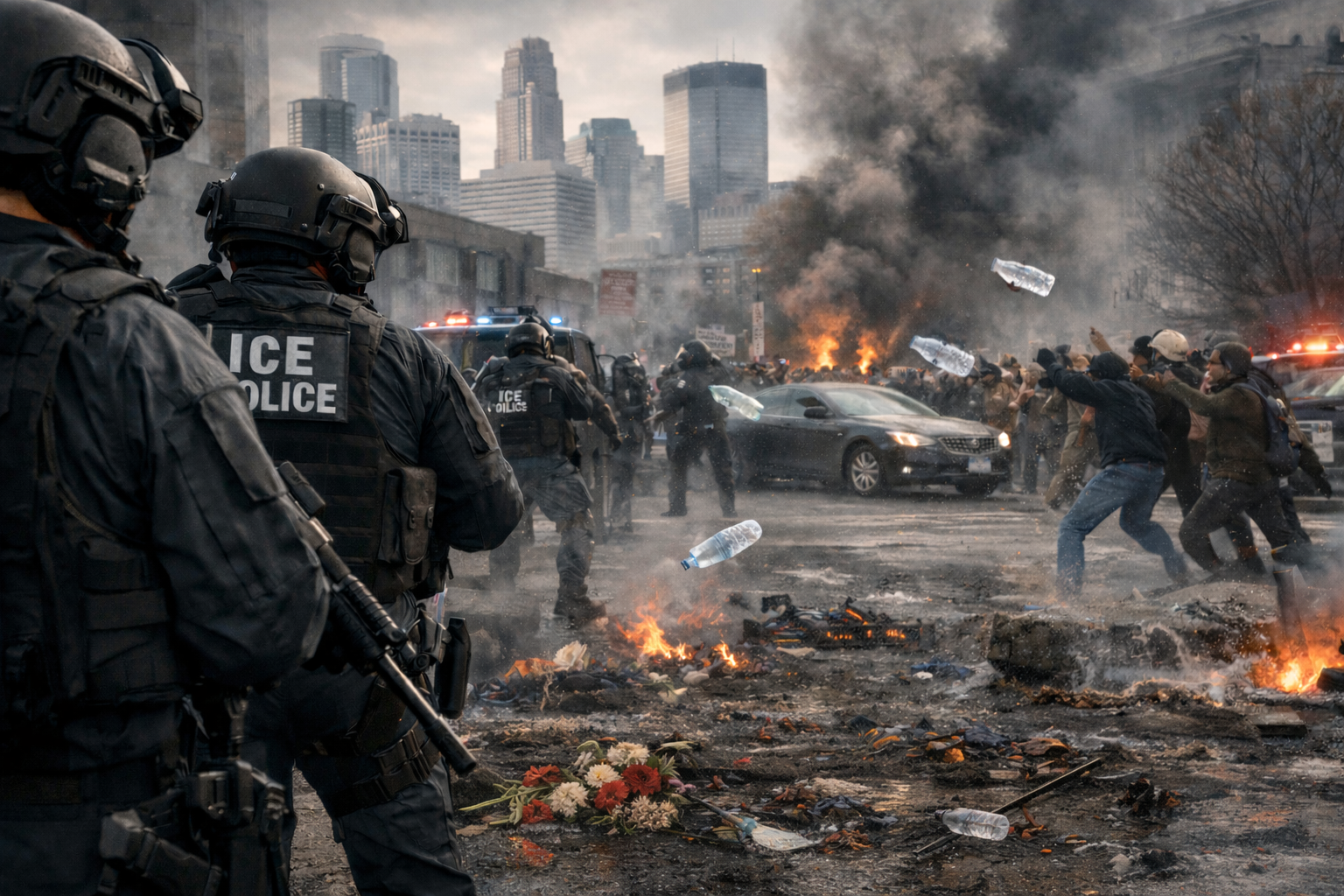
When Sanctuary Policies Collide with Federal Law: The Minneapolis ICE Confrontations and Their Consequences
The situation in Minneapolis–St. Paul, Minnesota, began with the immigration and sanctuary policies pursued by Governor Tim Walz, who established Minnesota as a sanctuary state—refusing to cooperate with federal immigration enforcement authorities. At the same time, Minneapolis Mayor Jacob Frey continued to resist efforts to have local officers assist federal authorities in identifying and detaining illegal aliens with criminal histories. This resistance contributed to an environment where federal enforcement action became inevitable, since immigration laws must be upheld and enforced. In addition, billions in fraud involving taxpayer dollars, has become part of the broader public frustration fueling demands for stronger enforcement and accountability, with many Minnesota state employees that blew the whistle while much of it was instead covered up.
Overwhelming public support for President Donald Trump was driven in large part by a desire for stricter immigration enforcement and a perception that existing policies were not effectively addressing crime and unauthorized immigration. When tensions escalated, Walz and Frey were seen by many as aligning—whether directly or implicitly—with left-leaning activist groups, such as Indivisible Twin Cities, which became increasingly aggressive in their confrontations with federal agents. Protesters engaged in behaviors that are clearly obstructive and dangerous, such as throwing objects and using vehicles to impede enforcement actions of the federal agents which is a felony.

Inside Indivisible: The Money, the Ideology, and the National Machine Powering Violent Protestors
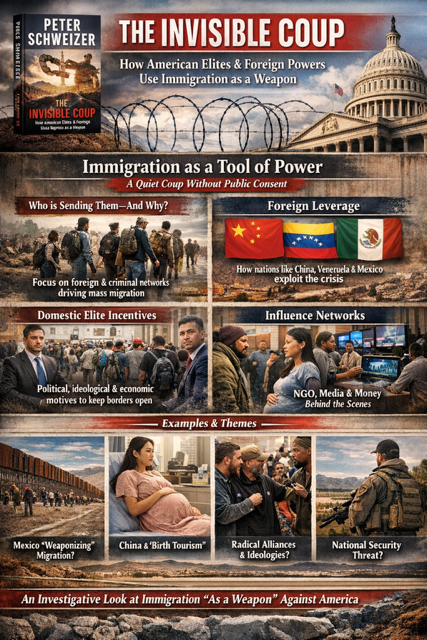
This article examines how Indivisible National and Indivisible Twin Cities functions as part of a broader national infrastructure that moves money, narratives, and logistics from elite donor networks into local political pressure campaigns. Drawing on public grant records, organizational disclosures, and the analytical framework outlined in Peter Schweizer’s The Invisible Coup, the article traces how national funding pipelines, ideological alignment, and permissive political environments converge to produce coordinated local unrest—particularly in places like Minnesota’s Twin Cities.
What emerges is not a story of isolated civic engagement, but of institutionalized activism: a system in which NGOs, philanthropy, political leadership, and street-level tactics reinforce one another while accountability becomes increasingly diffuse. Understanding this system is essential—not just to interpreting individual protests, but to assessing how modern power is exercised, quietly and at scale, outside traditional democratic checks.In The Invisible Coup, Peter Schweizer argues that the modern U.S. immigration system is not merely “broken” or overwhelmed, but is being deliberately leveraged as a tool of power. Schweizer frames this as a “coup” not in the military sense, but as a quiet shift in sovereignty and governance, where enforcement priorities, demographic outcomes, and institutional authority change without clear public consent.