

When Sanctuary Policies Collide with Federal Law: The Minneapolis ICE Confrontations and Their Consequences
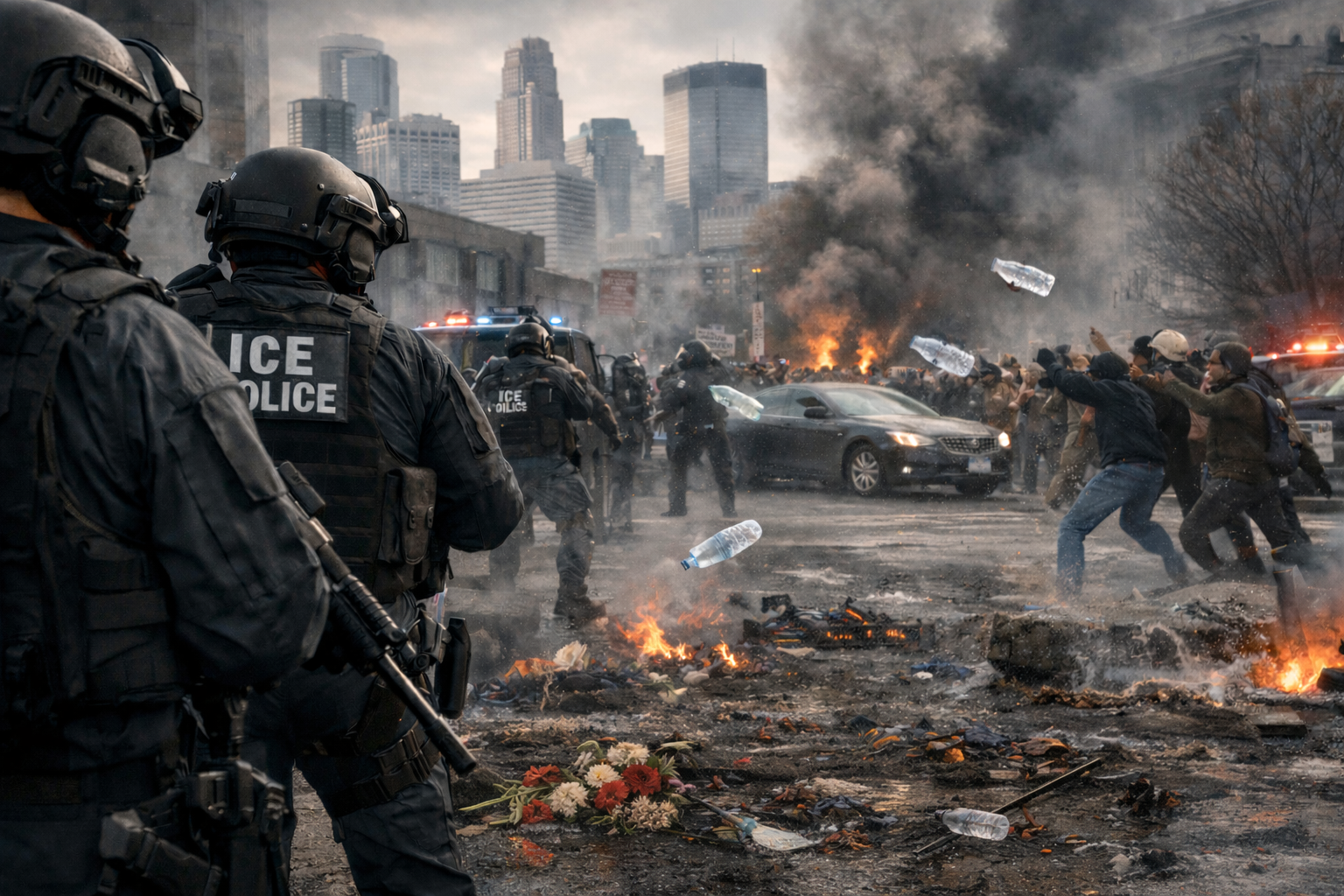
The situation in Minneapolis–St. Paul, Minnesota, began with the immigration and sanctuary policies pursued by Governor Tim Walz, who established Minnesota as a sanctuary state—refusing to cooperate with federal immigration enforcement authorities. At the same time, Minneapolis Mayor Jacob Frey continued to resist efforts to have local officers assist federal authorities in identifying and detaining illegal aliens with criminal histories. This resistance contributed to an environment where federal enforcement action became inevitable, since immigration laws must be upheld and enforced. In addition, billions in fraud involving taxpayer dollars, has become part of the broader public frustration fueling demands for stronger enforcement and accountability, with many Minnesota state employees that blew the whistle while much of it was instead covered up.
Overwhelming public support for President Donald Trump was driven in large part by a desire for stricter immigration enforcement and a perception that existing policies were not effectively addressing crime and unauthorized immigration. When tensions escalated, Walz and Frey were seen by many as aligning—whether directly or implicitly—with left-leaning activist groups, such as Indivisible Twin Cities, which became increasingly aggressive in their confrontations with federal agents. Protesters engaged in behaviors that are clearly obstructive and dangerous, such as throwing objects and using vehicles to impede enforcement actions of the federal agents which is a felony.
This growing hostility and lack of cooperation set the stage for a significant surge in federal enforcement operations. ICE and Border Patrol agents mobilized in large numbers—reported to be part of an operation referred to as “Metro Surge”—resulting in widespread unrest and conflict throughout Minneapolis due to the organized protest from Indivisible at the national level and Twin Cities. Indivisible is a left-leaning group that has stated they will fight President Trump and the Republicans’ agenda. They are anti-capitalists and have Marxist ideologies. They promote violence and resistance and also have a mechanism for paid agitators to be embedded with protestors, creating a dangerous environment.
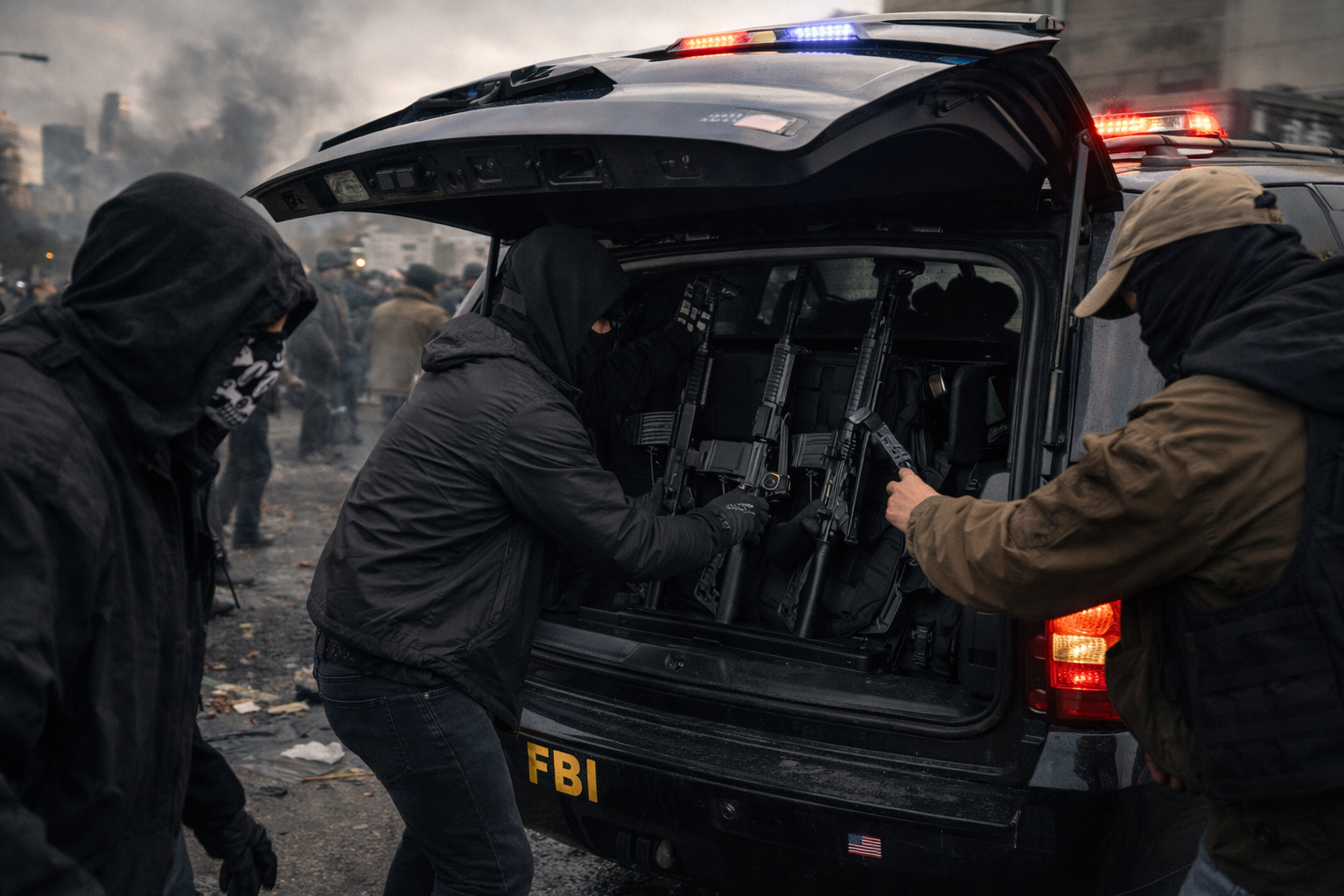
A critical contradiction in this situation is the repeated claim by organizers and participants that the demonstrations were “peaceful protests,” while documented actions on the ground showed otherwise. During the same period, individuals associated with these protests broke into law-enforcement vehicles—including a federal FBI vehicle—and stole weapons and equipment from inside. Breaking into police vehicles and removing firearms is not peaceful protest; it is criminal conduct that dramatically escalates risk for officers, protesters, and the surrounding public. These actions undermine claims of nonviolence and reinforce federal concerns that organized resistance to enforcement has crossed from protest into active obstruction and endangerment, further justifying heightened security and enforcement responses.
Fatal Encounters and Their Circumstances
Two fatal shootings occurred amid this heightened federal presence, each with distinct circumstances but both fueling deep controversy and public outcry.
Renée Nicole Good — January 7, 2026
On January 7, 2026, federal immigration agents fatally shot 37-year-old Renée Nicole Good during an enforcement operation in Minneapolis. Good’s positioned her vehicle sideways in the street to obstruct ICE agents when she drove forward, hitting an ICE agent, identified as Jonathan Ross, who then fired three shots, striking and killing her. The Minnesota governor and city officials criticized the shooting and demanded a thorough investigation, while federal authorities defended their actions as self-defense under chaotic conditions.
Alex Jeffrey Pretti — January 24, 2026
Seventeen days later, on January 24, 2026, 37-year-old Alex Jeffrey Pretti, an intensive care nurse in Minneapolis, was shot and killed by federal agents during another enforcement confrontation. Pretti was a U.S. citizen, legally licensed to carry a firearm, and was present at the scene of protests against federal immigration enforcement. He brought a handgun with two magazines—despite advice from family not to engage in risky behavior. While ICE agents were trying to arrest an illegal alien with a criminal history, Pretti engaged ICE agents to prevent them from arresting the suspect. ICE agents wrestled with him—and video footage of the encounter raised serious questions about how the shooting unfolded. Some video evidence appeared to show agents removing a firearm before shots were fired, prompting urgent calls for a full review of training, use-of-force protocols, and situational judgment.
Both incidents became flashpoints in broader debates over federal immigration enforcement, sanctuary policies, and the level of cooperation (or lack thereof) between state/local officials and federal authorities.
Escalation, Organization, and Public Reaction
As confrontations intensified, activist groups amplified their actions. What began as demonstrations evolved into organized resistance to ICE operations—using rapid communication networks and coordinated messaging to mobilize protests. Opponents of sanctuary policies framed these federal operations as violations of community safety and civil liberties, while supporters viewed the resistance as obstruction of lawful enforcement.
Public reactions ranged from local vigils and mass demonstrations in Minneapolis to protests in other cities. Participants marched and voiced anger at federal actions, chanting the names of Good and Pretti and demanding accountability for the fatal shootings.
Training, Judgment, and Investigations
Allegations surrounding the specific circumstances of the shootings—especially questions over whether agents removed firearms before firing—have intensified scrutiny on federal training standards and judgment under stress. Independent investigations and transparent review processes are necessary to determine whether established protocols were followed and what factors contributed to these lethal outcomes.
Competing Agendas and the Need for Cooperation
At the heart of the conflict are two opposing agendas. One reflects the Trump administration’s immigration enforcement priorities, backed by significant public support. The other is embodied by local and national activist groups, including Indivisible, whose rhetoric and actions have openly challenged federal enforcement strategies.
Federal agents must exercise extreme care and restraint in every enforcement operation. Escalation and volatility increase the risk of harm to civilians, protesters, and officers alike. At the same time, state and local leaders—including Governor Walz and Mayor Frey—must engage in meaningful cooperation with federal authorities to reduce friction and prevent future escalations. Without cooperation, continued confrontations and tragic outcomes remain likely.
APA References
CBS Minnesota. (2026, January 7). WATCH: Walz says Minnesota must play a role in investigation into ICE’s killing of Renée Good. PBS. Retrieved from https://www.pbs.org/newshour/politics/watch-walz-says-minnesota-must-play-a-role-in-investigation-into-ices-killing-of-renee-good
Minnesota ICE shootings. (2026). Wikipedia. Retrieved January 27, 2026, from https://en.wikipedia.org/wiki/Minnesota_ICE_shootings
Pretti, A. J. (2026). Killing of Alex Pretti. Wikipedia. Retrieved January 27, 2026, from https://en.wikipedia.org/wiki/Killing_of_Alex_Pretti
Renee Good. (2026). Killing of Renée Good. Wikipedia. Retrieved January 27, 2026, from https://en.wikipedia.org/wiki/Killing_of_Ren%C3%A9e_Good
2026 Anti-ICE Protests in the United States. (2026). Wikipedia. Retrieved January 27, 2026, from https://en.wikipedia.org/wiki/2026_Anti-ICE_Protests_in_the_United_States
