

The PowerMentor Institute for Freedom and Justice explores leadership, freedom, and democracy issues with a commitment to those seeking freedom and self-determination, empowering those in regions with totalitarian control. We conduct thorough research using AI and other tools to provide the most accurate and insightful information available.

Japan’s Stringent Immigration Model—and Why It Has Avoided the Religious-Demographic Flashpoints Seen Elsewhere
Japan is widely recognized for maintaining highly managed immigration: defined legal categories, strict status controls, and comparatively lower long-run immigration intensity than most peer countries. The OECD summarizes Japan’s position clearly: Japan has one of the lowest foreign-born shares in the OECD—2.2% in 2021, versus 10.4% across the OECD. OECD
This approach matters because many of the immigration stresses now affecting the United States, parts of Europe, and other Western democracies tend to emerge when inflows outpace governance capacity—border control, asylum adjudication, interior enforcement, housing, and integration systems.
1) Japan channels entry through narrow, rule-based lanes
Japan’s inflows are strongly structured around work and study pathways. The OECD reports that approximately half of immigrants living in Japan are there for work or study, with major shares falling into high-skilled categories, trainees, and international students. OECD
Policy strength: A status-driven system is easier to govern than “mixed flows” where irregular entry, humanitarian claims, and labor migration blend together and create long-term limbo.

Qatari Propaganda, Pivots, and the Battle for American Hearts
A fact-focused deep dive on Qatar’s influence operations in the U.S.—and what can and cannot be proven about “proxy” commentators
1) What Qatar can reliably be shown to do in the U.S.
A. Qatar runs large-scale, legal influence operations (lobbying + PR)
Qatar’s influence footprint in Washington is not a conspiracy theory; it’s a standard modern-state playbook: FARA-registered firms, relationship cultivation, and message placement. The Quincy Institute describes Qatar’s spending through FARA-registered lobbyists/PR firms as on the order of hundreds of millions since 2016. Quincy Institute
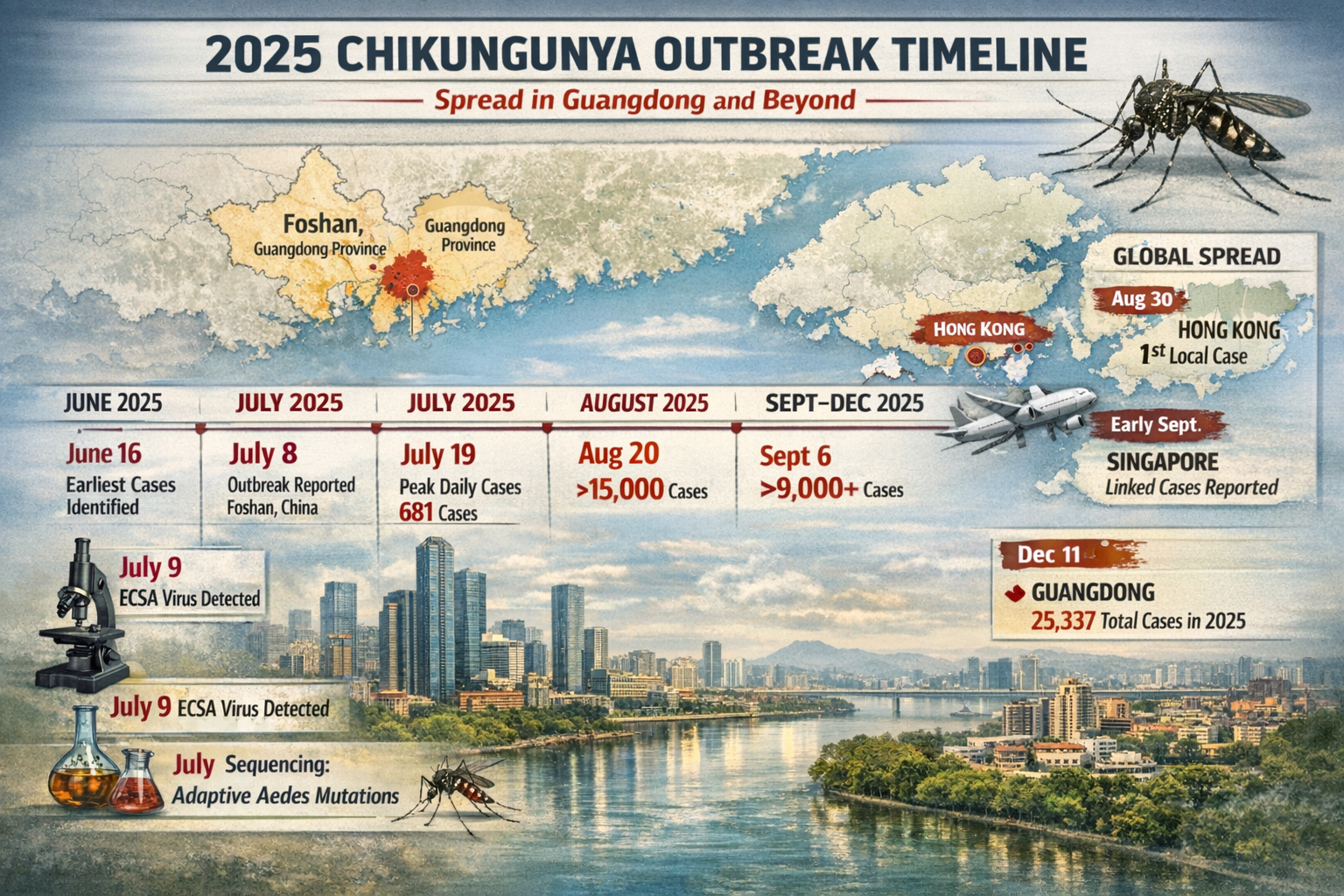
Chikungunya in Southern China (2025): Foshan’s Explosive Outbreak and Global Public Health Implications
Public Health Alert Snapshot (as of December 19, 2025)
A large chikungunya outbreak emerged in Foshan City (Shunde District), Guangdong Province, in summer 2025 and rapidly became the largest documented chikungunya outbreak in China to date. China CDC Weekly
Clinical illness has largely matched classic chikungunya—acute fever + severe joint pain + rash—with reports from early outbreak investigations indicating mild disease overall and no recorded deaths in the Foshan case series. China CDC Weekly
1) What happened in Foshan—and why it spread so fast

David, the Karen People, and the Power of Covenant Friendship
A group of Karen friends and I went to see the new movie David. We expected a powerful retelling of a familiar biblical story—but we didn’t expect how personal it would feel.
As the film unfolded, scene after scene echoed themes the Karen people know deeply: strength formed in hidden places, courage rising against overwhelming odds, identity preserved through hardship, and the kind of loyal friendship that doesn’t just comfort you—it helps you survive. Walking out of the theater, we kept circling back to the same thought: David’s story isn’t only ancient history. It’s a mirror.
What follows are the key observations that struck us most—connections between David’s struggles and the Karen journey, the role of covenant friendship like David and Jonathan, and even how meaningful cultural clothing can serve as a visible banner of identity when pressure tries to erase it.

Brown University shooting → “Claudio Neves Valente” link, timeline, comms failures, and lessons learned (Expose + Debrief)
What’s now confirmed (as of Thu, Dec 18, 2025)
Authorities have identified Claudio Neves Valente (48, Portuguese national; former Brown physics graduate student) as the suspect in the Dec 13 Brown University mass shooting and have also linked him to the fatal shooting of MIT professor Nuno F. G. Loureiro in the Boston area days later. Valente was found dead from a self-inflicted gunshot wound in a Salem, New Hampshire storage unit. Reuters The Washington Post
Investigators also say Valente and Loureiro attended the same university in Lisbon, Portugal—a “tie” now publicly acknowledged in major reporting. Reuters+1
1) Timeline (what happened, and what the public heard)
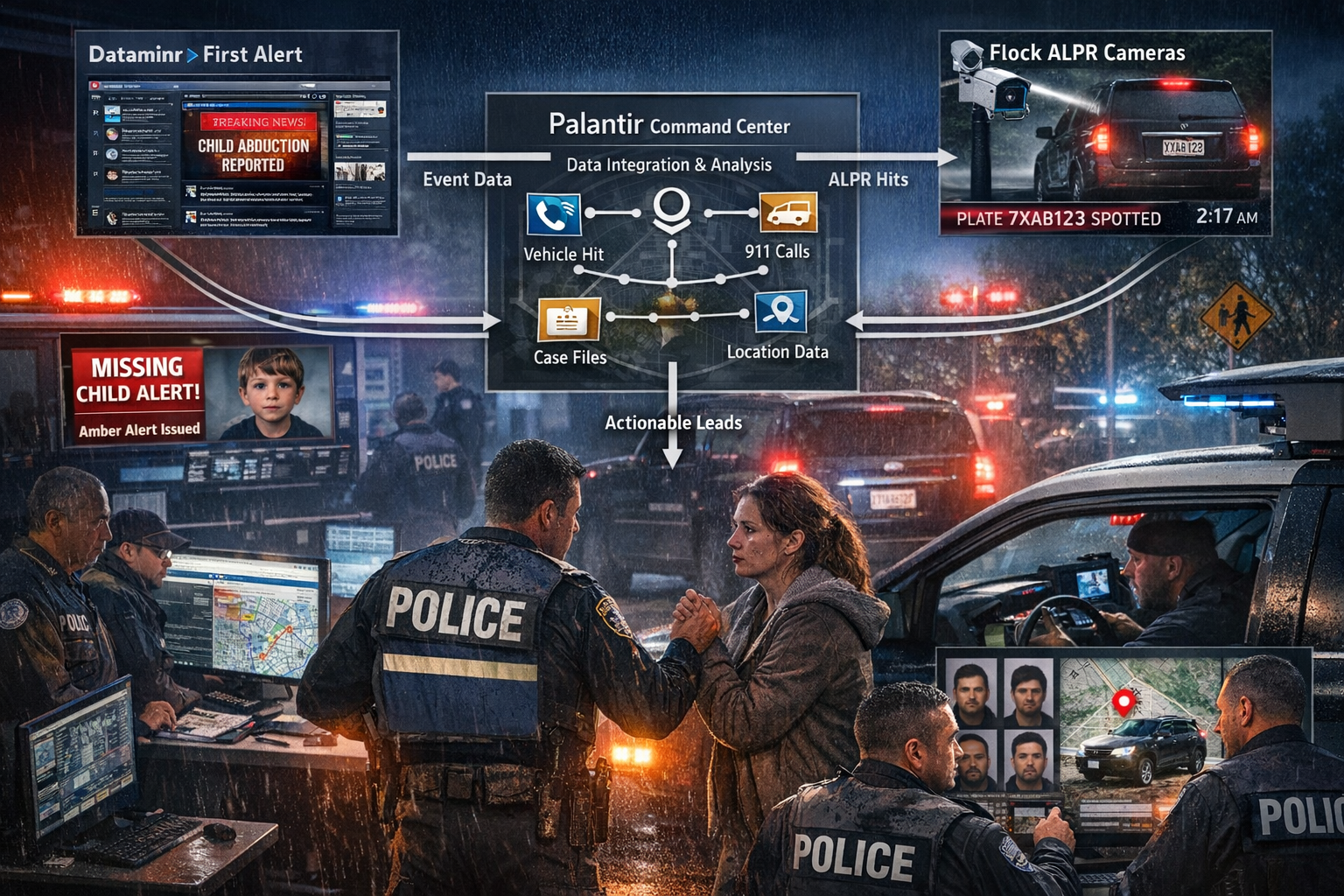
The “Digital Dragnet” Debate: How Palantir, Flock ALPR, and Dataminr Can Help Save Lives—and How They Can Also Track Everyone
It’s 2:13 a.m. A 911 call comes in: a child is missing. The family can only say, “A dark SUV left fast.”
Within minutes, three kinds of technology can work together:
Dataminr First Alert helps emergency teams spot breaking events fast (from large volumes of public information and signals) so they can move sooner, not later. Dataminr
Flock Safety ALPR cameras capture license plates + time + location and can trigger alerts when a plate matches a “hot list.” Flock says LPR data is hard-deleted after 30 days by default (unless local law/policy sets something different). Flock Safety Flock Safety
Palantir-style “data fusion” platforms (what Palantir markets in Foundry/Gotham) can pull many systems into one view, track what staff are doing, and keep audit trails of actions inside the platform. Palantir
That is the promise: faster clues, faster coordination, faster outcomes.
Now the concern: the same stack can become a location-history machine—the kind that quietly builds a map of where everyday people drive, day after day.

What the Megachurch Collapse Exposed—and Why Many Christians See God’s Hand in It
For decades, megachurches were the public face of American Christianity: arena seating, stadium-scale worship, celebrity pastors, bookstore empires, conference circuits, and a weekly experience polished to rival professional entertainment. They weren’t a fringe phenomenon either—among roughly 370,000 U.S. congregations, the Hartford Institute has tracked well over a thousand megachurches, depending on definition and year of the database. Wikipedia Hartford Institute macdonald.hartsem.edu
And then something happened that many leaders did not think could happen: the doors shut in 2020, people adapted, and a meaningful share never returned—not with the same frequency, not with the same loyalty, and not with the same willingness to build their spiritual lives around a weekend “event.” Broad surveys show a measurable post-pandemic drop in attendance patterns (even if the decline is modest in some datasets): Pew found a decrease in the share of adults attending at least monthly and that one-in-five Americans said they now attend in person less often than before the pandemic. Pew Research Center Gallup similarly reported a lower post-2020 average for weekly attendance compared to the pre-pandemic years. Gallup.com

When Cell Signals Meet AI: How Investigators Can Detect the “Outlier” After an Active-Shooter Event
After an active-shooter attack, investigators face a brutal clock: identify the attacker, predict the escape route, and stop the next act of violence. In that early window—when witnesses are traumatized, descriptions conflict, and the suspect may already be miles away—one of the most powerful sources of direction is the modern cellular network.
Every phone on a cellular network produces a “connectivity trail.” When combined with AI that can identify unusual movement patterns, that trail can highlight the one device trajectory that doesn’t look like everyone else’s: the “outlier” who flees the scene, travels quickly, and stops somewhere low-profile—like a motel.
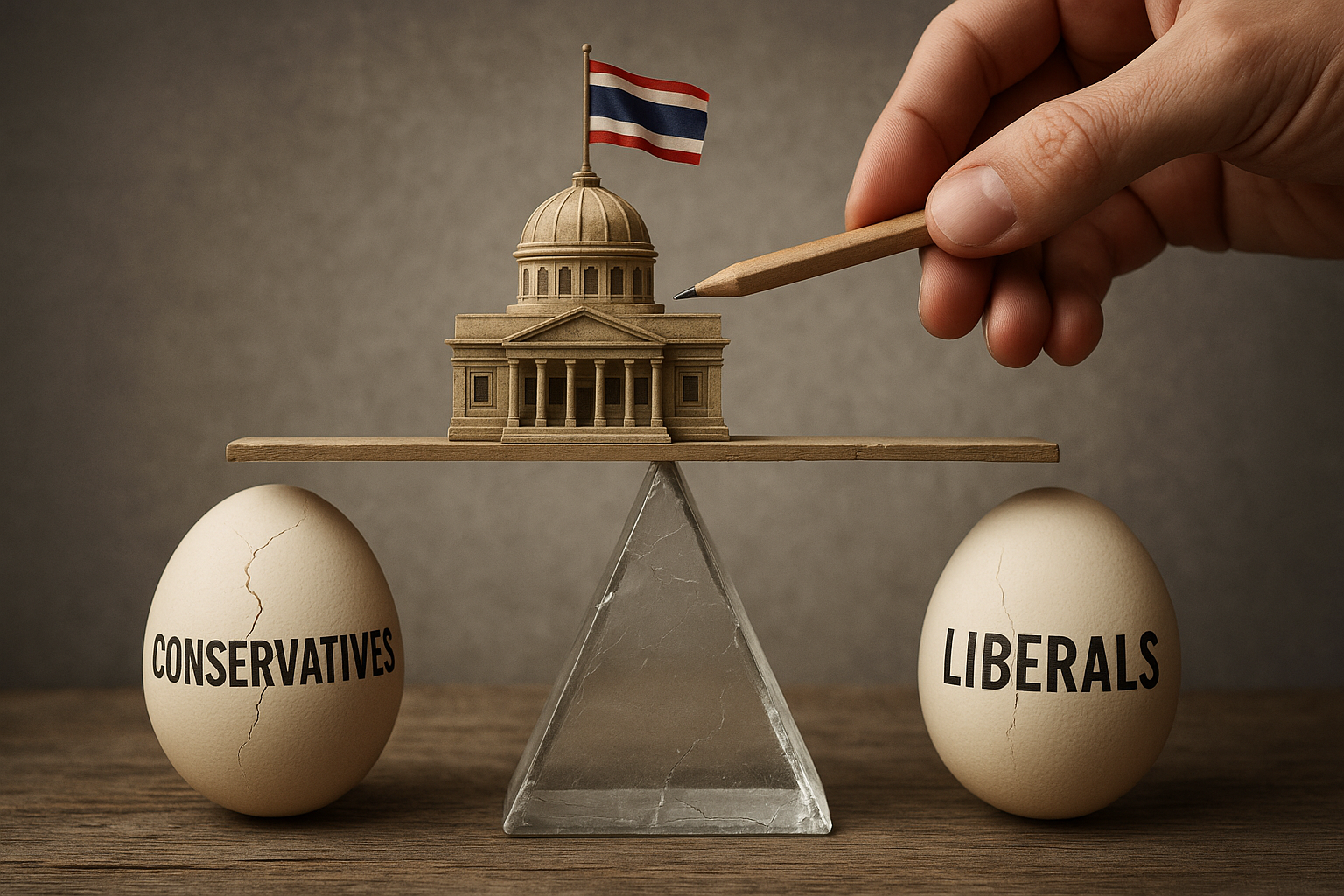
Thailand dissolves parliament again: what it means now, and what history says happens next
On December 11–12, 2025, Thailand’s prime minister Anutin Charnvirakul asked for — and received — royal approval to dissolve the House of Representatives, triggering an early general election within 45–60 days and placing the government in caretaker mode. Reuters Government Public Relations Department
This isn’t a “coup” by itself. In Thailand’s system, it’s a constitutional reset button: end the sitting House, send the country to elections, and try to rebuild a workable majority. But in Thailand, dissolutions often happen inside deeper power struggles, so what follows depends less on the paperwork and more on whether the streets, courts, and elite institutions accept the next outcome.
1) What “dissolving parliament” actually does (in plain terms)

The Outrage Machine: How NCI, Narcissistic Power Grabs, and Political Rhetoric Are Turning Americans Against Each Other
If someone wanted to break a country from the inside, they wouldn’t start with tanks.
They’d start with:
Victimhood narratives
Outrage on a loop
Demonized enemies
And finally, permission for violence
You’re watching this play out right now in the United States:
from attacks on ICE facilities and bullets literally marked “ANTI-ICE,”
to the assassination of Charlie Kirk,
to National Guard soldiers shot in Washington, DC,
and a background of ongoing violence in cities like Chicago and Los Angeles. Facebook
Behind the chaos is a playbook—a fusion of:
Neuro-Cognitive Intelligence (NCI) and its PCP model (Perception → Context → Permission)
The classic four-step path of psychopathic narcissists to dictatorship
And a weaponized media environment that rewards rage and division

When Weed Turns Deadly: Inside Cannabis Hyperemesis Syndrome and Why the World Just Gave It an Official Name
A “mysterious vomiting disorder tied to long-term marijuana use” has just been formally recognized by global health officials. That disorder is cannabis (cannabinoid) hyperemesis syndrome (CHS)—a condition that can push otherwise healthy people into repeated emergency room visits, severe dehydration, and even kidney failure. With a new World Health Organization (WHO) diagnostic code and alarming new data showing skyrocketing emergency-room cases, CHS has moved from medical curiosity to urgent public-health warning.
What Exactly Is Cannabis Hyperemesis Syndrome?

A War Fought on Two Fronts: How Ukraine’s Deep-Rooted Corruption Collides With a $100 Billion Flood of Western Aid
The resignation of Andriy Yermak, President Volodymyr Zelenskyy’s powerful chief of staff and widely seen as his “right-hand man,” after a raid by Ukraine’s anti-corruption police is more than a personnel change. It is the latest shockwave in a $100 million kickback scheme centered on Energoatom, Ukraine’s state nuclear energy company, uncovered by the National Anti-Corruption Bureau of Ukraine (NABU) in “Operation Midas.” Reuters Al Jazeera
Investigators allege that private companies were forced to pay 10–15% kickbacks to politically connected “overseers” simply to keep contracts and get paid, with illicit funds laundered through a web of shell firms and intermediaries tied to figures close to the presidential circle. Al Jazeera Carnegie Endowment
Eight suspects have already been charged, including a businessman described as the mastermind, while Ukraine’s justice and energy ministers have resigned amid public outrage. The Washington Post Al Jazeera
Yermak insists he is innocent and has not been formally charged, but the optics are devastating: the president’s closest aide has stepped down in the middle of war because anti-corruption officers showed up at his door. Reuters

Why Ending TPS for Burma Is Built on False Claims: The Elections Are a Sham and the Crisis Is Worsening
In announcing the termination of Temporary Protected Status (TPS) for Burma (Myanmar), DHS Secretary Kristi Noem claimed that “the situation in Burma has improved enough that it is safe for Burmese citizens to return home” and went so far as to describe the junta’s upcoming elections as “free and fair,” praising the role of the Burma (Myanmar) military and China in brokering “successful ceasefire agreements.”
These assertions are flatly contradicted by the best available evidence from the United Nations, human rights organizations, religious freedom monitors, and even U.S.-linked policy institutions. Far from improving, Burma is in a deepening civil war, humanitarian collapse, and religious persecution crisis—and the elections being prepared by the junta are widely described as a sham.

US New Rules About TPS for Burma (Myanmar): What It Means
The U.S. government has decided to end Temporary Protected Status (TPS) for people from Burma (Myanmar).
This change will start on January 26, 2026.
Here is what this means in very simple words.
What Is TPS?
TPS is a temporary program that lets people from certain countries:
stay in the United States for a short time,
get permission to work,
and stay safe if their home country is too dangerous.
TPS does not give a green card.
Who Will Be Affected?
Only people from Burma who are living in the U.S. with TPS will be affected.
If you only have TPS, this change is about you.

The Opportunity of a Lifetime: Partnering With Gen Z to Shape What Comes Next
What do all of you think — Gen Z is disengaged?
Let me tell you something.
Do you know that Gen Z reports the highest levels of loneliness, disconnection, and lack of purpose of any generation ever recorded?
Yet if I walk into a room and see every young adult on their phone, nobody says a word — because we’ve normalized disengagement.
Do you know that the leading cause of Gen Z burnout is not laziness, and it’s not screen time?
It’s the absence of meaningful connection, mentorship, and belonging.
A young person can be surrounded by thousands of digital “friends”…
and still feel completely alone.

Facade of Freedom: Inside Burma’s Military-Staged Election
In the wake of yet another manipulated electoral process, the military rulers of Burma (Myanmar) are advancing what amounts to a sham election—a cynical ploy to cloak authoritarian rule in the veneer of democracy. This article unpacks how the generals orchestrated this charade, exposing the web of fraud, coercion and violence underpinning a vote that is anything but free and fair.
1. The context: Coup, emergency rule and the erosion of democracy
On 1 February 2021, the military via the Tatmadaw ousted the democratically elected government after the National League for Democracy (NLD) won a mandate in the 2020 election. Wikipedia The generals then repeatedly extended the state of emergency—using it to suspend civil liberties, defend their hold on power, and delay a genuine electoral return. Wikipedia The Guardian
Bold truth: The so-called return to elections is not a restoration of democracy but a manufactured legitimacy project.

Burma’s Collapse Is Now America’s Problem: How a Failing State Became the Global Capital of Organized Crime—and a Direct Threat to U.S. Citizens
Burma (Myanmar) has crossed a threshold. What began as a domestic political crisis after the 2021 coup has evolved into something far more dangerous: a failed state whose criminal networks now directly target and harm Americans at scale. Recent U.S. congressional testimony stated it with unusual clarity: Burma is rapidly becoming the world’s center of organized crime, with more than half its population in poverty, 3.6 million internally displaced, and millions more fleeing across borders.
But the core message of the hearing was even more urgent:
junta-affiliated scamming networks inside Burma are stealing billions of dollars a year from Americans, money that flows directly into the pockets of military leaders and transnational crime syndicates.
This is no longer a distant humanitarian tragedy. It is a direct, measurable threat to American households, American retirees, American small businesses, and American financial security.

THE DARK HEART OF KK PARK: THE GLOBAL ORGAN-HARVESTING MACHINE HIDING IN PLAIN SIGHT
A multi-year investigation into the Southeast Asian cyber-slavery city that now stands at the center of the world’s most horrifying human-trafficking operation
For years, human-rights workers, escaped trafficking victims, and investigative journalists have warned that KK Park, the infamous cyber-scam megacity on the Myanmar–Thailand border, was far more sinister than a forced-fraud factory. Their testimonies were disturbing, fragmented, and dismissed as “rumors.”
But in 2025, everything changed.
A massive raid by the Myanmar military, followed by a chaotic collapse of the compound’s internal security, triggered a mass escape of nearly 700 victims into Thailand. Among them were survivors who had seen the darkest truth inside KK Park with their own eyes:
KK Park operated a medical complex where trafficked victims were surgically stripped of their organs and left to die.
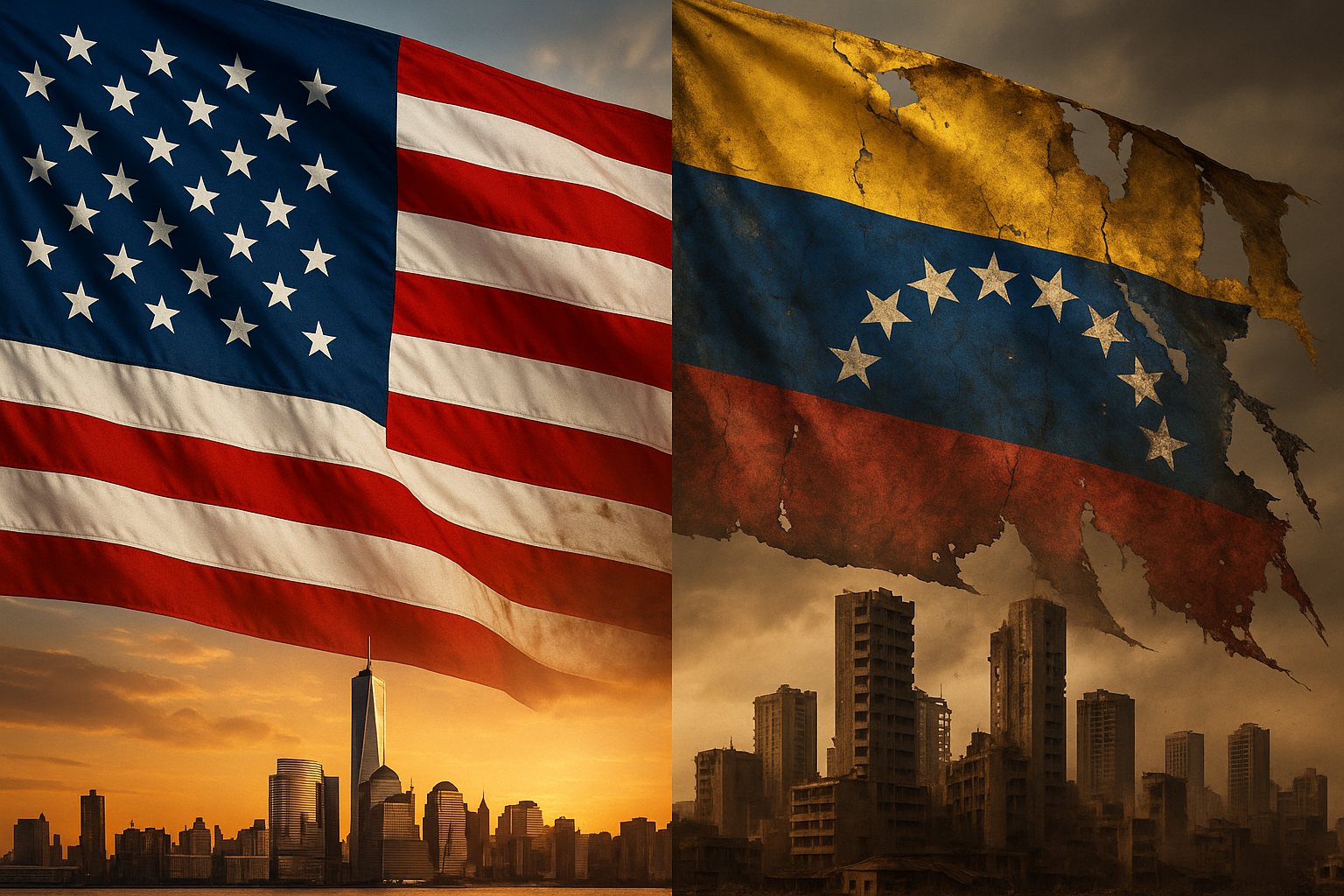
Two Roads for America: Renewal or Ruin — As War Clouds Gather Over Venezuela and Nigeria
America stands at a defining moment. Two paths lie ahead.
One restores strength — a united, disciplined, America First republic standing tall against tyranny.
The other leads to decay — a Venezuelan-style collapse, where inequality, populism, and propaganda tear apart the foundations of freedom.
And just as these choices sharpen at home, the world tightens its hold: the United States readies strikes in Venezuela and prepares an intervention in Nigeria. These actions may either affirm America’s resolve — or expose its internal fractures.

Co-Opted Voices: How Foreign Powers and Ideological Networks Are Undermining America from Within
From Europe’s unraveling to the U.S. front line—how Qatar, China, Iran, and their allies are using influence, money, and media to fracture democracy
Introduction: The Warning from Across the Atlantic
Europe’s moral crisis did not begin overnight. For years, Jewish communities and democratic institutions warned of foreign ideological infiltration, antisemitism, and cultural decay creeping into universities, political systems, and civil society. Those warnings were dismissed—until it was too late.
Now, that same contagion is spreading to the United States, where foreign governments, extremist ideologies, and compromised media figures are manipulating public discourse to undermine the nation’s democratic foundations. The objective is not simply to alter U.S. foreign policy—it is to weaken America’s unity, moral confidence, and global leadership.
As Europe’s crisis shows, when democratic societies abandon vigilance, corruption enters not through invasion but through invitation.