

What the Megachurch Collapse Exposed—and Why Many Christians See God’s Hand in It
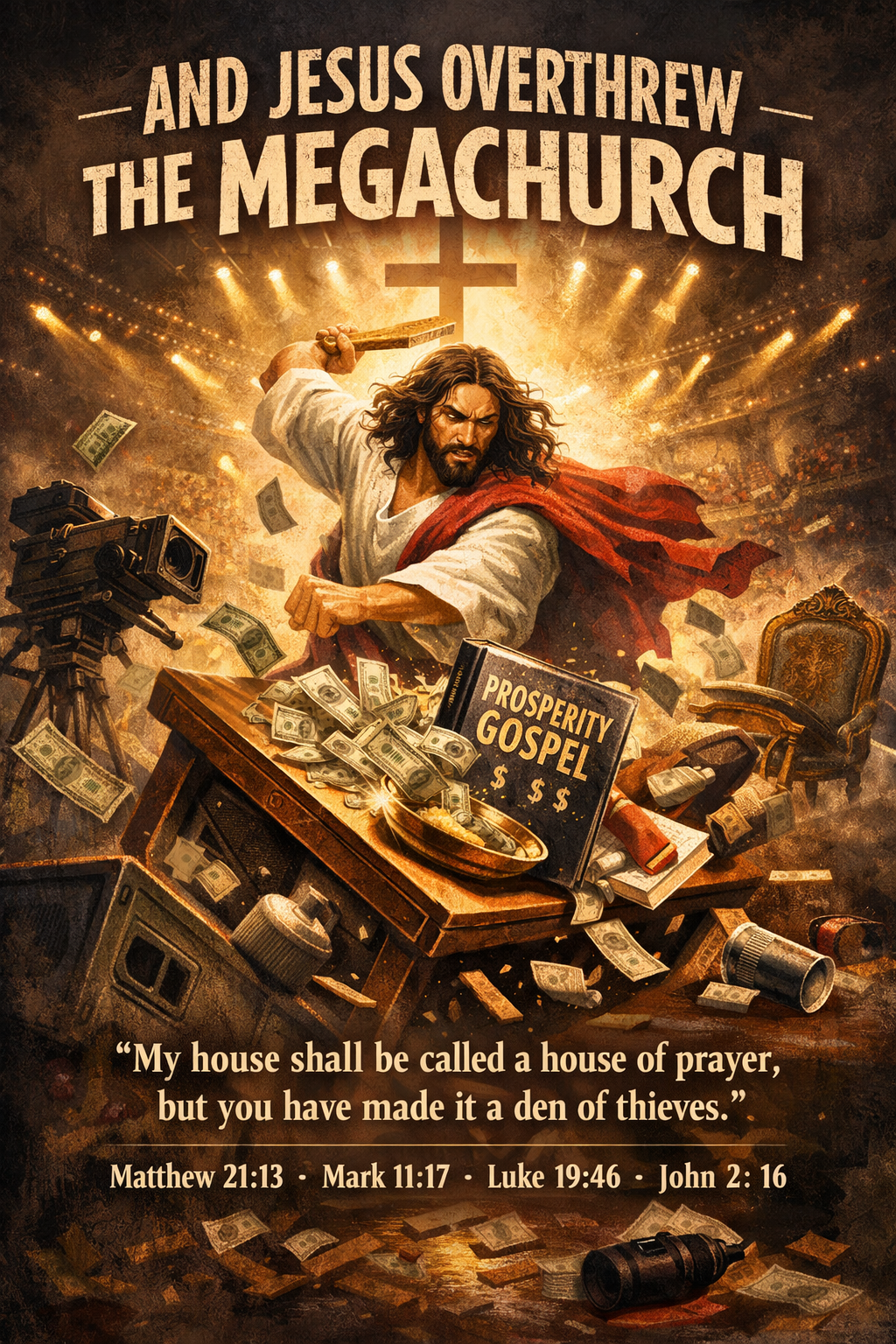
For decades, megachurches were the public face of American Christianity: arena seating, stadium-scale worship, celebrity pastors, bookstore empires, conference circuits, and a weekly experience polished to rival professional entertainment. They weren’t a fringe phenomenon either—among roughly 370,000 U.S. congregations, the Hartford Institute has tracked well over a thousand megachurches, depending on definition and year of the database. Wikipedia Hartford Institute macdonald.hartsem.edu
And then something happened that many leaders did not think could happen: the doors shut in 2020, people adapted, and a meaningful share never returned—not with the same frequency, not with the same loyalty, and not with the same willingness to build their spiritual lives around a weekend “event.” Broad surveys show a measurable post-pandemic drop in attendance patterns (even if the decline is modest in some datasets): Pew found a decrease in the share of adults attending at least monthly and that one-in-five Americans said they now attend in person less often than before the pandemic. Pew Research Center Gallup similarly reported a lower post-2020 average for weekly attendance compared to the pre-pandemic years. Gallup.com
That’s the cultural layer. But underneath it—where the real story sits—many Christians believe God used this moment as a revealing: not merely a “church attendance problem,” but an exposure of what the megachurch model often trained people to love.
The damage wasn’t just “big churches.” It was the system big churches normalized.
Plenty of large churches love Jesus sincerely, preach the gospel, serve their communities, and do real good. Size alone isn’t the sin.
The damage came from the incentives the megachurch era mainstreamed—what it quietly taught was “success,” what it rewarded, and what it made normal:
1) Consumers instead of disciples
When church becomes a product, people become customers. That means the “win” is not repentance, holiness, sacrificial love, or costly obedience. The “win” becomes: Did they like it? Did they come back? Did they bring friends? Did they give?
One of the most important cracks in the façade surfaced years before COVID: Willow Creek’s internal research (often associated with the “REVEAL” study) concluded that increased participation didn’t necessarily produce spiritual growth—people could be busy, involved, and still spiritually stagnant. The Christian Century faithengineer.com
That should have been an alarm bell for the whole movement: activity can replace formation; attendance can replace maturity.
2) Entertainment replacing reverence
When the line between worship and a show disappears, church subtly trains the heart to chase experience. People learn to associate “God is moving” with lights, volume, charisma, and crowd energy—until the day the crowd is gone and the speakers are silent, and the question rises: Was my faith anchored—or was it carried by atmosphere?
3) Celebrity pastors and fragile empires
Megachurches often concentrate enormous spiritual authority, money, and brand equity into a single personality. That creates two predictable outcomes:
Pressure to protect the brand at all costs (which can lead to secrecy, spin, and institutional self-preservation).
Catastrophic fallout when leaders fail (because the church’s identity is tied to the leader).
The most dramatic examples are well-known: Mars Hill—once a multi-site megachurch network—announced it would dissolve its campuses after Mark Driscoll’s resignation and controversy. Christianity Today
And Willow Creek faced public crisis and significant disruption after Bill Hybels’ resignation amid allegations, followed by major financial and staffing cutbacks in subsequent years. Christianity Today
When the model trains people to attach their spiritual life to a “gifted personality,” God sometimes removes that support—not to destroy faith, but to expose what faith was actually clinging to.
4) Money, optics, and moral confusion
A “growth-at-all-costs” system tends to monetize everything: conferences, book pipelines, branded merch, premium experiences, VIP culture, leadership platforms, and building projects that can dwarf the budgets of entire communities. The optics matter because they shape theology in the public imagination: people start to believe God is most present where the production is highest and the leader looks most successful.
And when the inevitable financial strain hits, the truth gets blunt: enormous facilities and payrolls don’t run on inspirational quotes. They run on consistent attendance, consistent volunteer labor, and consistent giving.
The Crystal Cathedral—iconic, glass-walled, broadcast-famous—ended up in bankruptcy and was ultimately sold to the Catholic Diocese of Orange. Angelus News - Multimedia Catholic News ABC News
That wasn’t merely a real-estate transaction. It was a parable: even the most spectacular monument can become unsustainable when the spiritual engine underneath is thin.
COVID didn’t “kill church.” It removed the scaffolding.
Here’s what the pandemic did, functionally:
It severed people from the weekly event.
It proved convenience could replace attendance.
It made comparison effortless (if you’re online anyway, you can listen to anyone).
It tested whether community was real or merely proximity.
This matters because the megachurch advantage used to be excellence and access—high-quality preaching, music, children’s programs, and media distribution. But once content became democratized, the advantage eroded. Now the question isn’t, “Can your church produce a great sermon?” Almost anyone can stream great sermons. The question is, “Can your church form people into Christlikeness when no one is watching?”
And the “empty seat” reality became visible in the most symbolic places—like converted arenas built to hold thousands. Lakewood Church, for example, meets in Houston’s former basketball arena with seating around 16,000–17,000 and has long been described as serving tens of thousands weekly across services. Cape Cod Times
When a room is designed for spectacle, even a modest drop feels like a public confession.
“How God allowed it”: a theological reading many believers won’t ignore
If you read the moment through Scripture’s themes (not headlines), the pattern is familiar:
God shakes what can be shaken so what is truly His remains.
God exposes idols—even religious idols.
God prunes what is alive so it can bear real fruit.
God judges His own house first, not because He hates it, but because He loves it enough to purify it.
Many Christians see the megachurch disruption not as God abandoning the church, but God refusing to let His name be propped up by a system that sometimes drifted into performance, celebrity, and consumer comfort.
In that reading, God “allowed collapse” in at least three ways:
1) He let the model reach its limit.
When success is measured by crowd size, you eventually build something that can’t survive without crowds. God sometimes lets us experience the logical end of what we chose—so we can finally see it clearly.
2) He let hidden things surface.
Systems that revolve around power and platform often hide dysfunction until the pressure reveals it. In multiple megachurch stories, scandal and institutional breakdown didn’t begin with COVID—but COVID removed the distraction and sped up the reckoning. Christianity Today
3) He redirected hunger.
A surprising number of people didn’t “lose faith”—they lost faith in the model. They began searching for depth, prayer, repentance, Scripture, communion, local community, and accountable leadership—things that don’t require stadium seating. Pew’s work suggests the pandemic altered habits for a notable slice of the population, especially around in-person participation. Pew Research Center
What replaces it isn’t another “better show.” It’s a better church.
If the megachurch era trained people to equate “God’s blessing” with bigger buildings and bigger brands, then the correction will look almost backwards:
smaller, thicker communities
transparent governance and finances
shepherds, not celebrities
discipleship that costs something
care for the poor that isn’t a photo-op
theology with weight—sin, suffering, holiness, endurance, joy that isn’t fake
worship that doesn’t need fog machines to feel real
Not every megachurch will die. Some will adapt. Some will repent and reform. Some will shrink and become healthier. But the illusion—that mass scale automatically equals spiritual power—has been badly wounded.
And maybe that’s mercy.
Because if God is restoring the church, He will not rebuild it on the same foundation that caused the damage: spectacle without substance, growth without depth, and crowds without Christ.
Final word: God did not abandon the Church. God is cleansing it.
If God is allowing collapse, it’s not because He hates His people.
It’s because He refuses to leave them addicted to substitutes.
And maybe—just maybe—the empty seats are not a tragedy.
Maybe they are an altar.
A place where American Christianity finally lays down the idol of impressiveness… and returns to the fear of God, the simplicity of obedience, and the power of a faith that doesn’t need a stage to be real.
