

Thailand dissolves parliament again: what it means now, and what history says happens next
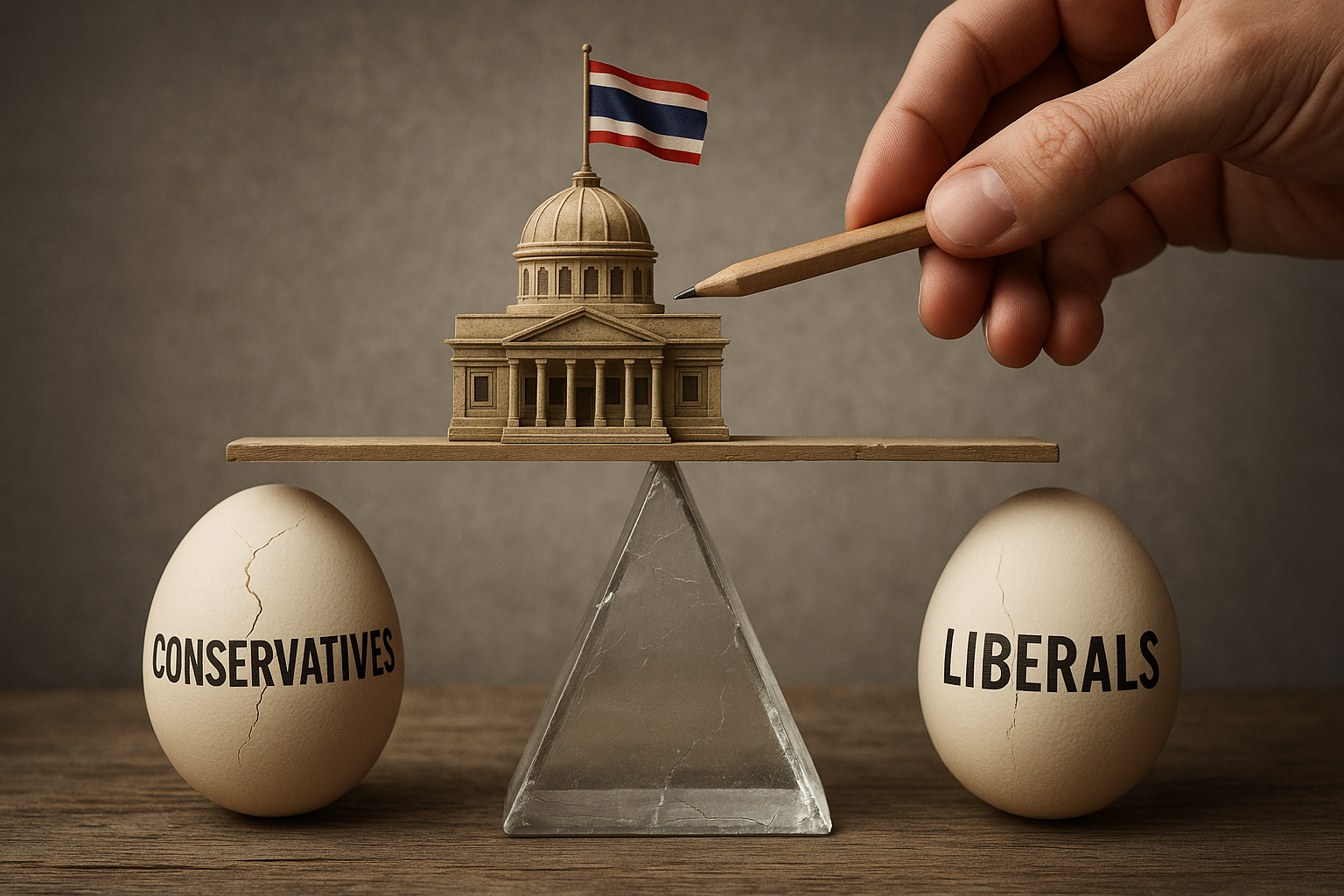
On December 11–12, 2025, Thailand’s prime minister Anutin Charnvirakul asked for — and received — royal approval to dissolve the House of Representatives, triggering an early general election within 45–60 days and placing the government in caretaker mode. Reuters Government Public Relations Department
This isn’t a “coup” by itself. In Thailand’s system, it’s a constitutional reset button: end the sitting House, send the country to elections, and try to rebuild a workable majority. But in Thailand, dissolutions often happen inside deeper power struggles, so what follows depends less on the paperwork and more on whether the streets, courts, and elite institutions accept the next outcome.
1) What “dissolving parliament” actually does (in plain terms)
The mechanics
The House is dissolved by royal decree after the prime minister submits a request. Government Public Relations Department
The country must hold a general election within 45–60 days of dissolution. Reuters
The prime minister and cabinet remain in place as a caretaker government until a new government is formed. AP News
What changes immediately
Parliamentary lawmaking pauses. No sitting House means no normal legislative bargaining, committee work, or votes. (Emergency actions can still happen through executive/administrative channels, but big policy moves usually stall.)
The campaign starts now. Parties pivot from governing to election survival — which typically increases polarization and “messaging politics.”
Coalition math becomes the whole game again. Thailand frequently ends up with coalition governments; dissolutions often re-shuffle alliances rather than “solve” ideology.
2) Why this dissolution happened in December 2025
Reporting points to a convergence of pressures:
A parliamentary deadlock tied to constitutional reform disagreements, with the People’s Party threatening a no-confidence motion. Reuters
A serious Thailand–Cambodia border conflict (deaths, injuries, displacement), creating a national-security atmosphere that can reshape voter behavior and political legitimacy arguments. AP News
Economic strain and political instability that has cycled prime ministers repeatedly since 2023, making early elections a tactical option. Reuters
3) “Conservative vs liberal” in Thailand doesn’t map cleanly to the U.S. — here’s the closest translation
Thailand’s main divide is less “tax rates vs welfare” and more:
A) Establishment / conservative-royalist / pro-military leaning blocs
Often emphasize:
Order, stability, hierarchy, and deference to traditional institutions
Skepticism toward rapid structural reforms (especially around sensitive institutions)
Stronger alignment with security-state instincts during unrest
Recent coverage describes Anutin’s positioning as closer to conservative military/royalist factions (even while he’s a civilian politician). Financial Times
B) Reformist / liberal-democratic blocs (urban youth + policy reform coalitions)
Often emphasize:
Rule-of-law reforms, reducing “non-elected veto points,” and expanding civil liberties
Structural reforms (constitutional, institutional checks, decentralization)
Stronger procedural democracy framing (“elected majorities should govern”)
Thailand’s modern reformist wave has repeatedly run into court dissolutions / bans of major reform parties and leaders, shaping how these movements operate. Research Briefings
Important nuance: Thailand’s “economic left/right” arguments exist, but the dominant cleavage in recent decades has been populist electoral machines vs establishment guardianship, plus reformists vs entrenched power — with courts, commissions, and security forces often playing decisive roles. Reuters Japan Reuters
4) When Thailand has dissolved parliament before — and how Thai people reacted
Dissolution is common in Thai politics; what matters is whether it’s seen as a legitimate off-ramp or a maneuver to dodge accountability.
1992: “Black May” and the demand for democratic legitimacy
Thailand’s 1992 crisis wasn’t “just” a dissolution story — it was a legitimacy explosion after an unelected military figure became prime minister, sparking mass protests and deadly violence (“Black May”). The crisis ended after royal intervention and led to elections later that year and a civilian coalition government. AP News
Public reaction pattern: mass mobilization demanding democratic legitimacy and limits on military political power.
1996: Banharn dissolves the House amid corruption and no-confidence pressure
In October 1996, PM Banharn Silpa-archa dissolved parliament and called a snap election — a classic “reset before the vote turns” maneuver amid intense criticism. UPI
Public reaction pattern: more procedural than revolutionary — frustration with corruption and instability, but not the same nationwide rupture as 1992/2010/2013.
2006: Thaksin dissolves the House amid protests — boycott, legitimacy crisis, then coup
In February 2006, PM Thaksin Shinawatra dissolved parliament amid mounting protests. Major opposition parties boycotted the election, deepening the legitimacy crisis; the year culminated in the September 2006 military coup. Al Jazeera
Public reaction pattern: polarized mass politics; dissolution did not “cool” the conflict — it became part of the escalation.
2011: Abhisit moves toward dissolution after years of violent polarization
In 2011, PM Abhisit Vejjajiva moved toward dissolving parliament and holding elections after a period marked by extreme polarization and the 2010 crackdown. Reuters
Public reaction pattern: compared with 2006/2013, the dissolution functioned more like a structured transition mechanism — though the underlying divide remained.
2013: Yingluck dissolves the House — protests continue, elections disrupted, and a coup follows
In December 2013, PM Yingluck Shinawatra dissolved parliament and called a snap election — but protest leaders kept mobilizing, pressing for an unelected reform body rather than elections. Reuters
That crisis spiraled into disrupted voting and later military takeover in 2014 (widely documented in crisis timelines). Wikipedia
Public reaction pattern: dissolution did not end the fight; it shifted it to the streets and institutional battlegrounds.
2023: Prayut dissolves the House ahead of elections — a “normal” election trigger, but high-stakes
In March 2023, Thailand dissolved parliament to clear the way for elections in May, widely framed as renewing a long-running contest between establishment-backed rule and election-winning populist/reform forces. Reuters Reuters Japan
Public reaction pattern: not a single protest moment — more a “high-stakes ballot box” event shaped by the post-2014 political order.
5) What the next 45–60 days could mean (realistic scenarios)
Based on Thailand’s patterns, the December 2025 dissolution creates three big fault lines:
Scenario 1: “Clean election, messy coalition”
Even if voters deliver a clear signal, no party may win a commanding majority, forcing coalition-building that can water down reform or amplify instability. Recent analysis suggests a tight race and uncertainty around forming a stable governing coalition. Reuters
Scenario 2: “Nationalism tailwind” versus “reform backlash”
With border fighting in the background, security narratives can boost leaders who present as defenders of sovereignty — but can also trigger backlash if the public believes crises are being used to deflect from governance failures. AP News
Scenario 3: “Institutional veto points reappear”
Recent Thai politics shows that elections are not always the final decider; party dissolutions, leadership bans, court rulings, and procedural blocks have shaped who can govern and how. Research Briefings
6) Bottom line: what dissolutions usually signal in Thailand
A dissolution is rarely “just” an election call. It usually signals one (or more) of the following:
The PM is trying to escape a parliamentary trap (no-confidence, coalition collapse, legislative dead-end). Reuters
The country is trying to channel conflict into ballots — with mixed success depending on whether major players accept the result. Reuters
Thailand is entering another cycle where street pressure + institutional power may shape outcomes as much as votes (as in 2006 and 2013). JSTOR
If you want, I can follow up with a one-page “party map” (Bhumjaithai, People’s Party, Pheu Thai and others) explaining what each broadly stands for and what coalition combinations look plausible after the election — without forcing a U.S.-style left/right label on everything.
References
References (APA 7)
Associated Press. (2025, December 11). Thailand’s Parliament is dissolved for new elections early next year. ABC News. https://abcnews.go.com/International/wireStory/thailands-parliament-dissolved-new-elections-early-year-128330007
Associated Press. (2025, December 12). Thailand’s parliament is dissolved for a new election early next year. AP News. https://apnews.com/article/b9cddef068c4415ec29f0e423dd3e006
Curtis, J. (2024, November 18). Thailand: Political developments 2023–24 and the banning of the Move Forward Party. House of Commons Library. https://commonslibrary.parliament.uk/research-briefings/cbp-10141/
Financial Times. (2006, March 5). Marchers vow to keep pressure on Thaksin. Financial Times. https://www.ft.com/content/5bbb9d3e-ac75-11da-8226-0000779e2340
Government Public Relations Department (Thailand). (2025, December 12). Announcement on the dissolution of the House of Representatives. PRD Thailand. https://thailand.prd.go.th/en/content/category/detail/id/48/iid/453648
Human Rights Watch. (1992, October 1). Bloody May: Excessive use of lethal force in Bangkok. https://www.hrw.org/report/1992/10/01/bloody-may/excessive-use-lethal-force-bangkok
Human Rights Watch. (2011). Descent into chaos: Thailand’s 2010 Red Shirt protests and the government crackdown. https://www.hrw.org/reports/thailand0511_brochure_low.pdf
News Agencies. (2006, May 8). Court nullifies Thai elections. Al Jazeera. https://www.aljazeera.com/news/2006/5/8/court-nullifies-thai-elections
News Agencies. (2013, December 9). Thai prime minister dissolves parliament. Al Jazeera. https://www.aljazeera.com/news/2013/12/9/thai-prime-minister-dissolves-parliament
News Agencies. (2023, March 20). Thailand dissolves parliament for May national election. Al Jazeera. https://www.aljazeera.com/news/2023/3/20/thailand-dissolves-parliament-for-may-national-election
Parliament of Thailand. (2017). Constitution of the Kingdom of Thailand, B.E. 2560 (2017) (English version). https://web.parliament.go.th/assets/portals/61/filenewspar/61_1059_file.pdf
Reuters. (2013, December 9). Thai election likely to be on February 2: election official. Reuters. https://www.reuters.com/article/us-thailand-politics-election-idUSBRE9B807D20131209/
Reuters. (2013, December 10). Tearful Thai PM urges protesters to take part in election. Reuters. https://www.reuters.com/article/idINDEE9B902O20131210/
Reuters. (2023, March 20). Thailand dissolves parliament, clears way for election. Reuters. https://www.reuters.com/article/business/media-telecom/thailand-dissolves-parliament-clears-way-for-election-idUSP9N2ZG028/
Thepgumpanat, P. (2025, December 12). Thai PM sets course for early election amid border and parliamentary unrest. Reuters. https://www.reuters.com/world/asia-pacific/thai-pm-sets-course-early-election-amid-border-parliamentary-unrest-2025-12-12/
Thepgumpanat, P., & Wongcha-um, P. (2025, December 11). Thai PM moves to dissolve parliament, setting stage for elections. Reuters. https://www.reuters.com/world/asia-pacific/thai-pm-says-he-will-return-power-people-setting-stage-vote-2025-12-11/
Petty, M., & Thepgumpanat, P. (2025, December 12). Explainer: Thailand’s snap election: How will it play out? Reuters. https://www.reuters.com/world/asia-pacific/explainer-thailands-snap-election-how-will-it-play-out-2025-12-12/
Australian Broadcasting Corporation. (2006, February 24). Thai PM calls early election for April 2. ABC News (Australia). https://www.abc.net.au/news/2006-02-25/thai-pm-calls-early-election-for-april-2/806048
Amnesty International. (1992, September 30). Thailand: The massacre in Bangkok. https://www.amnesty.org/en/documents/asa39/010/1992/en/
Associated Press. (2025, June 10). Thailand’s former Prime Minister Suchinda Kraprayoon, who cracked down on 1992 protests, dies at 91. AP News. https://apnews.com/article/671a8e42e0e81d91d227d227155e13d0
Encyclopaedia Britannica. (n.d.). History of Thailand: Attempts to institute populist democracy. https://www.britannica.com/topic/history-of-Thailand/Attempts-to-institute-populist-democracy
