

The PowerMentor Institute for Freedom and Justice explores leadership, freedom, and democracy issues with a commitment to those seeking freedom and self-determination, empowering those in regions with totalitarian control. We conduct thorough research using AI and other tools to provide the most accurate and insightful information available.

When Weed Turns Deadly: Inside Cannabis Hyperemesis Syndrome and Why the World Just Gave It an Official Name
A “mysterious vomiting disorder tied to long-term marijuana use” has just been formally recognized by global health officials. That disorder is cannabis (cannabinoid) hyperemesis syndrome (CHS)—a condition that can push otherwise healthy people into repeated emergency room visits, severe dehydration, and even kidney failure. With a new World Health Organization (WHO) diagnostic code and alarming new data showing skyrocketing emergency-room cases, CHS has moved from medical curiosity to urgent public-health warning.
What Exactly Is Cannabis Hyperemesis Syndrome?

A War Fought on Two Fronts: How Ukraine’s Deep-Rooted Corruption Collides With a $100 Billion Flood of Western Aid
The resignation of Andriy Yermak, President Volodymyr Zelenskyy’s powerful chief of staff and widely seen as his “right-hand man,” after a raid by Ukraine’s anti-corruption police is more than a personnel change. It is the latest shockwave in a $100 million kickback scheme centered on Energoatom, Ukraine’s state nuclear energy company, uncovered by the National Anti-Corruption Bureau of Ukraine (NABU) in “Operation Midas.” Reuters Al Jazeera
Investigators allege that private companies were forced to pay 10–15% kickbacks to politically connected “overseers” simply to keep contracts and get paid, with illicit funds laundered through a web of shell firms and intermediaries tied to figures close to the presidential circle. Al Jazeera Carnegie Endowment
Eight suspects have already been charged, including a businessman described as the mastermind, while Ukraine’s justice and energy ministers have resigned amid public outrage. The Washington Post Al Jazeera
Yermak insists he is innocent and has not been formally charged, but the optics are devastating: the president’s closest aide has stepped down in the middle of war because anti-corruption officers showed up at his door. Reuters

Why Ending TPS for Burma Is Built on False Claims: The Elections Are a Sham and the Crisis Is Worsening
In announcing the termination of Temporary Protected Status (TPS) for Burma (Myanmar), DHS Secretary Kristi Noem claimed that “the situation in Burma has improved enough that it is safe for Burmese citizens to return home” and went so far as to describe the junta’s upcoming elections as “free and fair,” praising the role of the Burma (Myanmar) military and China in brokering “successful ceasefire agreements.”
These assertions are flatly contradicted by the best available evidence from the United Nations, human rights organizations, religious freedom monitors, and even U.S.-linked policy institutions. Far from improving, Burma is in a deepening civil war, humanitarian collapse, and religious persecution crisis—and the elections being prepared by the junta are widely described as a sham.

US New Rules About TPS for Burma (Myanmar): What It Means
The U.S. government has decided to end Temporary Protected Status (TPS) for people from Burma (Myanmar).
This change will start on January 26, 2026.
Here is what this means in very simple words.
What Is TPS?
TPS is a temporary program that lets people from certain countries:
stay in the United States for a short time,
get permission to work,
and stay safe if their home country is too dangerous.
TPS does not give a green card.
Who Will Be Affected?
Only people from Burma who are living in the U.S. with TPS will be affected.
If you only have TPS, this change is about you.

The Opportunity of a Lifetime: Partnering With Gen Z to Shape What Comes Next
What do all of you think — Gen Z is disengaged?
Let me tell you something.
Do you know that Gen Z reports the highest levels of loneliness, disconnection, and lack of purpose of any generation ever recorded?
Yet if I walk into a room and see every young adult on their phone, nobody says a word — because we’ve normalized disengagement.
Do you know that the leading cause of Gen Z burnout is not laziness, and it’s not screen time?
It’s the absence of meaningful connection, mentorship, and belonging.
A young person can be surrounded by thousands of digital “friends”…
and still feel completely alone.

Facade of Freedom: Inside Burma’s Military-Staged Election
In the wake of yet another manipulated electoral process, the military rulers of Burma (Myanmar) are advancing what amounts to a sham election—a cynical ploy to cloak authoritarian rule in the veneer of democracy. This article unpacks how the generals orchestrated this charade, exposing the web of fraud, coercion and violence underpinning a vote that is anything but free and fair.
1. The context: Coup, emergency rule and the erosion of democracy
On 1 February 2021, the military via the Tatmadaw ousted the democratically elected government after the National League for Democracy (NLD) won a mandate in the 2020 election. Wikipedia The generals then repeatedly extended the state of emergency—using it to suspend civil liberties, defend their hold on power, and delay a genuine electoral return. Wikipedia The Guardian
Bold truth: The so-called return to elections is not a restoration of democracy but a manufactured legitimacy project.

Burma’s Collapse Is Now America’s Problem: How a Failing State Became the Global Capital of Organized Crime—and a Direct Threat to U.S. Citizens
Burma (Myanmar) has crossed a threshold. What began as a domestic political crisis after the 2021 coup has evolved into something far more dangerous: a failed state whose criminal networks now directly target and harm Americans at scale. Recent U.S. congressional testimony stated it with unusual clarity: Burma is rapidly becoming the world’s center of organized crime, with more than half its population in poverty, 3.6 million internally displaced, and millions more fleeing across borders.
But the core message of the hearing was even more urgent:
junta-affiliated scamming networks inside Burma are stealing billions of dollars a year from Americans, money that flows directly into the pockets of military leaders and transnational crime syndicates.
This is no longer a distant humanitarian tragedy. It is a direct, measurable threat to American households, American retirees, American small businesses, and American financial security.

THE DARK HEART OF KK PARK: THE GLOBAL ORGAN-HARVESTING MACHINE HIDING IN PLAIN SIGHT
A multi-year investigation into the Southeast Asian cyber-slavery city that now stands at the center of the world’s most horrifying human-trafficking operation
For years, human-rights workers, escaped trafficking victims, and investigative journalists have warned that KK Park, the infamous cyber-scam megacity on the Myanmar–Thailand border, was far more sinister than a forced-fraud factory. Their testimonies were disturbing, fragmented, and dismissed as “rumors.”
But in 2025, everything changed.
A massive raid by the Myanmar military, followed by a chaotic collapse of the compound’s internal security, triggered a mass escape of nearly 700 victims into Thailand. Among them were survivors who had seen the darkest truth inside KK Park with their own eyes:
KK Park operated a medical complex where trafficked victims were surgically stripped of their organs and left to die.

Kawthoolei Rising: A Roadmap for Karen Independence Through Integrity, Interdependence, and Civilian Rule
The Karen Crossroads
The Karen people of Burma (Myanmar) have endured nearly seventy-five years of broken promises, ethnic persecution, and systemic exploitation by a state long dominated by the Bamar military and business elite. Once promised autonomy in the 1947 Panglong Agreement, the Karen were instead subjected to decades of scorched-earth campaigns, forced relocations, and cultural erasure. Today, amid the collapse of Burma’s (Myanmar) national order and the global exposure of cyber-scam compounds in Karen State, a new opportunity has emerged for the Karen to rebuild—not through rebellion alone, but through integrity-based governance, regional interdependence, and civilian supremacy.

Two Roads for America: Renewal or Ruin — As War Clouds Gather Over Venezuela and Nigeria
America stands at a defining moment. Two paths lie ahead.
One restores strength — a united, disciplined, America First republic standing tall against tyranny.
The other leads to decay — a Venezuelan-style collapse, where inequality, populism, and propaganda tear apart the foundations of freedom.
And just as these choices sharpen at home, the world tightens its hold: the United States readies strikes in Venezuela and prepares an intervention in Nigeria. These actions may either affirm America’s resolve — or expose its internal fractures.

Co-Opted Voices: How Foreign Powers and Ideological Networks Are Undermining America from Within
From Europe’s unraveling to the U.S. front line—how Qatar, China, Iran, and their allies are using influence, money, and media to fracture democracy
Introduction: The Warning from Across the Atlantic
Europe’s moral crisis did not begin overnight. For years, Jewish communities and democratic institutions warned of foreign ideological infiltration, antisemitism, and cultural decay creeping into universities, political systems, and civil society. Those warnings were dismissed—until it was too late.
Now, that same contagion is spreading to the United States, where foreign governments, extremist ideologies, and compromised media figures are manipulating public discourse to undermine the nation’s democratic foundations. The objective is not simply to alter U.S. foreign policy—it is to weaken America’s unity, moral confidence, and global leadership.
As Europe’s crisis shows, when democratic societies abandon vigilance, corruption enters not through invasion but through invitation.

When Hatred Begins with One — It Never Ends with Only One
A deeper look at Europe’s institutional crisis, antisemitism, and the ideological currents reshaping the West
In recent months, the alarm raised by Jewish communities and observers has grown louder: antisemitism is escalating within Europe’s universities, political institutions, and cultural fabric. A key warning echoes: “It will not end with the Jews.” The forces now in motion threaten not only Jewish lives and identity but the stability of democracy and the rule of law across Europe and North America.
This article expands on that troubling testimony. It examines three interlinked phenomena: the resurgence of the Muslim Brotherhood’s influence in Europe; the rising antisemitism on campuses and in society; and how institutional responses are faltering. The stakes are high. Democratic societies must confront the challenge before it grows deeper, broader, and harder to reverse.
Oil, Drugs and Terror: How Venezuela Became the Western Hemisphere’s Sleeping Threat
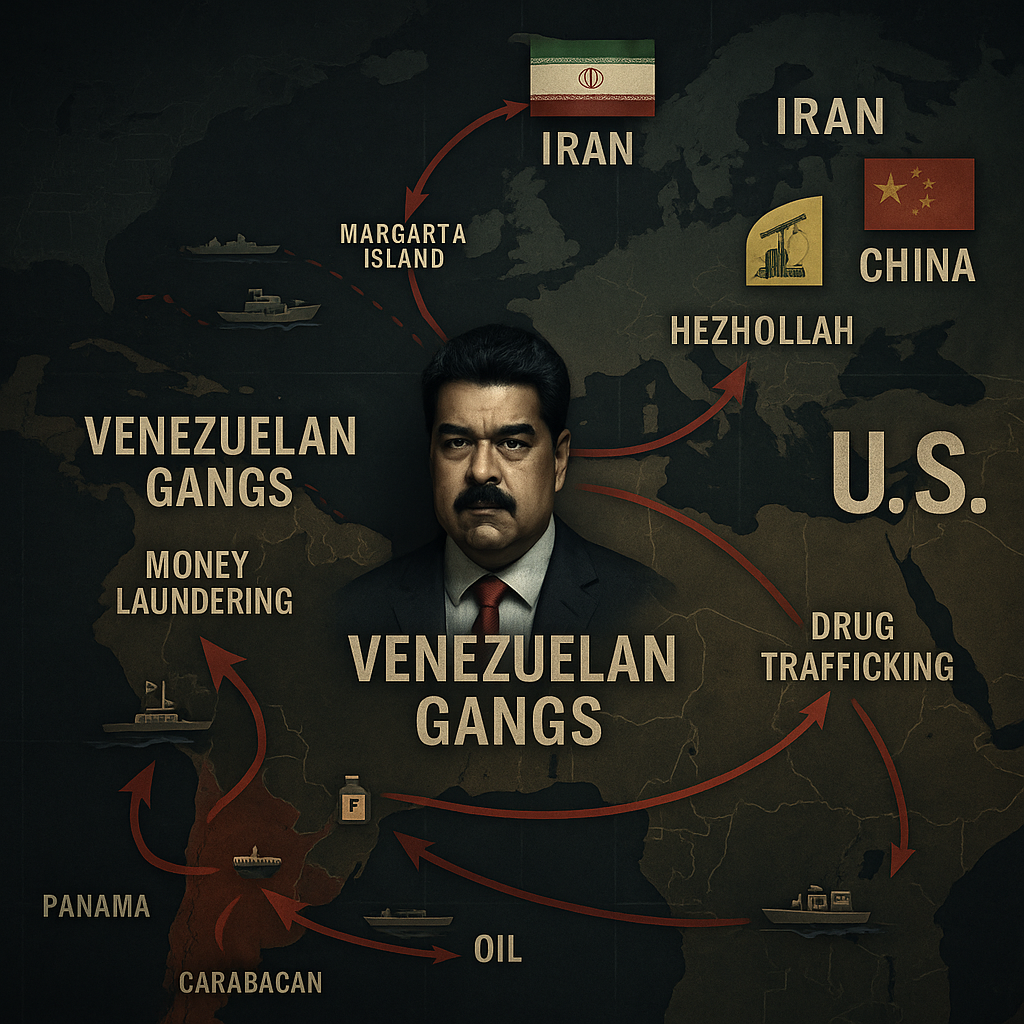
What you’re about to read may sound like the plot of a political thriller—but it’s real, and it’s happening right in our own backyard. There are two deeply intertwined reasons why the U.S. is confronting Donald Trump’s administration is zeroing in on Venezuela: drugs and oil—but not just that. This is about global rivals setting up shop next door. It’s about trafficking routes, proxy armies, and the erosion of U.S. security from the south.
Let’s break it down. Reason One: Drugs—Lethal drugs
First, Venezuela is not only a transit country—it has become a conduit for deadly narcotics. Cocaine and increasingly fentanyl-laced product are entering the U.S., and there are credible reports that those shipments involve networks tied to the Venezuelan regime and its allies.
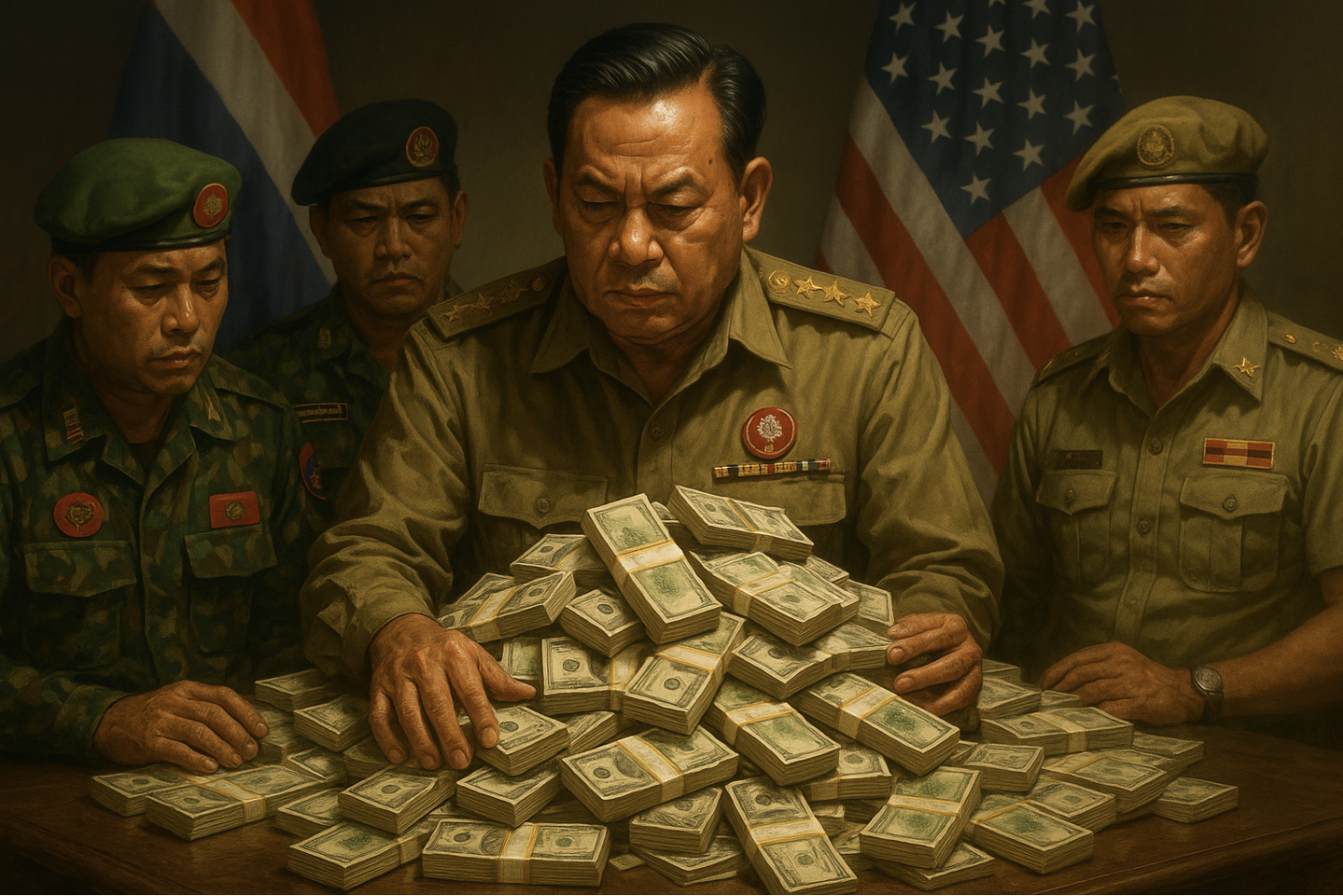
Shadow Economies of Kawthoolei: How U.S.–Thai Strike Forces Are Exposing a Criminal Network Long Warned About by KTLA—While the Karen People Remain Innocent Victims
Introduction: A Criminal Empire Built on Karen Land—but Never by the Karen People
Across the Thailand–Burma (Myanmar) border, an enormous criminal economy has taken root—powered by cyber-scam compounds, human trafficking, and militia-protected enclaves operating beyond the reach of the state. These networks have defrauded millions worldwide and enslaved tens of thousands of trafficked workers.
But the Karen people themselves are not responsible for any of this. They are victims—displaced, extorted, threatened, and betrayed by corrupt individuals who abused leadership positions inside the Karen National Union (KNU) and some of the armed and political structures.
The Inevitable Reckoning: Junta Charges 22 KNU Officials — and Karma May Finally Be Catching Up
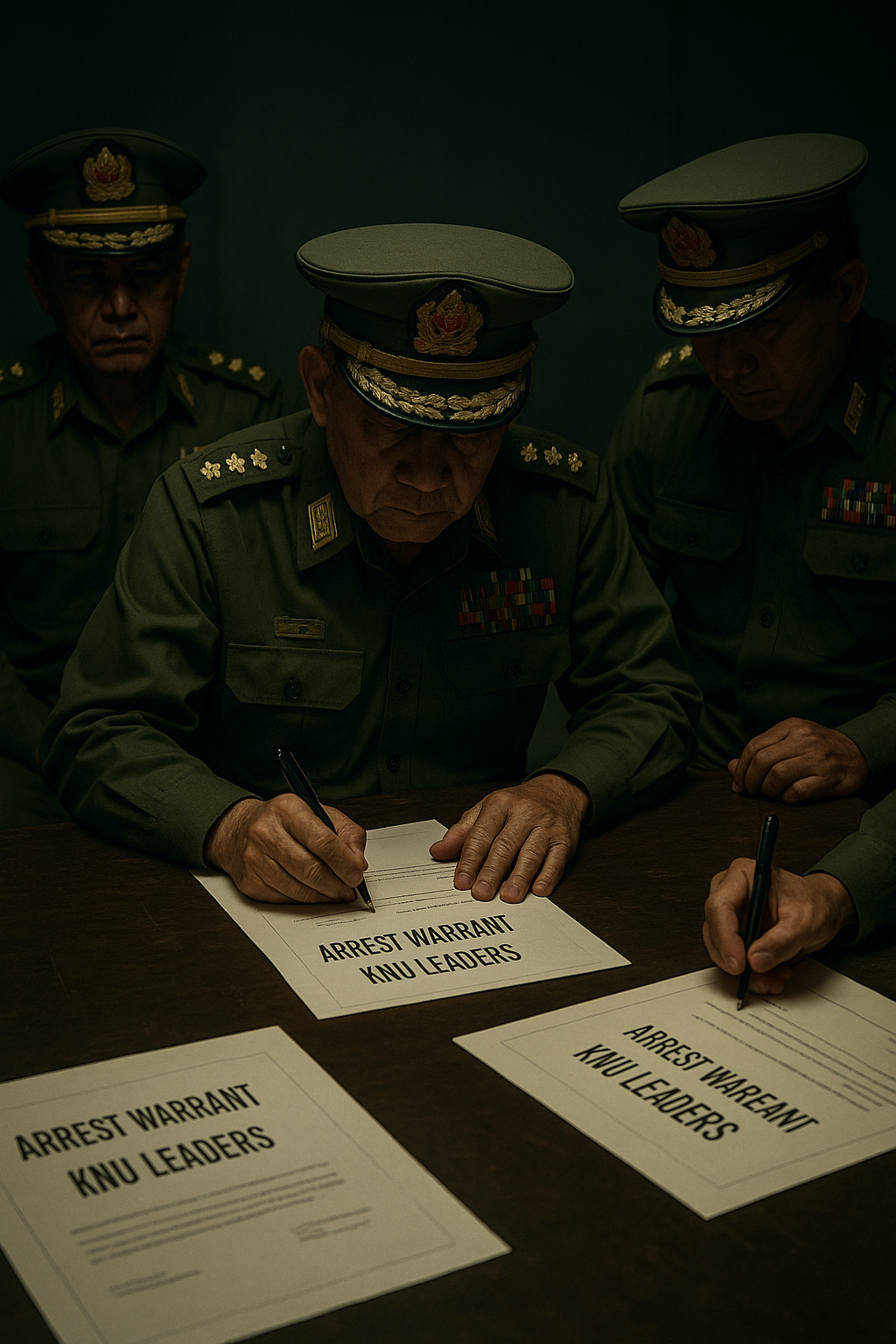
On November 11, 2025, Burma (Myanmar)’s military regime charged 22 officials of the Karen National Union (KNU) under its so-called Election Protection Law.
Among them is Padoh Saw Myint, a Doo Tha Htoo district councillor, along with 21 other local Karen leaders who issued a statement condemning the junta’s upcoming “election” as unlawful and warning political parties that participating would make them accomplices of the military dictatorship.
The junta responded by charging them with “disrupting” the election and spreading “propaganda” under Section 23(b), a clause carrying a sentence of five to ten years in prison.
The Battle for Asian Highway 1: KTLA’s Rise, Karen Fragmentation, and the Fight for Kawthoolei’s Future
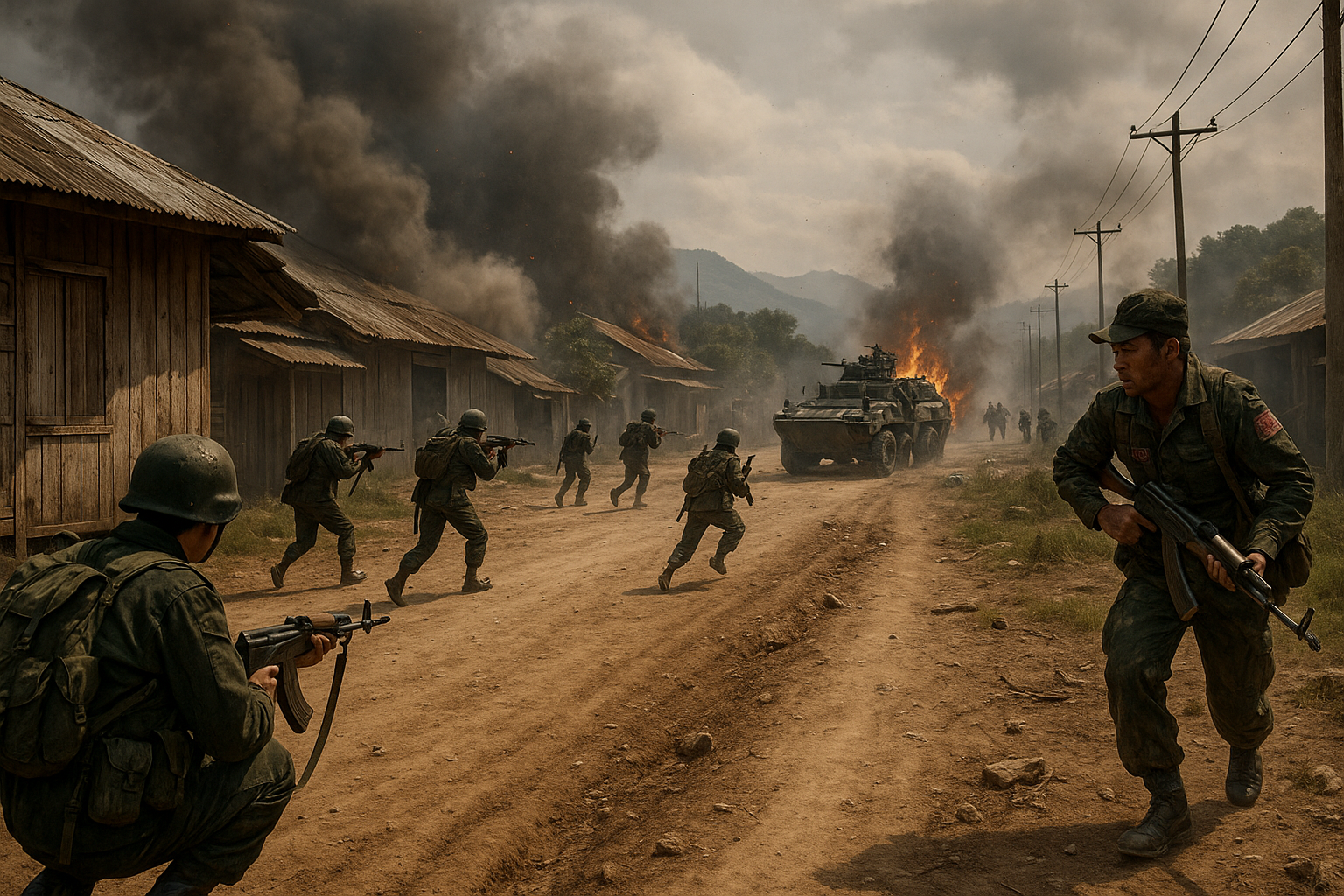
Fierce clashes along the Asian Highway 1 (AH1) in Kawthoolei (Karen State) highlight a pivotal moment in the struggle for Kawthoolei. While the fighting is often described as another confrontation between junta forces and Karen resistance, the situation is far more complex. It reflects a deep internal Karen dilemma, the junta’s reliance on proxy militias, and the emergence of the Kawthoolei Army (KTLA) as a critical defender of Karen civilians and territorial sovereignty.
The AH1 conflict is not simply a military engagement; it is a struggle for legitimacy, unity, and the future governance of Karen lands.

When Marxist/Communist Revolution Eats Its Young: How Movements Use — then Abandon — the Students Who Built Them
Across the last century, one catastrophic truth repeats itself with terrifying clarity:
Communist and Marxist revolutions rise on the backs of university students — then destroy those same students once power is secured.
This is not allegory. This is not political spin. This is historical record, written in blood.
From Mao’s China to Pol Pot’s Cambodia, Castro’s Cuba, the Vietnamese communist consolidation, and Iran’s post-revolution purge of leftist students, the pattern is identical:
1. Mobilize idealistic youth to destabilize society.
2. Weaponize students to overthrow the old order.
3. Once power is secured, purge, imprison, “re-educate,” or kill the very young supporters who made the revolution possible.
Below is a stark, detailed account of how this pattern unfolded — and why modern rhetoric echoing early revolutionary indoctrination must be recognized for what it is.
China Executes Cyber-Scam Lords — Yet the Mastermind Saw Chit Thu Still Walks Free: The Global Injustice at the Heart of Burma’s (Myanmar) Digital Slavery Empire
A Historic Shift
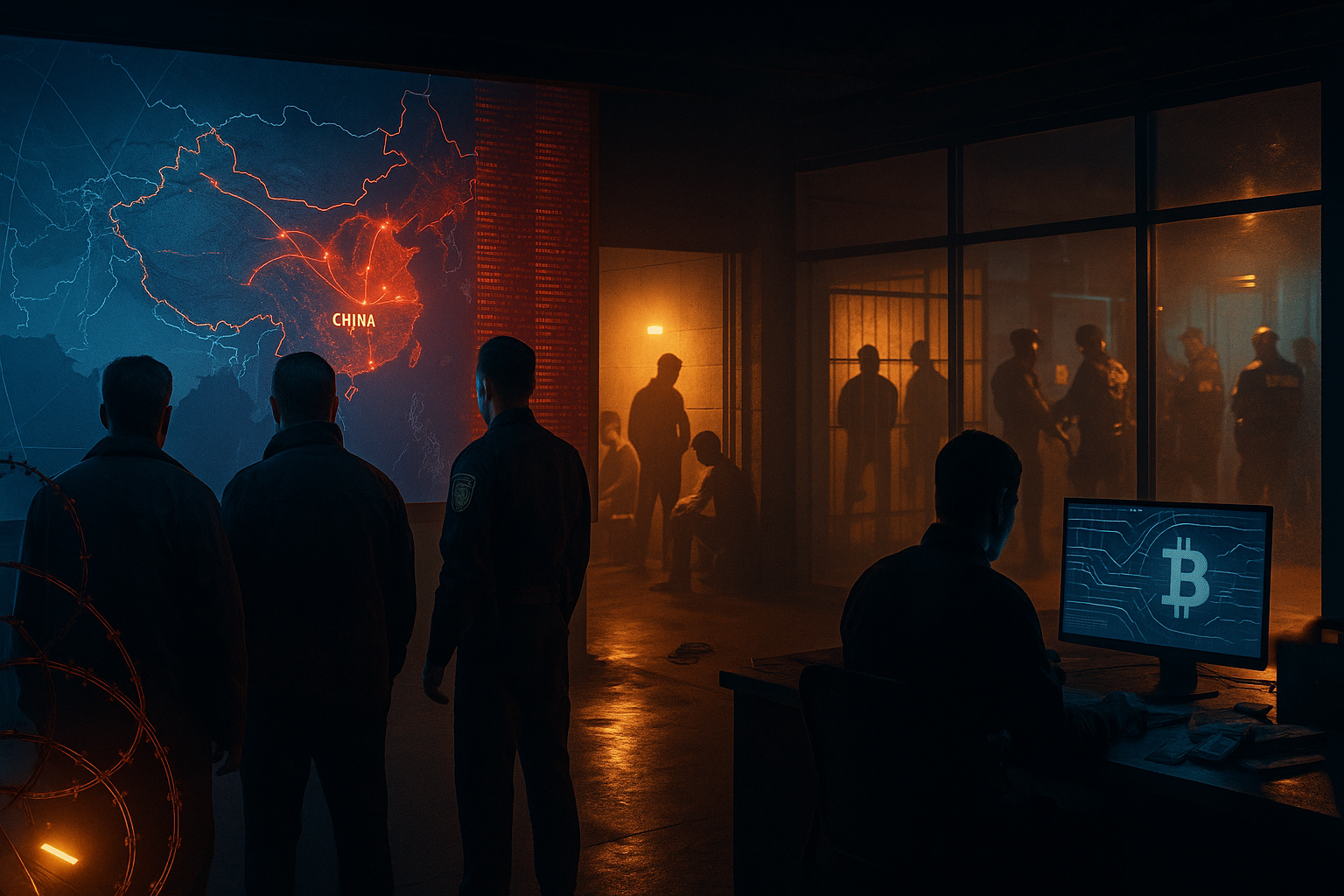
In a move that signals unprecedented seriousness in combating global cyber-fraud and digital enslavement, China has sentenced 11 Burma (Myanmar) based scam syndicate leaders to death, dismantling a billion-dollar criminal empire built on human trafficking, forced digital labor, torture, and murder.
This case does not simply represent crime prosecution — it marks a geopolitical escalation and a moral stand against cyber-slavery networks that have ravaged lives across Asia, Europe, Africa, and the West.
The Crimes
Chinese courts determined that the syndicate — operating from the Kokang region — was responsible for:
US $1.4 billion in fraud
Human trafficking and enslavement
Abuse and torture of captives
Killing at least 14 people who tried to escape
This criminal complex forced trafficked victims to run "pig-butchering" scams worldwide under threat of shock torture, beatings, starvation, and execution.

We Don’t Just Inherit Diseases — We Inherit Habits
How Generational Behavior Drives Modern Illness More Than Genetics
For decades, the public has been taught that many diseases “run in families.” While genetics do play a role, emerging evidence shows a more powerful force often at work: behavioral heredity. We inherit much more than DNA — we also inherit our family's diet, stress response, physical activity patterns, coping behaviors, and emotional environment.
In many cases, what appears to be genetic illness may actually be generational habit-driven illness.
Genes load the gun. Lifestyle pulls the trigger.
Behavior-Driven Diseases That Often Masquerade as Genetic

Silent Crisis in the Ranks: The Breaking Point for America’s Police — A Call to Protect Those Who Protect Us
Federal, State, and Local Police officers and Sheriff’s across the United States — are facing a growing, deadly crisis. Law-enforcement suicides are rising, yet public conversation remains muted. Officers are dying quietly, far from the spotlight, even as they serve on the front lines of some of the nation’s most polarized political and social battles.
This article brings together key data, the California context, individual officer cases, the toll of anti-police sentiment and political hostility, and what must change to save lives.
The Scale of the Crisis
Law-enforcement officers die by suicide more frequently than by homicide or in the line of duty.