

The Battle for Asian Highway 1: KTLA’s Rise, Karen Fragmentation, and the Fight for Kawthoolei’s Future
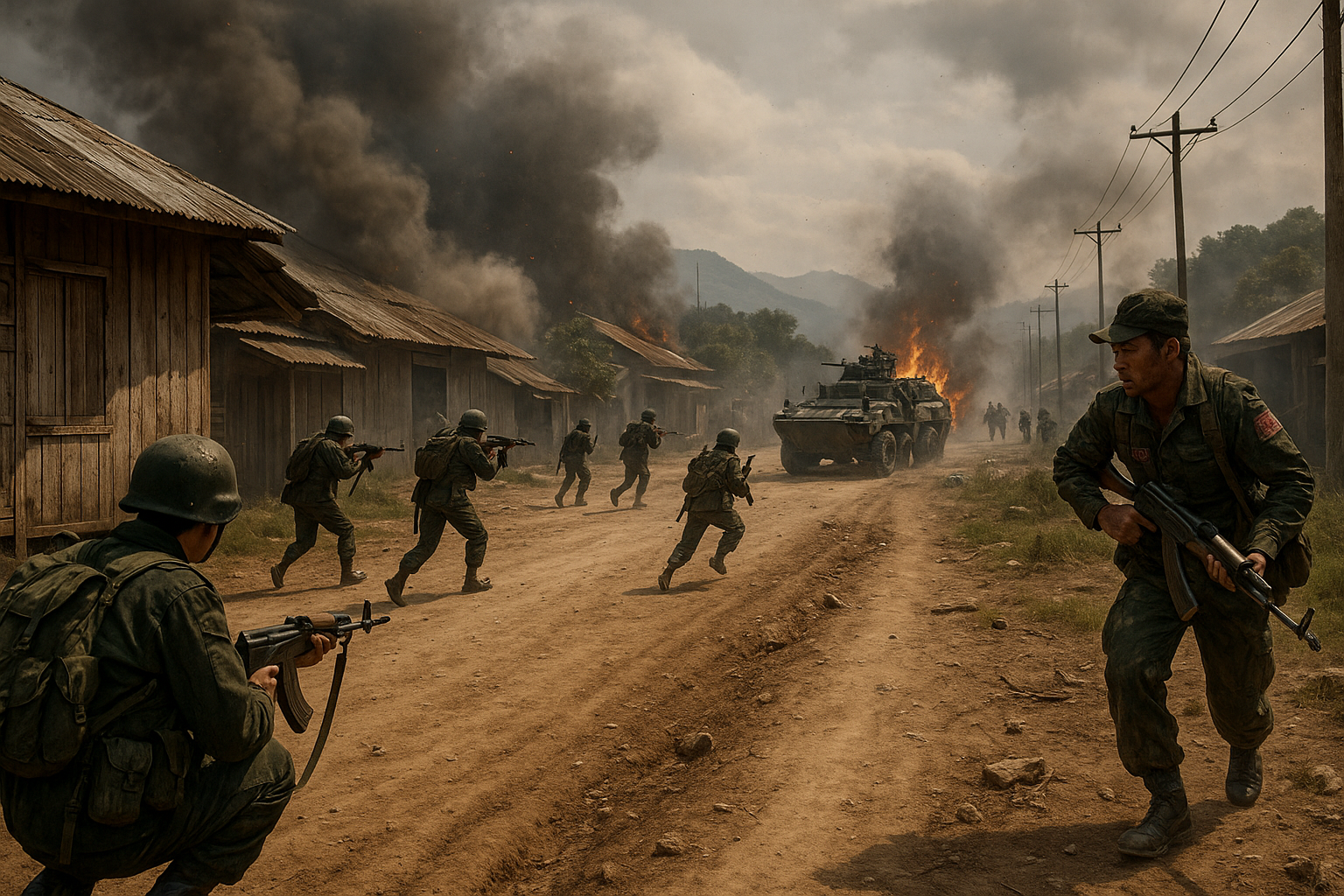
Fierce clashes along the Asian Highway 1 (AH1) in Kawthoolei (Karen State) highlight a pivotal moment in the struggle for Kawthoolei. While the fighting is often described as another confrontation between junta forces and Karen resistance, the situation is far more complex. It reflects a deep internal Karen dilemma, the junta’s reliance on proxy militias, and the emergence of the Kawthoolei Army (KTLA) as a critical defender of Karen civilians and territorial sovereignty.
The AH1 conflict is not simply a military engagement; it is a struggle for legitimacy, unity, and the future governance of Karen lands.
KTLA: A New Center of Moral and Military Authority
KTLA was formed in response to years of fragmentation, internal corruption, and the erosion of trust in legacy institutions claiming to represent the Karen people. Its rise represents a fundamental shift in Karen resistance identity, grounded in civilian protection, integrity, and a commitment to restoring the authority of the Kawthoolei Government.
Why Asian Highway 1 Matters
AH1 is one of the most strategic transportation corridors in Burma (Myanmar). It connects the country to Thailand, supports significant border trade income, and serves as a symbol of territorial control. The junta’s efforts to retake sections of the route reveal its desperation to restore economic and political dominance.
Key reasons AH1 is strategically vital:
Revenue: Control of the trade corridor generates substantial tax income.
Logistics: AH1 is a primary military transport and supply route.
Legitimacy: Holding the highway signals authority in Karen State.
Border Influence: Control affects Myanmar–Thailand economic flows.
Losing control of AH1 weakens the junta politically and financially, while empowering Karen resistance structures aligned with the Kawthoolei Government.
The Junta’s Dependence on Proxy Karen Militias
The offensive along AH1 has prominently featured two junta-aligned Karen groups:
The Border Guard Force (BGF) under Chit Thu
The Democratic Karen Benevolent Army (DKBA) under Bo Bi
These groups, though bearing Karen identity, function as extensions of junta authority, assisting in offensives, controlling checkpoints, taxing civilians, and undermining Karen self-determination.
Their cooperation with the junta exposes a long-standing strategy of using Karen against Karen, a tactic that has contributed to fragmentation, displacement, and weakened collective resistance.
Karen Resistance Forces on the Ground
Reports identify KNLA Brigades 1, 3, and 7 under Baw Kyaw Heh is participating in defensive operations along the AH1 corridor. However, on-the-ground intelligence and field reports reveal a broader picture:
KTLA units are actively engaged in defending the contested areas, often leading or coordinating operations with Kawthoolei-aligned KNLA commanders.
Media outlets tend to avoid naming KTLA due to political sensitivities and alliances within the broader anti-junta movement. Yet KTLA’s presence in the region is well established through:
Defensive actions around Htee Pho San
Operations north of Kawkareik
Protection of villages affected by heavy fighting
Securing border-trade zones
Countering BGF/DKBA incursions
KTLA’s involvement demonstrates its expanding role as the primary Karen force capable of standing against both junta battalions and junta-backed Karen militias.
The Karen Dilemma: Unity, Fragmentation, and Civilian Impact
The crisis on AH1 exposes a painful reality for the Karen people: They are fighting not one enemy but several.
Karen civilians face:
Brutal attacks from junta forces
Harassment and exploitation by BGF and DKBA militias
Instability caused by internal political divisions
Displacement due to artillery fire and road closures
Economic hardship as trade routes are severed
AH1’s closure has disrupted supply chains, cut off access to medical resources, and created new waves of internally displaced persons (IDPs). Humanitarian workers report forced detours, blocked routes, and communities stranded without aid.
The fragmentation of legacy institutions has left many Karen communities uncertain about who truly represents their interests. Against this backdrop, KTLA’s consistency and discipline offer a rare point of unity, especially for civilians who have long lived under the shadow of exploitation and conflict.
The Kawthoolei Government’s Strategic Position
The Kawthoolei Government — modeled on republican principles and rooted in decades of Karen struggle — sees the AH1 conflict as pivotal. The defense of this corridor involves more than tactical success; it is tied to the broader goal of:
Establishing administrative stability
Protecting civilians and territory
Challenging junta legitimacy
Reclaiming areas infiltrated by proxy militias
KTLA’s coordinated operations strengthen the Kawthoolei Government’s credibility as a legitimate governing authority capable of defending its people and territory.
A Turning Point for Karen Sovereignty
The battle for AH1 is not merely a military engagement — it is a symbolic test of Karen unity and the future of Kawthoolei. The junta’s reliance on BGF and DKBA demonstrates its weakness, while the involvement of KTLA signals a shift toward a more unified, principled, and effective Karen resistance.
This moment represents a crossroads:
Fragmentation leads to continued suffering, exploitation, and displacement.
Unity under the Kawthoolei Government and KTLA offers a path toward protection, stability, and long-term sovereignty.
The outcome of the AH1 struggle will influence not only control of a major trade route, but the trajectory of Karen political identity and the possibility of a unified, self-determined future.
References
Irrawaddy. (2025). Myanmar junta pushes to retake Asian Highway, igniting fierce battles with KNU. The Irrawaddy.
South, A. (2020). Ceasefires and durable solutions in Myanmar’s borderlands: Strong states, weak states, and the politics of armed actors. Journal of Contemporary Asia, 50(1), 26–45.
Jolliffe, K., & South, A. (2019). Brokered authoritarianism: The Border Guard Forces and state–building in Myanmar. Asia Foundation.
Smith, M. (1991). Burma: Insurgency and the politics of ethnicity. Zed Books.
Beaubien, J. (2023). Myanmar’s ethnic armed organizations and shifting alliances. International Crisis Group.
