

Shadow Economies of Kawthoolei: How U.S.–Thai Strike Forces Are Exposing a Criminal Network Long Warned About by KTLA—While the Karen People Remain Innocent Victims
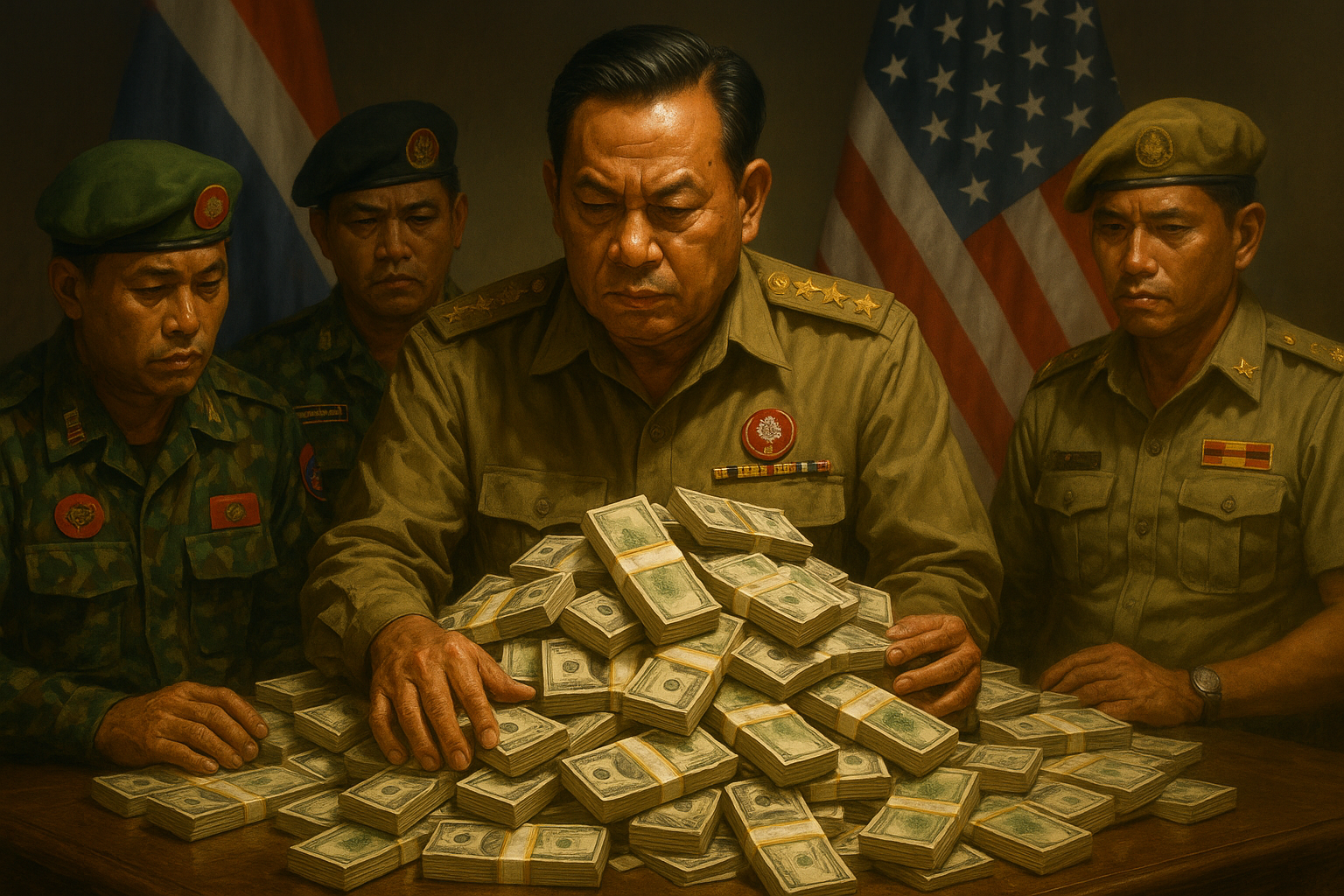
Introduction: A Criminal Empire Built on Karen Land—but Never by the Karen People
Across the Thailand–Burma (Myanmar) border, an enormous criminal economy has taken root—powered by cyber-scam compounds, human trafficking, and militia-protected enclaves operating beyond the reach of the state. These networks have defrauded millions worldwide and enslaved tens of thousands of trafficked workers.
But the Karen people themselves are not responsible for any of this. They are victims—displaced, extorted, threatened, and betrayed by corrupt individuals who abused leadership positions inside the Karen National Union (KNU) and some of the armed and political structures.
For years, the Kawthoolei Army (KTLA) sounded the alarm:
that land was being leased to Chinese criminal syndicates,
that scam compounds were rising inside Karen State,
that corrupt leaders were growing rich while the people suffered,
and that voices exposing this corruption were being silenced.
Those warnings were ignored—sometimes violently—by certain factions inside the KNU and KNLA who did not want the truth exposed. KNU leaders paid Burmese and Thai officials to target those sounding the alarm.
Now, in 2025, the United States and Thailand have launched the largest multinational crackdown on these criminal infrastructures ever undertaken. Their findings validate everything KTLA and others has been saying for years.
I. The U.S.–Thai Strike Force: A New Frontline Against Transnational Crime
In 2025, the U.S. Department of Justice unveiled the Scam Center Strike Force, deploying FBI and Secret Service agents directly into Bangkok’s Royal Thai Police War Room to coordinate real-time operations.
The Strike Force’s mission is bold and unprecedented:
Disrupt the scam-compound economy in Myawaddy, Shwe Kokko, KK Park, and other border enclaves
Seize crypto, domain networks, servers, and satellite communications
Freeze global assets linked to militia leaders, financiers, and complicit officials
Map financial networks connecting Myawaddy to Bangkok, Singapore, Malaysia, and Dubai
Partner with Thai DSI to shut down human trafficking and cross-border movement
Armed with specific intelligence, this is the first time U.S. agents have been physically deployed to target scam compounds operating just across the Thai–Burma (Myanmar) border.
And the patterns they are uncovering align precisely with what KTLA has warned about for years.
II. Scam Compounds: The Criminal Super-Cities of the Borderlands
In Karen State, massive criminal enclaves function like rogue micro-states:
KK Park, Shwe Kokko, and Tai Chang compound include:
Forced-labor cyber-fraud centers
Torture and detention facilities
Casinos, brothels, and crypto hubs
Their own militias, border gates, and internal courts
Direct ties to Chinese triads and transnational mafias
Killing detractors
These areas are not governed by the Karen people—they are controlled by BGF, DKBA, and at times individuals inside KNU/KNLA who facilitated land leases and protection agreements.
The victims include:
Global scam victims losing life savings
Trafficked workers beaten, starved, and forced to scam
Karen civilians displaced or threatened by criminal expansion
None of this was created by the Karen people. They have suffered the most from it.
III. KTLA’s Long-Standing Warnings: Exposing Corruption While Being Targeted for Speaking the Truth
For years, KTLA General Nerdah Bomya has stood almost alone in exposing how corruption eroded the integrity of Karen leadership.
1. Land Leases to Criminal Syndicates
KTLA warned that certain officials inside KNU and KNLA quietly:
leased Kawthoolei territory to Chinese crime-linked investors,
allowed scam cities to rise in Myawaddy and Shwe Kokko,
negotiated private deals without community approval,
protected illegal construction and casino zones.
Have killed those exposing the truth
These deals brought wealth to individuals—not to Karen villages, schools, or health services.
2. Secret Bank Accounts Across Asia
KTLA repeatedly exposed that some leaders maintained large private bank accounts in:
Bangkok
Singapore
Malaysia
Offshore jurisdictions
These accounts allegedly held profits from:
scam-compound land leases
casino taxation
cross-border trafficking fees
illicit “border trade” payments
The Strike Force and Thai FIUs are now investigating the same financial networks.
3. KTLA Paid the Price for Exposing Corruption
For revealing these truths, KTLA faced:
smear campaigns
expulsion from alliances
internal threats
armed intimidation
political isolation
They were targeted not because they were wrong, but because they were right.
Now, the U.S. and Thai operations demonstrate that KTLA’s warnings were accurate all along.
IV. BGF and DKBA: Crime Militias at the Heart of the Scam Economy
While the Karen people remain victims, two groups—BGF and DKBA—have been officially sanctioned by the U.S. Treasury for:
providing armed protection to scam centers
participating in human trafficking
renting land to scam operators
collaborating with Chinese crime networks
These sanctions validate KTLA’s claims and expose the criminal-commercial networks fueling the suffering of Karen civilians.
V. The U.S.–Thai Crackdown: Finally Targeting the Criminal Leadership, Not the People
The Strike Force, working with Thai DSI, is not targeting Karen communities.
They are targeting:
corrupt officials
criminal financiers
militia commanders
bank accounts tied to scam compounds
cross-border money-laundering networks
land-lease profiteers
This is a historic moment:
The world is no longer blaming the Karen people. The world is finally seeing the corruption of certain leaders—exactly as KTLA exposed.
VI. Why This Matters: The Future of Kawthoolei Is at Stake
The scam-compound economy has done more damage to Karen sovereignty, unity, and reputation than any military offensive.
But this new phase—where global law enforcement is dismantling the criminal networks from the outside—creates a rare opportunity:
An opportunity for:
honest leadership
genuine reform
protection of Karen civilians
restoration of Kawthoolei’s dignity
removal of criminal influence
accountability for corrupt leaders
KTLA, once dismissed for exposing corruption, now stands vindicated. They have defended the Karen people where others failed.
Conclusion: A Turning Point for Karen State and for Global Justice
As U.S. agents and Thai authorities dismantle scam cities across the border, one truth becomes clear:
The Karen people were never the problem.
Corruption was.
KTLA fought it.
And now, the world is finally catching up.
This is the beginning of a new chapter—
one where criminal leaders may lose everything
and the Karen people may finally reclaim the future stolen from them.
References
Crisis Group. (2022). Crowdfunding the War: The Money Behind Myanmar’s Resistance. International Crisis Group. https://www.crisisgroup.org/asia/south-east-asia/myanmar/328-crowdfunding-war-money-behind-myanmars-resistance
Department of the Treasury. (2025, May 5). Treasury Sanctions Burma-Based Actors Involved in Fraud and Corruption. U.S. Department of the Treasury. https://home.treasury.gov/news/press-releases/sb0129
The Irrawaddy. (2025). US Strike Force Launches Operations Against Myanmar-Based Scam Networks. The Irrawaddy. https://www.irrawaddy.com
The Irrawaddy. (2025). Myanmar Junta Dynamites Scam Hub in PR Move as Global Pressure Grows. The Irrawaddy. https://www.irrawaddy.com
U.S. Embassy in Thailand. (2025, September 8). Imposing Sanctions on Online Scam Centers in Southeast Asia. U.S. Embassy & Consulate in Thailand. https://th.usembassy.gov/imposing-sanctions-on-online-scam-centers-in-southeast-asia/
United States Institute of Peace. (2024). Scam Compounds in Southeast Asia: Emerging Global Threats. USIP.
DOJ Office of Public Affairs. (2025). DOJ Announces Scam Center Strike Force. U.S. Department of Justice.
Royal Thai Police. (2025). International Anti-Scam and Human Trafficking Operations Briefing.
