

The PowerMentor Institute for Freedom and Justice explores leadership, freedom, and democracy issues with a commitment to those seeking freedom and self-determination, empowering those in regions with totalitarian control. We conduct thorough research using AI and other tools to provide the most accurate and insightful information available.

Turning the Tide: KNU and KNLA Reclaim Ground — Now Is the Time to Unite with KTLA and Reject Corruption for Lasting Liberation
The Karen National Union (KNU) and its armed wing, the Karen National Liberation Army (KNLA), are at a historic turning point in their decades-long struggle for self-determination and justice. With the successful capture of major junta bases—including Maw Phoe Kay, Tarlal, Htee Khee, and the symbolic recapture of Manerplaw—the resistance has shown both the military capability and the enduring spirit of the Karen people.

The Silent Game: How China Strategizes America's Fall — and the Countermove Begins
The concept of China attempting to "destroy America from within" is explored in various books and analyses, notably Plan Red: China's Project to Destroy America by Gordon G. Chang and Unrestricted Warfare: China's Master Plan to Destroy America by Qiao Liang and Wang Xiangsui. These works, along with other sources, outline strategies that China might employ to undermine the United States through non-military means. Here's a synthesized overview of the key themes:

Stranded Abroad? The Hidden Risk of Traveling Without a U.S. Passport
Traveling from the U.S. abroad with a travel document instead of a U.S. passport presents several challenges, depending on the type of travel document and the destination country. Here’s a breakdown of key issues:
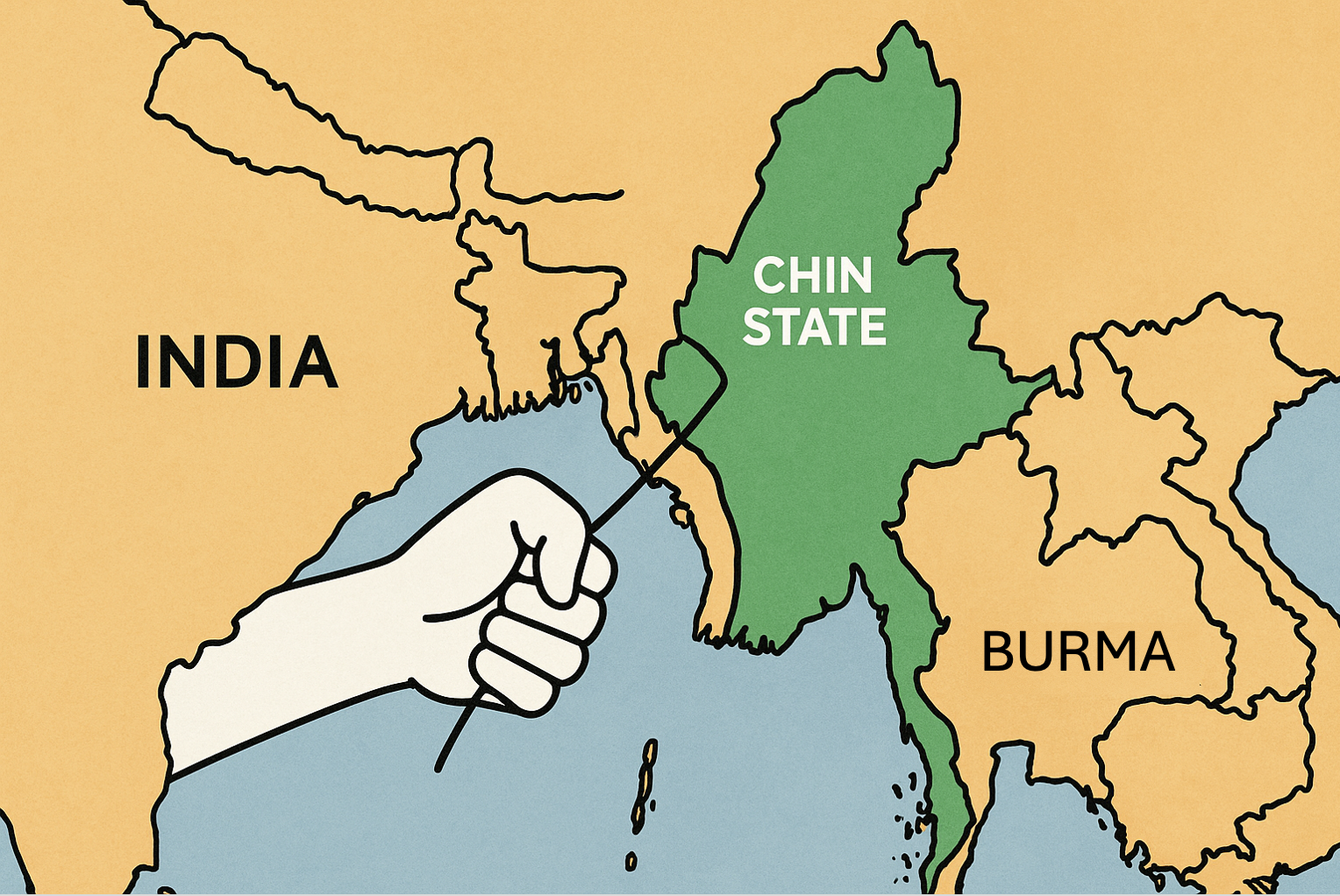
Borders in Flux: Could India Absorb Parts of Burma’s Chin State?
Recent political statements and cross-border ethnic ties are fueling speculation that India may be eyeing territory in western Burma, particularly Chin State and the Kabaw Valley. What once seemed far-fetched is now gaining traction amid Myanmar’s civil unrest and weakening central authority.

Funding Freedom or Fueling Ideology? The Controversial Shadow Behind the NUG’s Washington Presence
Since the military coup in Burma (Myanmar) in 2021, the National Unity Government (NUG) has gained global recognition as a pro-democracy opposition. One of its most notable moves has been establishing a foreign ministry office in Washington, D.C., but the source of funding behind this symbolic presence has become a point of contention. Many speculate that the Open Society Foundations (OSF)—the powerful philanthropic network founded by George Soros—may be quietly funding these operations.

With Deep Gratitude – Thank You for Standing Strong on Karen Day in DC - May 7, 2025
From the bottom of our heart, thank you everyone for showing up with strength, pride, and unity at Karen Day on Capitol Hill.
We express our deepest appreciation to the U.S. State Department, Speaker Mike Johnson’s Office, Senator Ted Cruz’s Office, Senator Josh Hawley’s Office, and our honored guest speakers, Ambassador Sam Brownback, Chairman Stephen Schnek & former Chairman David Curry, Bipartisan U.S. Commission on International Religious Freedom.

The Traitor: How Saw Chit Thu Turned the Ethnic Struggle into a Criminal Empire
The U.S. Department of the Treasury has sanctioned Saw Chit Thu, a former Karen National Union (KNU) officer turned militia warlord, for his central role in human trafficking, cyber scams, and transnational crime through his control of the Karen National Army (KNA). This action underscores not only U.S. resolve but also the urgent need to differentiate true ethnic movements from military-controlled proxies in Burma.

The Ethnic Rejection of the NUG: Why Burma’s National Unity Government Lacks Legitimacy Among the Oppressed
As Burma’s crisis deepens, many Western observers mistakenly view the National Unity Government (NUG) as a beacon of democratic resistance. But to the country’s ethnic nationalities, the NUG is not a representative government—it is a rebranded Bamar-centric elitist authority continuing decades of exclusion, domination, and denial of indigenous sovereignty.

Burma’s Aftershock: How the Burmese Junta Hijacked Disaster Relief to Crush the Revolution for the Ethnic People
The Karen people—long among the most resilient of Burma’s ethnic groups—have spent decades resisting domination by a Burman-led military regime. Their fight for self-determination in Kawthoolei, their ancestral homeland, is not just about land or identity; it’s about survival and dignity in the face of systemic persecution.
Since the 2021 military coup, Karen communities have taken a leading role in the broader Spring Revolution, allying with other ethnic groups and pro-democracy actors to dismantle Burma’s violent military apparatus once and for all.

Join Us on May 7 in Washington, D.C. – Stand for the Karen People
On May 7, 2025, we are calling on all freedom-loving Americans, human rights defenders, and members of the Karen community and their allies to gather at the U.S. Capitol for Karen Day on Capitol Hill. This is not just a rally—it is a historic stand for justice, survival, and self-determination.

The Patrons of the Junta: How Russia and China Fuel Burma’s Conflict
Burma’s military regime survives on a lifeline of Russian weapons and Chinese cash. While the world condemns the junta’s brutal crackdowns, Moscow and Beijing prop it up—not out of principle, but for profit and power. Fighter jets from Russia, infrastructure deals from China, and UN vetoes from both keep the generals armed and unaccountable. As ethnic resistance grows and villages burn, this unholy alliance reveals a simple truth: in global geopolitics, Burma’s suffering is just collateral damage.

Burma’s Silent War: Civilian Lives Shattered While the World Watches
As global attention shifts from one crisis to the next, a powerful exhibition in London demands we confront a crisis we have too long ignored. Testimonies from Beyond, on display at the Koppel Collective until May 6, exposes the devastating impact of the Burmese military’s airstrikes and atrocities. Featuring the personal belongings of civilians killed, including a nine-year-old’s backpack and schoolbook, and the rosary beads of an elderly couple, the exhibit forces us to see the real human cost of the military regime’s campaign of terror.

Top Risks Facing the United States in 2025
As the United States navigates 2025, it faces a convergence of pressing threats that challenge its stability and global leadership. Economic uncertainty, political division, foreign adversary aggression, and rapidly evolving societal stressors are reshaping the national landscape. Rising inflation, volatile markets, and the weight of geopolitical conflict—particularly involving Russia and China—compound domestic tensions, including misinformation and growing distrust in institutions. This image reflects the turmoil beneath the surface: a nation grappling with external and internal pressures, demanding unity, resilience, and foresight to secure its future.

Flashpoint America: Tracking Civil Unrest Risks and Staying One Step Ahead
In today’s deeply polarized political environment, the risk of civil unrest in the United States has grown significantly. From contested elections and legal battles involving high-profile figures to economic instability and heightened cultural tensions, various triggers have the potential to ignite unrest in cities across the country. Understanding where these flashpoints are most likely to occur—and how to prepare—is essential for personal safety and protecting your loved ones. This brief provides a clear overview of high-risk regions, key indicators of potential unrest, and practical steps you can take to stay informed and mobile if conditions deteriorate.
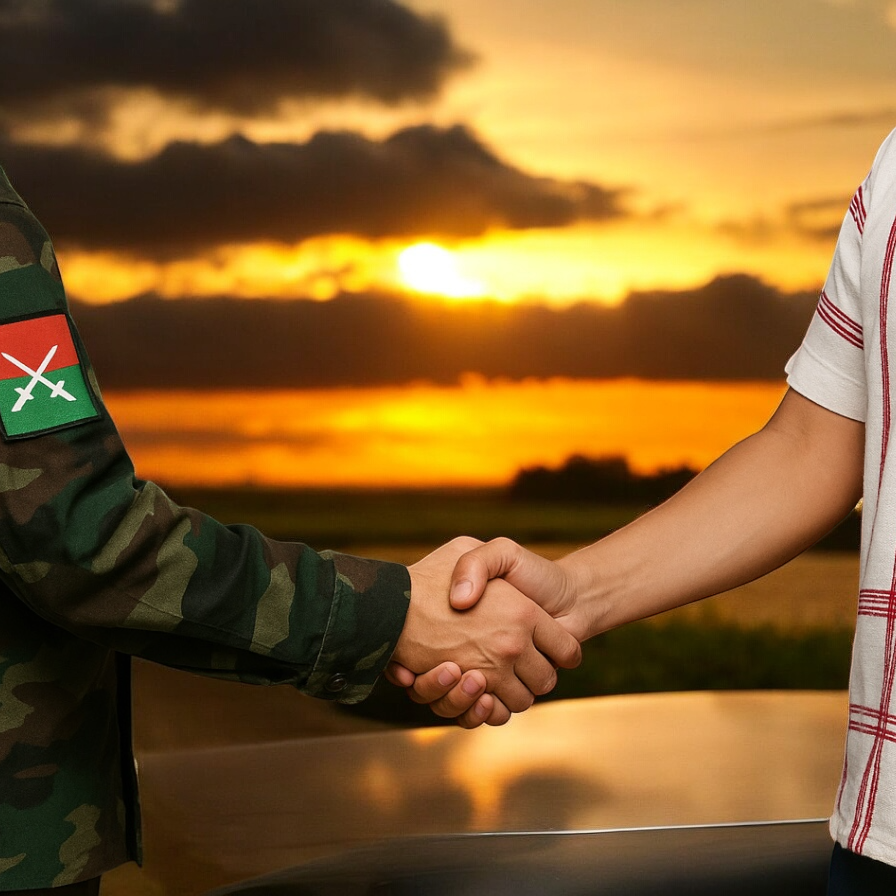
Forging Freedom: The Case for Kachin Independence and Strategic Alliance with Kawthoolei and other Ethnic Nations of Burma
The Kachin people, long-sidelined by Burma’s central government, have reached a pivotal moment in their history. Their decades of patience, negotiations, and federal aspirations have been systematically thwarted by both military regimes and Burman-dominated civilian leadership. With mounting human rights violations, political exclusion, and failed peace processes, the Kachin Independence Organisation (KIO) is rightfully advancing its movement toward full independence.

Turning Borders into Bridges: How Bangladesh’s Strategy with the Arakan Army Offers Thailand a Path to Support KTLA/KNLA Governance
As Burma’s military regime loses control along its borders, neighboring countries are adapting. A recent article from The Irrawaddy details how Bangladesh has chosen to engage with the Arakan Army (AA)—an ethnic armed group now in control of most of Rakhine State. This unofficial engagement is a pragmatic step toward securing Bangladesh’s borders and potentially enabling the repatriation of Rohingya refugees. This strategy sets a compelling precedent for Thailand, which faces similar dynamics along its western frontier with Karen State. By adapting Bangladesh’s approach, Thailand could engage the Kawthoolei Government (KTLA) and the Karen National Liberation Army (KNLA) to promote border stability and humanitarian outcomes.

Analysis of the Kawthoolei-Kachin MOU and Its Regional Implications
In a historic move that signals a powerful shift in Burma’s resistance movement, the Government of Kawthoolei, under the leadership of General Nerdah Mya Bomya, and the Kachin National Organization have signed a formal Memorandum of Understanding (MOU) condemning the ongoing atrocities committed by the Burmese military junta. This agreement not only denounces the regime’s obstruction of international humanitarian aid but also reframes the conflict as a regional crisis, urging Thailand, Malaysia, and ASEAN to take principled action. The MOU’s bold legal and diplomatic demands—ranging from cancelling engagements with the junta to invoking universal jurisdiction for arresting war criminals—establish a new standard for ethnic unity and international advocacy. This analysis explores the implications of this joint action and outlines a strategic pathway for other ethnic groups to follow, demonstrating how a coordinated ethnic front can catalyze regional stability and international accountability.

The Marxist Playbook: How the U.S. Was Infiltrated From Within
Throughout the 20th century, Marxist revolutionaries recognized that a direct violent uprising was unlikely to succeed in the United States. Instead, they developed a strategy based on infiltrating and subverting key cultural institutions—particularly the education system, the media, and civic organizations. By gradually influencing thought leaders, teachers, journalists, and policymakers, they intended to reshape American society from the inside out, replacing its capitalist foundations with collectivist ideology.

The Precipice of World War III: Global Flashpoints, Escalation Pathways, and Early Warning Systems
The world in 2025 stands at a dangerous crossroads, with multiple flashpoints threatening to ignite a global conflict. This assessment analyzes the three most volatile regions — Taiwan/China, Ukraine/Russia, and Israel/Iran — and maps their potential escalation into a full-scale World War III. Through detailed escalation pathways, a day-by-day conflict timeline, global heatmaps, and early warning indicators, this report outlines how rapidly localized incidents could trigger global alliances and nuclear confrontation. Immediate vigilance, strategic deterrence, and crisis management are critical to mitigating an unprecedented global catastrophe.

Global Christian Persecution and Killings: A 20-Year Chronicle (2005–2024)
Despite Christianity being the world’s largest religion, millions of Christians have faced relentless persecution, torture, and death over the past two decades. This is not merely discrimination—in many countries, it has escalated to ethnic cleansing and genocide. The mainstream global narrative often underreports these atrocities, yet thousands of believers die every year solely because of their faith in Jesus Christ.