

The PowerMentor Institute for Freedom and Justice explores leadership, freedom, and democracy issues with a commitment to those seeking freedom and self-determination, empowering those in regions with totalitarian control. We conduct thorough research using AI and other tools to provide the most accurate and insightful information available.

"A Cry in the Dark: Christians in Nigeria Face Genocide While the World Watches"
This Easter, while millions gather in worship and celebration across the world, the Christian communities of Nigeria kneel in fear, surrounded by the deafening silence of the international community. The brutal truth is clear: Christians in Nigeria are being systematically hunted—and it’s time the world calls it what it is: genocide.

Kaw Ku: A Journey of Resilience, Triumph, and the American Dream
In a world where adversity often shapes character, few stories embody the spirit of resilience and determination like that of Kaw Ku. Born into the turmoil of conflict, raised in the shadows of loss, and forged by the pursuit of opportunity, Kaw Ku’s journey is nothing short of extraordinary. His life is a testament to the unyielding strength of the Karen people and a reminder that the American dream is alive for those willing to fight for it.
A Childhood in the Refugee Camps
Kaw Ku's earliest memories are not of playgrounds or bedtime stories but of a life on the run. His people, the Karen, have faced decades of oppression at the hands of Burma’s military regime. For his family, safety was a fleeting concept. His father, a man of strength and dignity, was a leader among his people—someone who stood against the brutal injustices inflicted by the corrupt military forces. That resistance came at a heavy price. One day, soldiers arrived, and his father never came home. He had been executed for nothing more than daring to dream of a free Karen people.

Real ID vs Voter ID: A Case of Double Standards in the Debate Over Identification Laws
In recent years, debates over identity verification have become central to both election integrity and national security conversations. But one surprising tension has emerged: many of the same individuals and groups that strongly support Voter ID laws are also the ones most vocally opposing Real ID.
This contradiction raises a compelling question: Is it possible to demand strict identity checks at the polls, while rejecting stricter ID for air travel and federal access — without being hypocritical?

What ASEAN Must Do Now: Reclaim Credibility, Address Burma, and Break Free from China’s Shadow
As the world watches Southeast Asia navigate an increasingly complex geopolitical landscape, the Association of Southeast Asian Nations (ASEAN) finds itself at a crossroads. Long praised for fostering peace and economic growth in the region, ASEAN now faces mounting criticism for its inability to respond effectively to the Burma (Myanmar) crisis and its growing economic dependency on China. If ASEAN is to reclaim credibility, protect regional stability, and maintain autonomy, it must act boldly—and rethink its outdated policy of non-interference.

Weaponizing Enlightened Economics: A U.S. Strategy for Stability and Strength in Burma
As the world grapples with geopolitical uncertainty and expanding authoritarian influence, Burma (Myanmar) stands as a decisive test of America's ability to lead through values-driven, economic diplomacy. The compelling 2018 report, “Weaponization of U.S. Economic Engagement in Burma,” authored by Col. Tim Heinemann (ret.), outlines a robust strategy that mirrors many principles embedded in the 2017 U.S. National Security Strategy—and it strikingly aligns with key aspects of former President Donald Trump’s foreign policy doctrine.

The Power of Discernment: Why Effective Leadership Demands Objective and Logical Reasoning
In a world saturated with noise, bias, and rapid opinions, effective leadership depends not on echo chambers but on discernment—the ability to assess situations through objective and logical reasoning. True leaders do not merely react; they step back, question narratives, analyze from multiple angles, and challenge the prevailing winds of influence. This intellectual discipline is what separates decision-makers from crowd-followers.

Global Stability Through Strength: A Bold Approach to Ending the Refugee Crisis
In an era marked by mass displacement, humanitarian emergencies, and global instability, one of the most powerful and underutilized strategies for preventing the refugee crisis is compelling unstable regimes to prioritize safety, opportunity, and civil engagement within their own borders.

Strategic Use of 90-Day Pauses in Trump's Policy Playbook
Trump has historically employed 90-day pauses as a tactical measure to exert pressure, reassess situations, and negotiate from a position of strength. This approach was evident in his early presidency with Executive Order 13780, which imposed a 90-day suspension on entry to the U.S. by nationals of certain countries, aiming to enhance vetting procedures and protect national security.

Tariffs and the Imperative of Strategic Patience: Reclaiming America’s Global Strength
In today’s polarized discourse, tariffs are often met with swift judgment and short-sighted criticism. Critics focus on rising prices and short-term disruptions. But what’s missing from that conversation is a deeper understanding: tariffs are not just about economics—they are about national strength, strategic positioning, and the defense of democratic values globally.
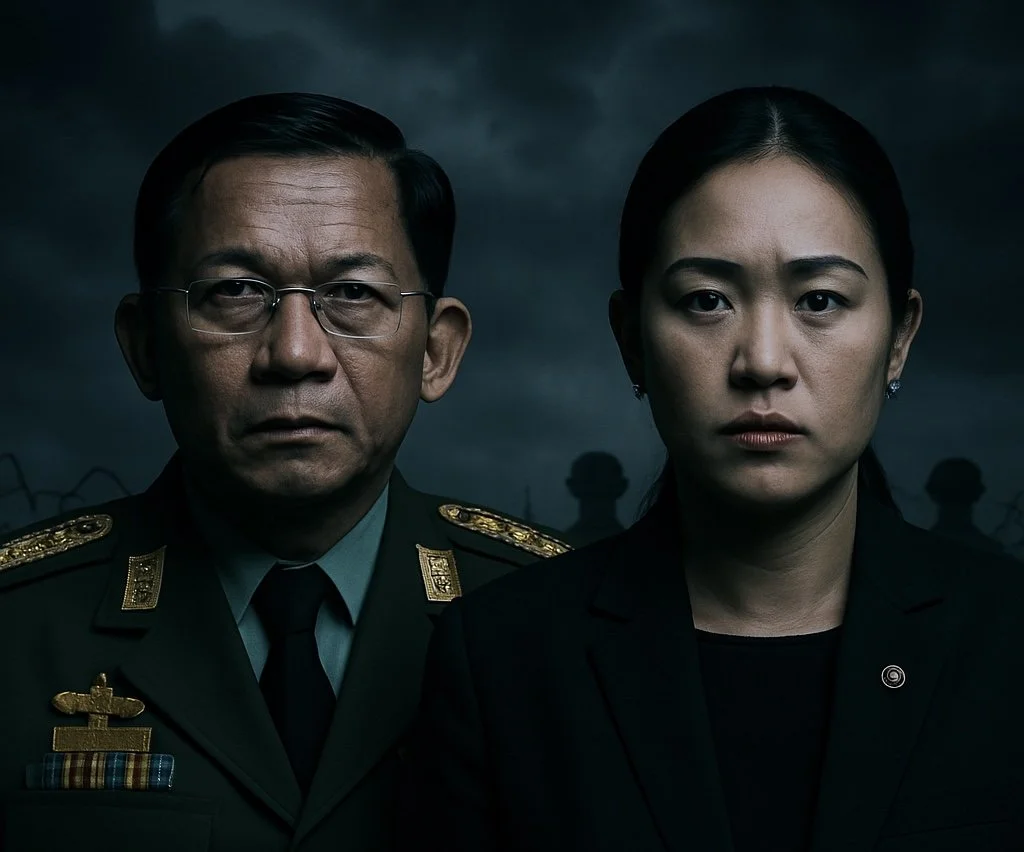
A Cautionary Embrace: Why Thailand Must Be Wary of Burma’s Military Leader—and Why the U.S. Should Pay Attention
The recent visit of Burmese Senior General Min Aung Hlaing to Thailand, marked by his high-level meeting with Thai Prime Minister Paetongtarn Shinawatra, has sparked international interest and scrutiny. On the surface, it may seem like a diplomatic exchange between neighbors—but beneath the photo ops and polite rhetoric lies a deeper concern: Min Aung Hlaing’s ambitions, reputation, and track record pose a real risk to Thailand’s stability, global standing, and moral leadership in the region.

Systematic Neglect: The Burma (Myanmar) Military's Prioritization of Self-Interest Over Civilian Welfare During Crises
This article examines the Burma (Myanmar) military's consistent pattern of neglecting civilian needs during national emergencies, focusing on two significant events: the COVID-19 pandemic and the 2025 earthquake. In both instances, the military junta prioritized its interests, undermining public health and safety. The paper highlights key actions taken by the military during these crises and provides recommendations for international engagement.

Do Not Fund the Burmese Generals: Ensure U.S. Earthquake Aid Reaches the People—Not Their Oppressors
In the wake of a devastating earthquake that struck Burma (Myanmar), the international community is once again confronted with a critical moral and political decision: whether to provide aid through a brutal military regime with a long history of corruption and abuse—or to stand firmly with the people and ensure support is delivered directly through trusted, independent channels.

Dr. Hkalam Samson: Burmese Generals Imprisoned Him Six Years for Meeting with President Trump and Speaking Truth
In July 2019, Rev. Hkalam Samson, a prominent Kachin Christian leader from Burma (Myanmar), met with then-President Donald J. Trump at the White House during the Ministerial to Advance Religious Freedom. There, he thanked the United States for promoting religious liberty and courageously exposed the Burmese military’s brutal oppression of ethnic minorities, including Christians.

Karen Border Forces and the Shadow Economy: Unveiling the Ties Between Saw Chit Thu, the KNU, and Illicit Activity
The Karen National Union (KNU), a longstanding political organization that many Karen assert does not represent their interests, and point out they were never elected by the Karen people. Recent scrutiny has cast shadows on some of its affiliated and splinter factions, particularly the Border Guard Force (BGF) and Democratic Karen Benevolent Army (DKBA), with questions arising over alleged involvement in human trafficking, drug trafficking, and online scam operations centered along the Thai-Myanmar border.

Burmese Military Exploits Earthquake Tragedy to Intensify Attacks on Civilians
Instead of aiding survivors or allowing relief to reach impacted regions, the Burmese military junta is reportedly using this vulnerable moment to escalate violence, unleashing aerial bombings on already displaced and traumatized communities in ethnic minority states such as Kayin (Karen), Kayah (Karenni), and Shan.

Divide and Rule: How the Burmese Military Installs Proxy Leaders to Control Ethnic Groups
For decades, Burma (Myanmar)'s military junta—known as the Tatmadaw—has employed a deliberate strategy of divide and conquer to maintain power and control over the country’s diverse ethnic populations. Central to this strategy is the installation and manipulation of proxy leaders within ethnic communities, fracturing internal unity and weakening collective resistance against centralized military rule.

Republic vs. Democracy: Understanding the Differences and Weighing the Pros and Cons
In political discussions, the terms republic and democracy are often used interchangeably—but they are not the same. While both forms of government empower citizens and value participation, they differ in structure, decision-making, and the protection of individual rights. Understanding these differences is essential to grasp how governments operate and serve their people.

A Republic is the Better Form than Democracy—But Only When “We the People” Stay Awake.
A democracy—especially a direct democracy—is generally easier to manipulate or co-opt through mass influence, while a republic is harder to manipulate outright but can be corrupted over time through institutional decay.

Billions in Aid, Minimal Impact: Why U.S. Foreign Aid Fails the People Who Need It Most
In light of the 2025 Burma earthquake, some have tried to blame U.S. President Donald Trump for the tragic loss of life, claiming his administration’s restructuring of USAID “cut off” crucial support. But this narrative oversimplifies the issue and ignores a long, bipartisan history of foreign aid being squandered—regardless of who’s in the White House.

The Red Resurgence: How the GOP Is Capturing the American Pulse While Democrats Drift
In a stunning shift that’s shaking the foundations of American politics, polling trends, public sentiment, and strategic missteps are converging to paint a clear picture: the Republican Party is on the rise, while Democrats appear unwilling—or unable—to respond to what the electorate is demanding. If the current trajectory continues, the United States may be headed for one of the most significant political realignments in decades.