

The PowerMentor Institute for Freedom and Justice explores leadership, freedom, and democracy issues with a commitment to those seeking freedom and self-determination, empowering those in regions with totalitarian control. We conduct thorough research using AI and other tools to provide the most accurate and insightful information available.

Two Ways to Discover Truth: Scientific Method vs. Legal Method
When evaluating truth, especially in historical or non-repeatable events, it's important to understand the difference between two main approaches:

Anchored in Purpose: How Faith and Meaning Are Guiding Young Adults Through the Uncertainty of 2025
In 2025, young adults aged 18 to 30 are navigating one of the most complex cultural and emotional landscapes in modern history. From mental health struggles and economic instability to identity confusion and social disconnection, the pressure is real—and constant.
But a quiet shift is happening.

Standing With South Korea: The Vision for a Free and Empowered North Korea
The Korean Peninsula remains one of the last frontiers of Cold War division—split by ideology, governance, and freedom. While South Korea thrives as a democratic, innovative society, its northern counterpart remains locked in a brutal totalitarian regime that suppresses the human spirit and denies its people basic human rights.

Navigating the Modern Workplace: A Guide for Gen Z and Gen Alpha
As Generation Z (born 1997–2012) and the emerging Generation Alpha (born 2013–2025) step into the professional world, they bring fresh perspectives shaped by rapid technological advancements and evolving societal values. To thrive in today’s dynamic work environment, it’s crucial for these generations to master conflict resolution, prioritize personal development, seek mentorship, and cultivate high-trust relationships.

Burma, Not Myanmar: A Name Change Can’t Erase Brutality
In 1989, just one year after the military's bloody crackdown on the pro-democracy uprising, the ruling junta unilaterally changed the name of the country from Burma to Myanmar. This was not simply a linguistic update—it was a strategic rebranding by one of the world’s most brutal regimes, aimed at whitewashing decades of oppression, violence, and ethnic cleansing.

From Dreamer to Doer: How I Turned ADHD Into My Superpower
Growing up, I was the kid with a million ideas. I could see solutions where others saw problems, dream up new businesses, and imagine entire worlds in my mind. Teachers and peers often called me "creative," "visionary," and “full of potential.” But there was a catch—those ideas rarely made it past my imagination.

Book Review: I Am Not Unbreakable by Ethan Maxwell Landry
There are books that inform, and then there are books that transform. I Am Not Unbreakable by Ethan Maxwell Landry is the latter—a raw, unflinching memoir that grips your heart, challenges your perspective, and refuses to let go even after the final page.
I’ve had the privilege of knowing Ethan for many years, and I have firsthand knowledge of his journey. His life story is nothing short of incredible. Behind his quiet strength lies a depth of resilience that few can imagine. While I always admired his humility and determination, reading this memoir revealed the full weight of what he has endured—and overcome.

Rethinking U.S. Foreign Aid: Addressing the Misallocation of Funds in Global Humanitarian Efforts
For decades, the United States has positioned itself as a global leader in humanitarian aid and development, allocating billions of dollars annually to support vulnerable populations across the globe. However, as organizations like PowerMentor have witnessed firsthand in the field, a troubling pattern has emerged: U.S. foreign aid often fails to reach the people who need it most.
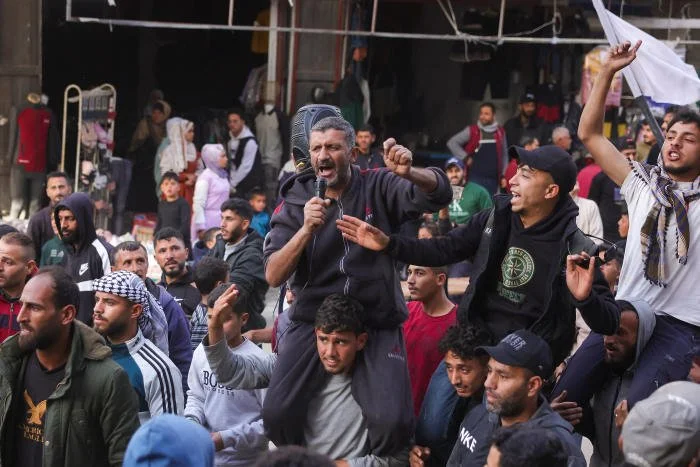
A Growing Outcry: Palestinians in Gaza Demand an End to Hamas Rule Amid Humanitarian Crisis
In a rare and powerful display of dissent, hundreds of Palestinians took to the streets of northern Gaza in late March 2025, voicing their frustration and despair over the ongoing war and the rule of Hamas. Demonstrators in Beit Lahiya chanted “Hamas out!” and waved banners that read “Enough wars,” demanding an end to the violence and calling for better governance.

Taiwan's Quest for Sovereignty: The Global Imperative of Supporting Its Independence
The United States plays a pivotal role in supporting Taiwan's independence, which aligns with American interests in promoting democracy, ensuring regional security, and maintaining economic stability in the Indo-Pacific. Taiwan's strategic location and its status as a leading technology hub—especially in the semiconductor industry—make it a critical partner for the U.S. Supporting Taiwan reinforces the U.S. commitment to democratic values and deters potential aggression that could disrupt global peace and economic prosperity.

Why Scattering Burma’s Ethnic Refugees Isn’t the Answer — It’s the Dictators’ Dream
For more than three decades, tens of thousands of Karen, Karenni, Shan, Chin, Mon, Kachin, and other ethnic people from Burma (Myanmar) have lived in refugee camps along the Thai border. Fleeing genocide, land grabs, and forced military violence, they found temporary safety—but not a future.

Turning Tides in Burma (Myanmar): Ethnic Armed Groups Rise as Military Regime Falters Despite China and Russia’s Backing
This reality presents a critical strategic oversight. If the United States and its allies wish to protect democratic interests and stability in Southeast Asia, they must reconsider their current approach. Ignoring the rising influence and legitimacy of these ethnic forces risks allowing China to recalibrate first, aligning with these groups and thereby expanding its economic and geopolitical dominance in the region.

Independence, Not Federalism: Why Burma’s Ethnic Nations Reject the NUG and It’s Federal Trap
Since the 2021 coup in Burma (Myanmar), much of the international community has looked to the National Unity Government (NUG) as a beacon of democratic resistance to the military junta. Promising to replace dictatorship with “federal democracy,” the NUG has gained sympathy abroad. But within Burma, particularly among the country’s diverse ethnic nations (Karen, Karenni, Kachin, Arakan, Mon, Shan, Cin et al), that promise rings hollow and deceptive.

Gen Z and Gen Alpha: A Conservative Shift
Recent analyses indicate a notable shift among Generation Z (born approximately between 1997 and 2012) and the emerging Generation Alpha (born from 2013 onward) towards more conservative political views, aligning with movements associated with the Trump administration.

Karen Day DC: A Timeline of Advocacy and Action (2017-2025)
Since its inception, Karen Day DC has served as a powerful platform for ethnic advocacy, bringing together members of the Karen community and allied ethnic groups to push for meaningful policy changes in the U.S. and international arenas. This annual gathering in Washington, D.C., has been instrumental in shedding light on the ongoing oppression and human rights violations in Burma, calling for international intervention, sanctions, and diplomatic pressure. Below is a summary of key agendas and outcomes from Karen Day DC over the years.

Russia’s Nuclear Deal with Burma’s Military Junta: A Threat to U.S. Influence and Security in Southeast Asia
In early March 2025, Burma/Myanmar's military leader, Senior General Min Aung Hlaing, met with Russian President Vladimir Putin in Moscow to strengthen bilateral relations between the two nations. A significant outcome of this meeting was the signing of an agreement to construct a small-scale nuclear power plant in Burma/Myanmar, marking a notable development in Southeast Asia's geopolitical landscape.

An Open Discussion with Tee Soe and Kevin LaChapelle on Karen Day in DC 2025
An open discussion with Tee Soe and Kevin LaChapelle on Karen Day in DC 2025. First, I would like to ask Dr. Kevin the main purpose of going to this trip and give us some details that we need to know for this district.

Burmanization: The Systematic Erasure of Ethnic Identity in Burma (Myanmar) and Skewing of Ethnic Population Data
Burmanization is a deeply entrenched policy and practice in Burma (Myanmar), systematically designed to erase the distinct cultural, linguistic, and religious identities of the country's diverse ethnic groups. This strategy, which has been in place for decades, seeks to assimilate ethnic minorities into the dominant Bamar (Burman) identity. The Karen, Karenni, Shan, Mon, Kachin, Arakan (Rakhine), and Chin people, among others, have borne the brunt of this policy through forced assimilation, linguistic erasure, religious persecution, and violent ethnic cleansing.

A Model for Independent Ethnic States in Burma (Myanmar): A Path to Lasting Peace
For true peace and stability in Burma (Myanmar), each ethnic group must have full independence rather than being forced into a centralized state dominated by the Bamar elite. This model envisions a system where each ethnic nation governs itself, with shared cooperation only in areas of mutual interest (trade, regional security, and diplomacy).