

WHEN THE WARNING SIGNS CONVERGE: UNDERSTANDING A WORLD UNDER PRESSURE
The human stakes of global conflict are straightforward: Can families live safely? Can people travel, work, worship, and speak without fear? Can nations determine their future without coercion? Those questions should remain central when headlines become a blur of missile strikes, embassy warnings, and military movements.
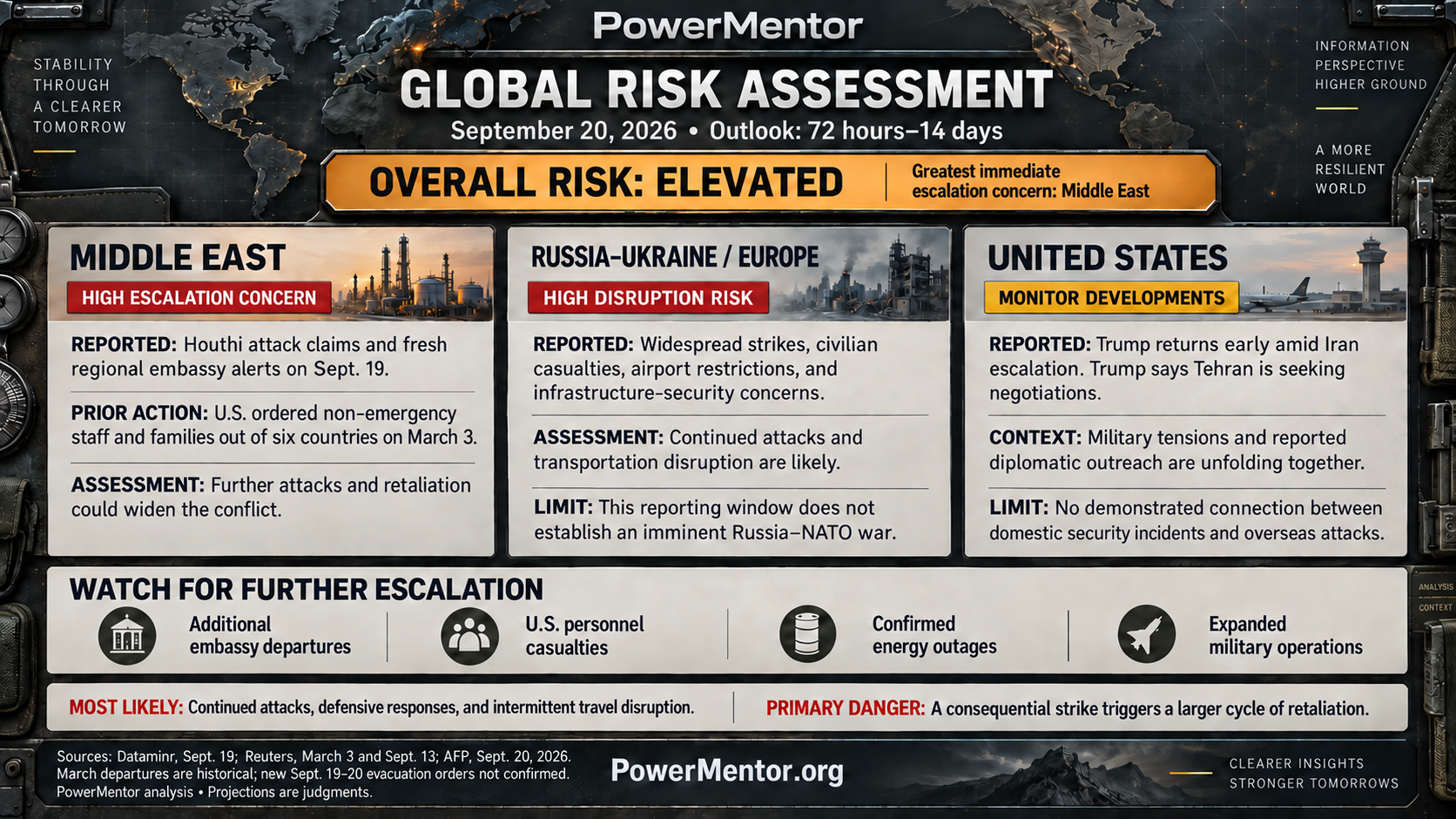
The September 19 Dataminr First Alert reporting presents a serious picture: attacks against Saudi targets, regional U.S. embassy alerts, widespread Russia–Ukraine strikes, transportation disruptions, and security incidents near American government facilities. Together, these events demand attention. Understanding their significance requires examining their consequences and connections without assuming every incident belongs to one coordinated campaign.
The strongest immediate escalation concern lies in the Middle East. Houthi claims of attacks against Riyadh and Saudi Aramco facilities in Yanbu suggest pressure aimed at both national leadership and economically important infrastructure. The extent of successful damage matters: an announced attack, an intercepted missile, and a sustained interruption of energy exports produce very different consequences.
Nevertheless, repeated attacks can impose substantial costs even when defenses prevent major destruction. They consume defensive resources, interrupt transportation, unsettle businesses, and force governments to protect numerous locations simultaneously. Civilians bear part of that burden through uncertainty, disrupted livelihoods, and the possibility of being caught in the next strike.
Embassy security measures belong in this assessment as concrete evidence of concern for personnel and citizens. Diplomatic departures had already occurred earlier in the conflict: Reuters reported March 3 orders for non-emergency U.S. personnel and families to leave six countries. Those earlier actions must be distinguished from the fresh September alerts; they do not establish that new evacuation orders were issued on September 19–20. The practical lesson is that personnel protection has already required action, and further restrictions or departures would need to be assessed against that history. Reuters
President Trump’s early return to Washington also occurred against this deteriorating regional backdrop. AFP reported the shortened visit as Middle East tensions rose, while earlier Reuters reporting documented Trump’s statement that Tehran was seeking negotiations. These developments place military pressure and diplomatic possibilities in the same picture, although they do not independently establish the precise reason for his return. AFP, Reuters
Diplomatic outreach can create an opportunity to reduce danger. Its significance depends on what follows: substantive engagement, workable commitments, and observable changes in conduct. Until then, negotiations and the possibility of further military action can coexist.
The most dangerous escalation pathway is a consequential strike followed by an expanding cycle of retaliation. Major civilian casualties, American casualties, or sustained damage to critical infrastructure could sharply increase pressure for a larger response. Each subsequent action can narrow the room for diplomacy and expose additional communities to harm.
Across Russia and Ukraine, the supplied reporting shows a different but equally consequential pattern: widespread strikes, civilian casualties, fires, and airport restrictions. The effects extend beyond the battlefield into shopping centers, vehicles, businesses, and transportation networks. The geographic spread illustrates how war reaches people who have no control over military decisions.
A single reporting window cannot establish whether the overall attack rate is accelerating. It can, however, demonstrate the continuing breadth of civilian exposure. Repeated disruption erodes economic stability and public confidence while forcing communities to adapt to persistent danger.
France’s reported identification of vulnerable sites adds another concern: infrastructure resilience. Communications, transportation, and essential services deserve protection because their failure can affect large populations. Allegations of sabotage require careful attribution, but the need to prepare for disruption remains real.
The domestic American incidents should be assessed on their own evidence. An airspace violation, a White House security response, and a presidential schedule change do not establish a coordinated attack. Responsible analysis takes each seriously while resisting conclusions that timing alone cannot support.
For PowerMentor, the responsibility is to connect information with judgment. That means defending human dignity, recognizing coercion, supporting the protection of civilians, and being honest about what remains uncertain. Strong leadership requires both readiness to act and discipline in deciding what the evidence actually shows.
The immediate outlook is continued danger from attacks, retaliation, and interrupted movement. The indicators deserving closest attention are confirmed casualties, additional diplomatic departures, sustained infrastructure outages, expanded military operations, and meaningful diplomatic progress.
Preparation begins with accurate understanding. Leadership turns that understanding into action that protects people.
Source foundation: Supplied Dataminr First Alert reporting for September 19, 2026, with linked public reporting. This article addresses the September 19–20 assessment period; projections are analytical judgments.
