
Venezuela’s “Freedom Sunday”: When a Nation’s Faithful Started Breathing Again After Maduro’s Fall
On January 3–4, 2026, the images that raced across phones and TV screens felt unreal to millions of Venezuelans: Nicolás Maduro removed from power and flown to the United States, now detained in New York as prosecutors move forward with criminal cases. AP News ABC News
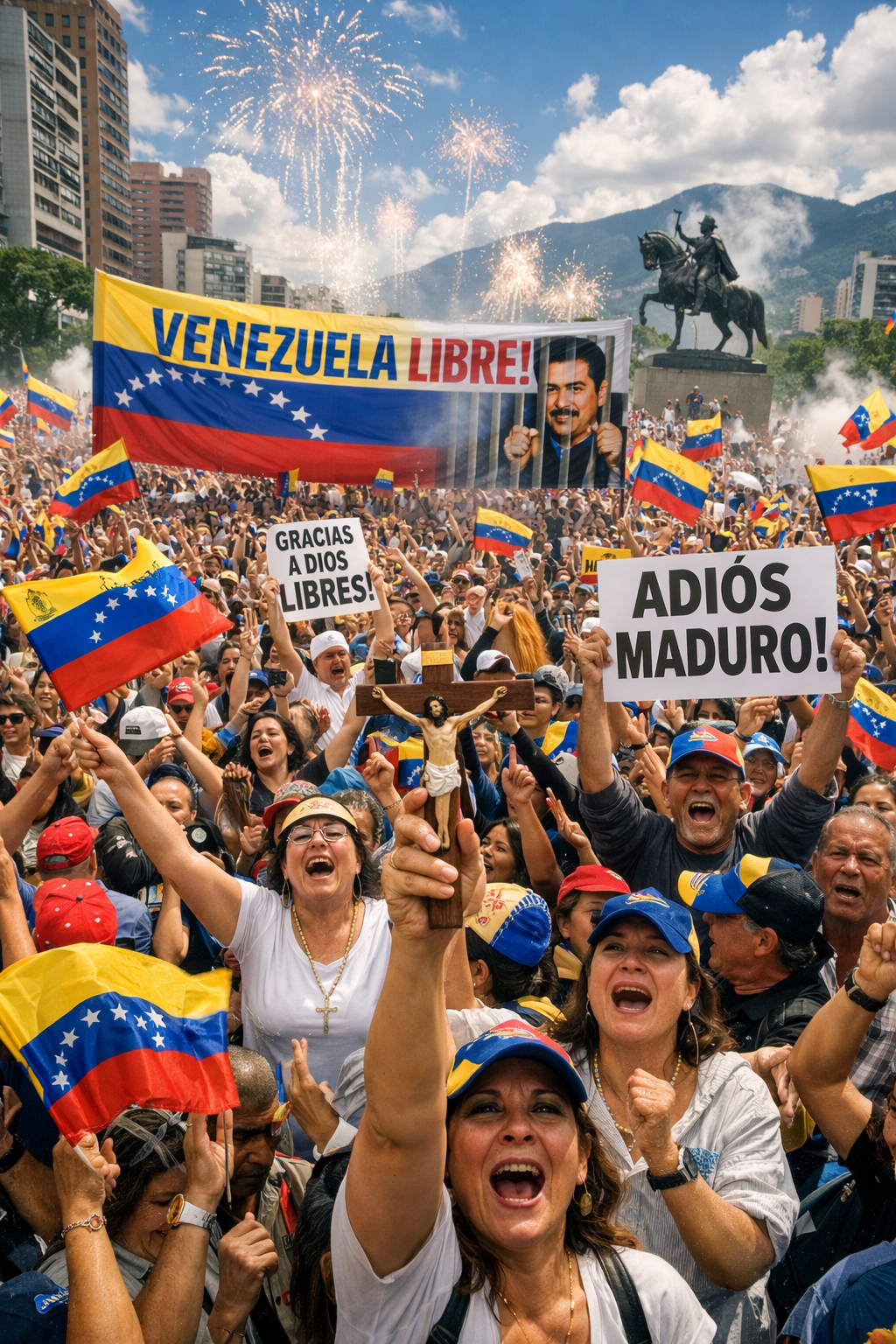
And almost immediately—wherever Venezuelans could safely gather—celebration broke out.
The sound of relief: flags, tears, and the word “liberty”
In South Florida—especially Doral, a hub for Venezuelans who fled persecution and collapse—crowds wrapped themselves in Venezuelan flags, chanted for freedom, and treated the news like the end of a long night. AP News AP News
Outside the Metropolitan Detention Center (MDC) in Brooklyn, where Maduro is reportedly being held, Venezuelan expatriates gathered again—this time with a different kind of emotion: grief for what was lost, gratitude for survival, and a fierce hope that Venezuela might finally be returned to its people. AP News
Inside Venezuela, the reaction has been more complicated—and that’s exactly what you’d expect after years of fear. Reporting and images indicate some public reactions in Caracas and elsewhere, but also a heavy undercurrent of uncertainty, with many people prioritizing safety over street celebrations. AP News The Guardian
Still, even where the streets weren’t packed, something profound has been happening in homes, small groups, and churches:
People have been praying—openly, emotionally, and with language they’ve been forced to whisper for years. The Christian Chronicle Religion Unplugged
Why Christians are at the center of this moment
For many Venezuelan believers, this isn’t only political. It’s personal.
Over the years, multiple credible observers have described harassment and pressure on religious life—including claims of disrupted services, intimidation of clergy, and punitive tactics against religious voices that criticize abuses or refuse to “fall in line.” U.S. Department of State
Beyond state pressure, many Christians have also faced threats from criminal groups and localized coercion, creating fear around speaking freely, organizing, or advocating for community integrity. Open Doors
In other words: for a portion of Venezuela’s faith community, “freedom” has not been a slogan—it has been the difference between worship as a right and worship as a risk.
Even where the regime tried to court religious groups for support at different moments, reporting has still emphasized a broader pattern of manipulation—rewarding compliant leaders while isolating or punishing outspoken ones. RNS
“Not hatred—justice”: what believers are saying
What stands out in early accounts is the tone many Christians are trying to hold:
Relief without revenge
Hope without triumphalism
Justice without bloodlust
Several reports describe Venezuelan Christians responding with Scripture, prayer, and calls for restraint—celebrating the possibility of accountability while insisting they don’t want their nation to trade one form of oppression for another. The Christian Chronicle Religion Unplugged
In U.S. cities with large Venezuelan communities, churches have held gatherings that look less like a victory party and more like a national exhale—people crying, hugging, and asking God to protect the country through whatever comes next. WHYY
The caution underneath the celebration
This is the part many freedom-loving Venezuelans understand instinctively: removing a dictator is not the same thing as restoring a republic.
Right now, reporting emphasizes a tense transition environment, mixed international reactions, and major questions about who governs next, under what authority, and with what safeguards for the Venezuelan people. AP News Reuters
So yes—there is celebration. But it’s the kind of celebration that keeps looking over its shoulder.
Because Venezuelans have learned the hard way: the most dangerous moment in a nation’s story is often the moment right after the strongman falls—when opportunists rush in, scores are settled, and ordinary people become collateral.
What “freedom for the faithful” should look like next
If Venezuela is going to turn this page without ripping the book apart, the next chapter must be defined by rights, not revenge—especially for those who have felt targeted for their beliefs.
A real restoration would mean:
Clear protections for freedom of worship, speech, and assembly
No intimidation of churches, clergy, or faith-based media
Release and review of politically motivated detentions
Rule-of-law reforms that outlive any single leader
A transition that returns legitimacy to Venezuelans—not to fear
That’s the heart of why so many Christians are celebrating this moment in the first place: not because they want power—because they want permission to live honestly… to worship without watching the door… to raise children without indoctrination… to speak about God and conscience without calculating the cost.
For them, Maduro’s removal isn’t merely the end of a regime.
It feels like the first sunrise after a very long, very dark night. The Christian Chronicle U.S. Department of
