
The Dictator’s Playbook: Buy Loyalty, Crush Everyone Else
A dictator’s modus operandi (their operating method) is simple: turn the state into a loyalty machine. The regime doesn’t exist to protect everyone’s rights. It exists to keep one person (or one clique) in power—and it does that by rewarding supporters and punishing everyone who won’t kneel.
Modus operandi—“how they operate.”
1) The Deal: “Support me, and you’ll get taken care of.”
Dictators don’t maintain control with elections and equal rights. They maintain control with selective benefits:
cash transfers, subsidies, cheap fuel, free food boxes
government jobs and contracts
permits, licenses, and “special access”
protection from prosecution (for loyal insiders)
This isn’t generosity. It’s transactional loyalty—a political economy built on “favorites.” Research on dictatorships and patronage describes exactly this dynamic: dictators often rely on patronage (targeted rewards) to keep political support. PIDE Files
2) The Machine: Patronage + Clientelism = Control
Two concepts matter here:
Patronage: the ruler hands out state resources to allies.
Clientelism: benefits are exchanged for obedience—your job, food, or safety depends on staying loyal.
That’s why you’ll see regimes building dependency pipelines—systems where ordinary people learn, quickly, that survival comes from being “in good standing” with the regime or its local bosses.
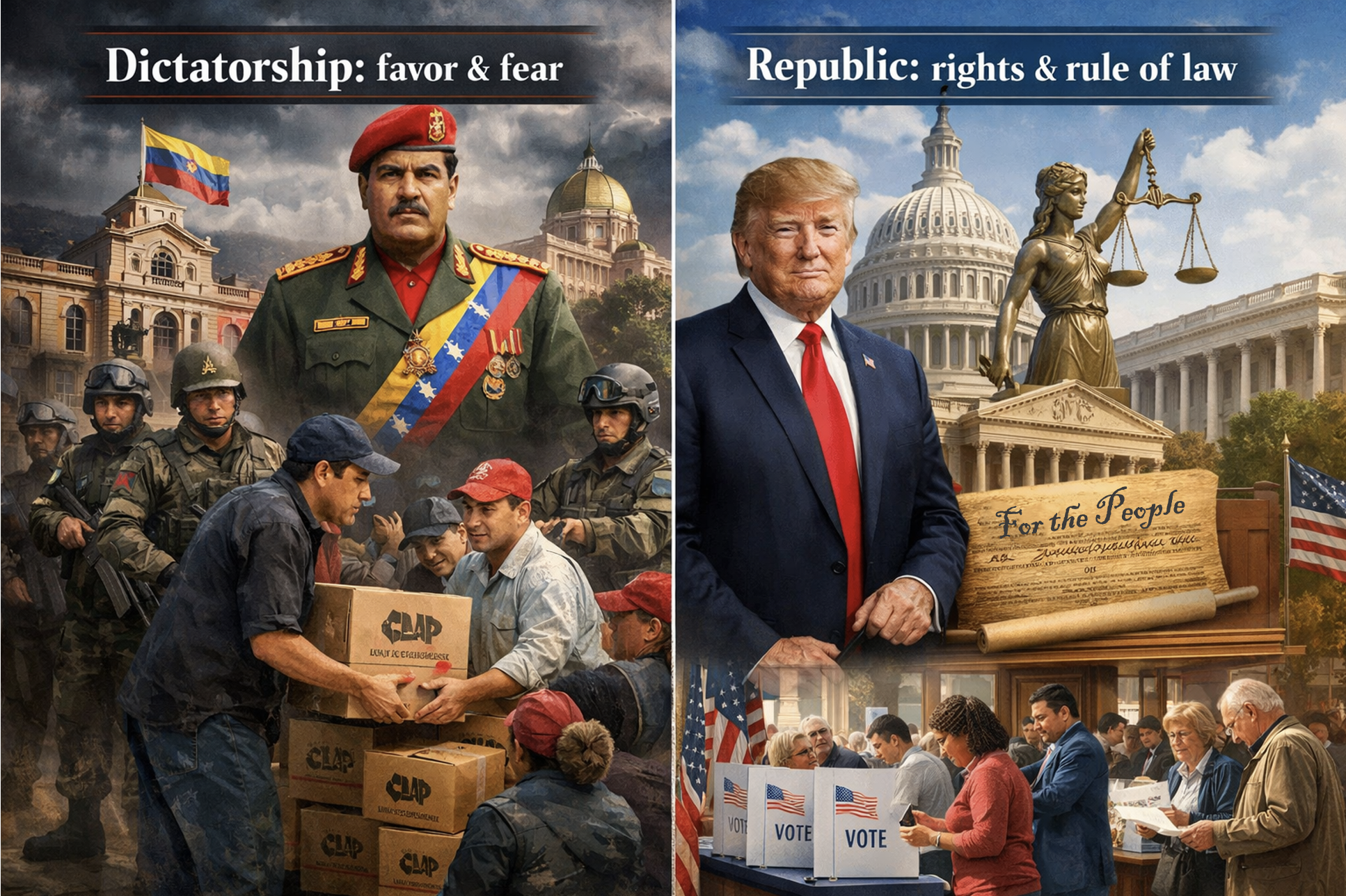
A concrete example is Venezuela, where analysts have described the use of clientelism and patronage networks—including distribution of food aid through programs like CLAP—tied to political loyalty. LASA Forum In addition, Maduro used assets from Cuba for his protection detail because Venezuelans have been oppressed, and he cannot trust the people. to not rise up because of all he has inflicted on them.
3) Why Supporters “Benefit” (At First)
People support dictators for reasons that look practical in the short run:
They get something they can’t easily get elsewhere (food, fuel, cash, a job).
They get protection—the regime looks the other way on corruption, smuggling, or abuses.
They get status—power by association.
They get fear-based certainty—the regime promises order, and punishes dissent.
But here’s the trap: those benefits are not rights. They’re privileges—and privileges can be revoked overnight. In the United States the Democratic Party began taking on these attributes when they demonized half of the country that supported President Trump. That sent shock waves through those that know very well that this leads to totalitarianism.
4) What Happens to Everyone Else: The Two-Tier Society
A dictator’s system inevitably produces two classes:
The favored:
protected, paid, promoted, excused
The unfavored:
regulated to death, censored, surveilled, harassed, fired, jailed, exiled
“law” becomes a weapon, not a shield
Authoritarian regimes share the same goal: indefinite retention of power, which drives repression and the erosion of rights and accountability. WOLA
And when opponents threaten power, dictators lean on tools like financial repression and other coercive methods to choke off resistance. Journal of Democracy
5) The Core Difference: A Republic and Rule of Law
In a republic under rule of law:
rights are universal (not dependent on favoritism)
leaders are temporary and constrained
courts are meant to be independent
government power is separated and checked
you can criticize leaders without becoming a target
In a dictatorship:
rights become conditional
institutions become props
law becomes selective
the ruler’s friends are “safe,” and everyone else is “manageable”
That’s the difference between citizens and subjects.
6) The Warning Signs You Can See Coming
When you see these patterns, you’re watching the playbook unfold:
benefits tied to political loyalty (“our people get it, their people don’t”)
courts and prosecutors used against critics
media captured, dissent labeled as “enemy” or “traitor”
property rights weakened, selective enforcement rises
“emergency” powers that never end
Bottom Line
A dictator doesn’t build a nation. He builds a dependency cartel.
He purchases loyalty with “free” benefits—paid for by debt, inflation, confiscation, or stolen opportunity—while he turns the law into a hammer against anyone outside the circle.
A republic is imperfect, but it aims at something dictators can’t tolerate: a system where the government serves the people—rather than the people serving the government.
