
U.S. captured Nicolás Maduro and his wife — and what Venezuela could look like next
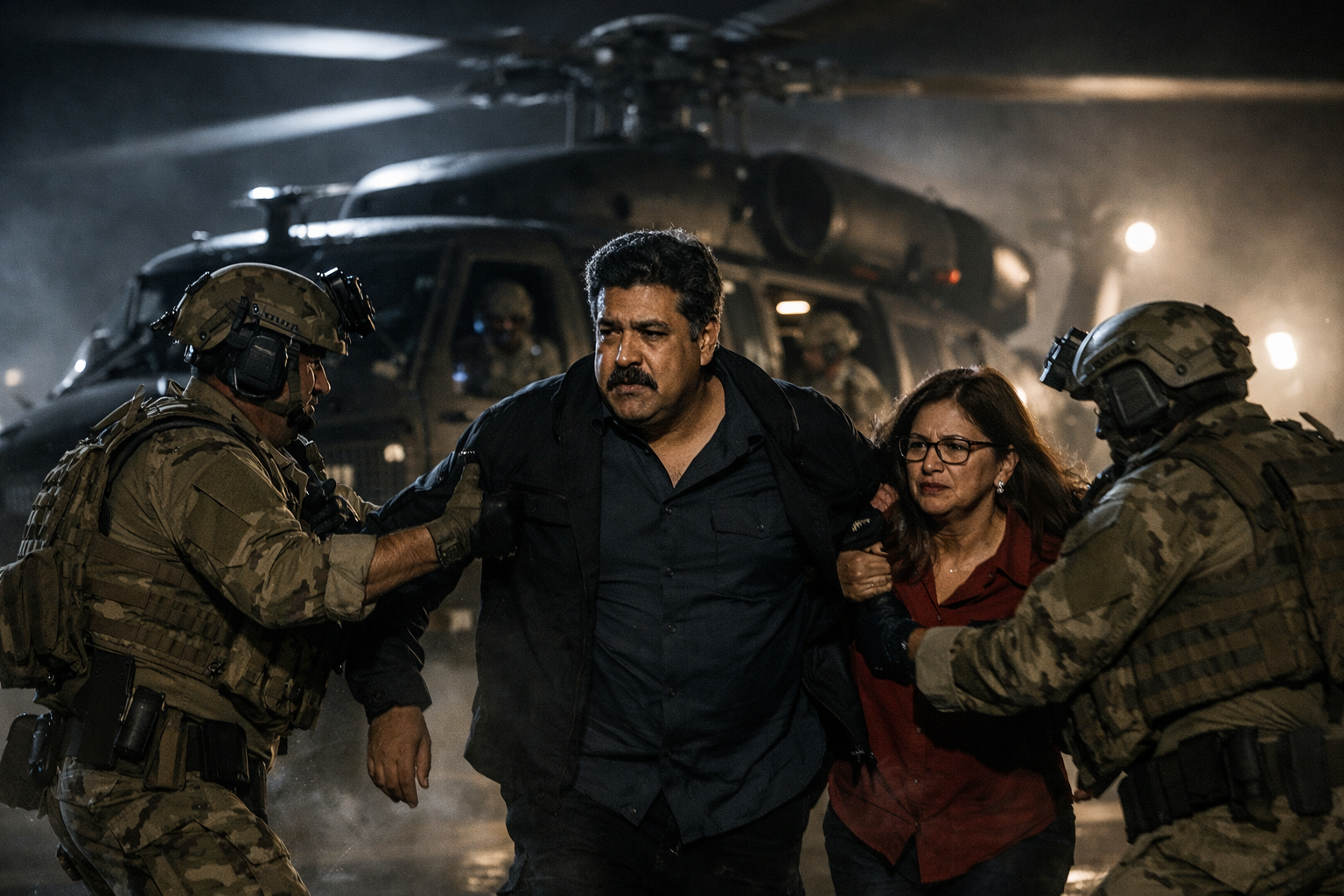
Early Saturday, January 3, 2026, President Donald Trump said the United States captured Venezuelan President Nicolás Maduro and his wife and flew them out of Venezuela, in the context of what he described as a large-scale U.S. strike. AP News Reuters
Venezuela’s government, for its part, issued statements condemning what it called U.S. “military aggression,” reporting attacks in Caracas and nearby states and declaring emergency measures. Reuters
What we know so far
Trump said Maduro and his wife were captured and flown out of the country. Reuters
Reporting describes explosions, low-flying aircraft, and strikes near key military sites in/around Caracas, plus power disruptions. AP News
The FAA reportedly restricted U.S. flights over Venezuelan airspace due to the situation. Financial Times
The immediate question: Who governs Venezuela now that Maduro is removed?
With Maduro out of Venezuela and unable to command the state apparatus, Venezuela faces a classic “power vacuum” contest among four centers of gravity:
The senior military/security leadership (who controls Caracas, airfields, broadcast facilities, intelligence services).
The ruling-party network (PSUV and loyalist governors, ministries, patronage structures).
Opposition figures and civil society (ability to mobilize legitimacy and administration quickly).
External actors (U.S., regional governments, allies of Caracas) shaping recognition and pressure.
In the first 24–72 hours, the most decisive factor is almost always control of security forces and communications. If the armed forces splinter, instability rises fast; if they unify behind an interim command, you can get a tense but ordered transition.
Three plausible futures for Venezuela (next 30–180 days)
Scenario A: Military-led “stability government” (most common in sudden removals)
A senior command group could declare a state of emergency, claim it is “restoring order,” and attempt negotiations for sanctions relief and international recognition. This often brings:
Curfews, tightened internal security
Purges or reshuffling of intelligence/police leadership
Efforts to keep oil exports flowing to fund the state
Risks: repression, factional infighting, slow progress toward elections.
Scenario B: Negotiated interim civilian transition (best-case for elections, hardest to execute fast)
This would require:
A transitional authority accepted by major institutions (military, courts, election bodies)
Rapid international diplomacy to set an election timeline, monitoring, and guarantees
Humanitarian stabilization (food, medicine, electricity, fuel distribution)
Benefits: highest legitimacy if done credibly.
Risks: sabotage by armed loyalist pockets, and “spoiler” violence.
Scenario C: Loyalist fragmentation and civil conflict (worst-case)
If loyalist units, militias, and criminal networks decide the state is up for grabs, you can see:
Competing “security zones” by region
Attacks on infrastructure (power grid, oil facilities)
Mass migration spikes and humanitarian crisis acceleration
This scenario is most likely if the state loses monopoly control of force quickly and if elites fear prosecution with no off-ramp.
What the “Venezuela after Maduro” economy could look like
Regardless of who governs next, Venezuela’s near-term trajectory will hinge on oil revenues, access to international finance, and sanctions policy.
If a transition looks credible, markets often anticipate partial normalization: more stable oil operations, limited re-entry of external services, and a gradual easing of shortages.
If violence expands, oil production and exports become targets or collateral damage—prolonging collapse and increasing regional pressure (Colombia, Brazil, Caribbean migration routes).
The U.S. has been escalating pressure via sanctions in recent weeks/months, including targeting regime-linked networks and oil-related evasion channels, which signals Washington has been building leverage for a major move. U.S. Department of the Treasury
What to watch over the next 48 hours
Who appears on state TV and who controls the narrative
Whether the Defense Ministry publicly aligns with an interim authority
Whether key commanders in Caracas and oil regions declare loyalty (or neutrality)
Whether there’s a call for elections, amnesty, or international mediation
Reports of mass arrests, defections, or clashes near strategic facilities
