

Stabbed by His Co-Pilot, the Captain Opened the Door—and Gave His Passengers a Fighting Chance
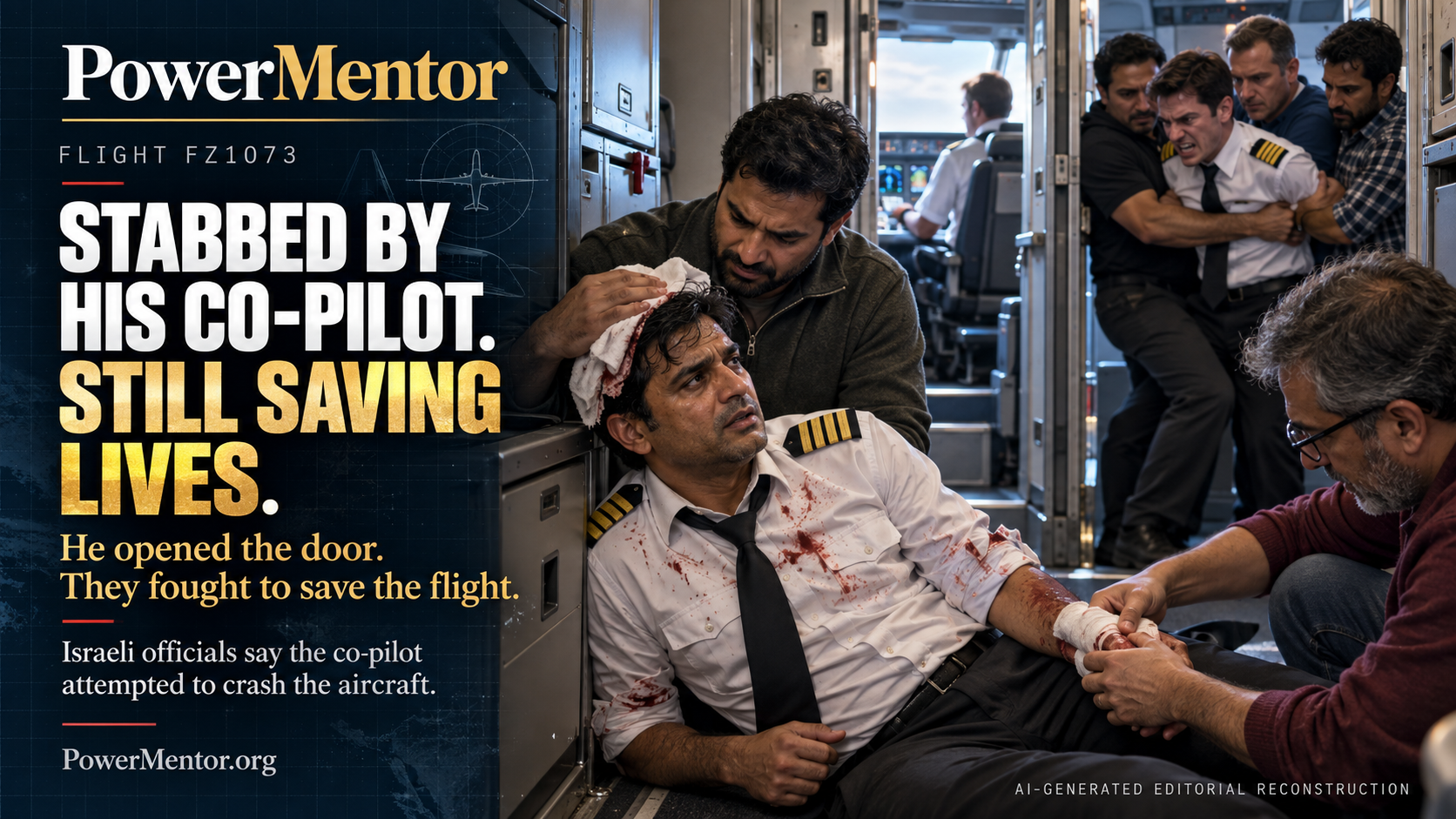
The co-pilot stabbed the captian, then tried to bring the aircraft down. The captain was bleeding. And the passengers who reached the cockpit found themselves fighting for everyone aboard.
According to Israeli officials, the emergency aboard flydubai Flight FZ1073 began when the co-pilot stabbed Captain Smit Machchhar during the September 30 flight from Dubai to Tel Aviv and attempted to crash the plane. Passengers and crew overpowered the attacker, and additional pilots aboard landed safely in Tabuk, Saudi Arabia.
The fuller accounts now emerging reveal how desperate that rescue became: a wounded captain releasing the cockpit door, passengers physically wrestling the attacker away from the controls, and a dentist trying to stop the captain’s bleeding while the aircraft was recovered.
The captain helped save the flight. Then the people aboard fought to save him.
Machchhar was bloodied on the cockpit floor when he managed to activate the door release, according to Netanyahu spokesman Doron Spielman. Despite his injuries, he created the opening that allowed passengers and crew to intervene. The Times of Israel reported that another pair of flydubai pilots aboard subsequently brought the aircraft to safety.
That release did not mean entering the cockpit was easy.
In a detailed reconstruction published by The Wall Street Journal, passenger Yaniv Hayun said the door was unlocked but obstructed by the fallen captain. He and another man pushed it open. Inside, Hayun saw the wounded captain on the floor and the attacker over the controls.
Hayun described seizing the attacker in a chokehold and pulling him out, then calling for help. The Journal’s account, drawing on passenger interviews and verified videos, described blood smeared on uniforms and walls and a passenger with blood running down his forehead.
The struggle continued outside the cockpit.
Passenger Tzvika Manes told Kan that he and others restrained the co-pilot with headphone cords. Another passenger, Daniel, described a steep dive and intense spinning before other pilots took control. People aboard feared they would not survive.
Dentist Dr. Shota Musaev was among those who rushed forward.
Speaking to Ynet after returning to Israel, Musaev said he initially went to help fight the attacker. The medical emergency became his responsibility after the suspect was restrained. He recalled that the co-pilot continued thrashing, forcing passengers to secure his hands and legs repeatedly.
Then Musaev turned to the captain.
Machchhar was bleeding heavily from his head and hands. He remained conscious and spoke while lying on the floor, telling those helping him that he was 39 and had two children. Musaev said he managed to control the bleeding, although the captain’s condition worsened somewhat shortly before landing.
In a follow-up interview, Musaev recalled:
“The captain told me he wanted to live and didn’t want to die there.”
The dentist feared the aircraft might not land before the captain lost too much blood. Controlling the bleeding helped stabilize him.
That account gives the rescue a deeply human dimension. The captain who helped others reach the cockpit was himself a father, badly injured and depending on strangers to keep him alive.
Those strangers were facing their own families’ possible deaths.
The passengers identified in the rescue include Hayun, a plumber; Manes; Asaf Rajuan; and Musaev. Further reporting also highlights Tali Manes, who heard violence and commotion near the cockpit, raised the alarm, and called for help. According to the Israeli president’s office, she later summoned pilots traveling farther back in the aircraft to come forward.
Their actions addressed several emergencies at once. The attacker had to be contained. The aircraft needed qualified pilots at its controls. The captain needed treatment. Frightened children and other passengers needed support.
The plane’s recovery was itself a demanding ordeal.
The Wall Street Journal reported that two pilots traveling aboard to operate the next flight assumed control and worked for roughly five minutes to stabilize the pitching aircraft. Its reconstruction described a loss of about 15,000 feet in less than a minute and damage that tore away part of the rudder.
Flydubai’s own statement confirms that on-duty crew traveling aboard secured the aircraft, diverted it, and landed safely at Tabuk. The airline subsequently suspended flights to and from Israel while the investigation continued.
Machchhar received hospital treatment in Saudi Arabia. India’s embassy reported him in stable condition, and reporting cited by The Times of Israel said he underwent surgery.
The investigation into the attacker has also developed.
On October 1, Netanyahu said information indicated the co-pilot had undergone radical Islamist indoctrination and was suicidal, while stressing that his conclusions were not final. Reuters reported that Israeli security officials initially assessed that the suspect likely acted alone. The UAE opened an investigation into possible terrorist purpose, planning, or direction. Those remain investigative assessments, rather than completed findings.
What emerges from the rescue accounts is the extraordinary importance of people acting while terrified and under immediate threat.
A captain resisted after being stabbed and released the cockpit door. Passengers confronted the attacker. A dentist treated severe bleeding. Additional pilots recovered the aircraft and landed it.
For PowerMentor, their example speaks to responsibility at its most demanding: using the strength, judgment, and skills available to protect someone else when there is no time to wait.
Captain Smit Machchhar gave others a fighting chance. They used it—and helped bring one another back alive.
