

Iran’s New Uprising: Courage in the Streets, Brutality from the State, and Rumors of a “Plan B” Exit
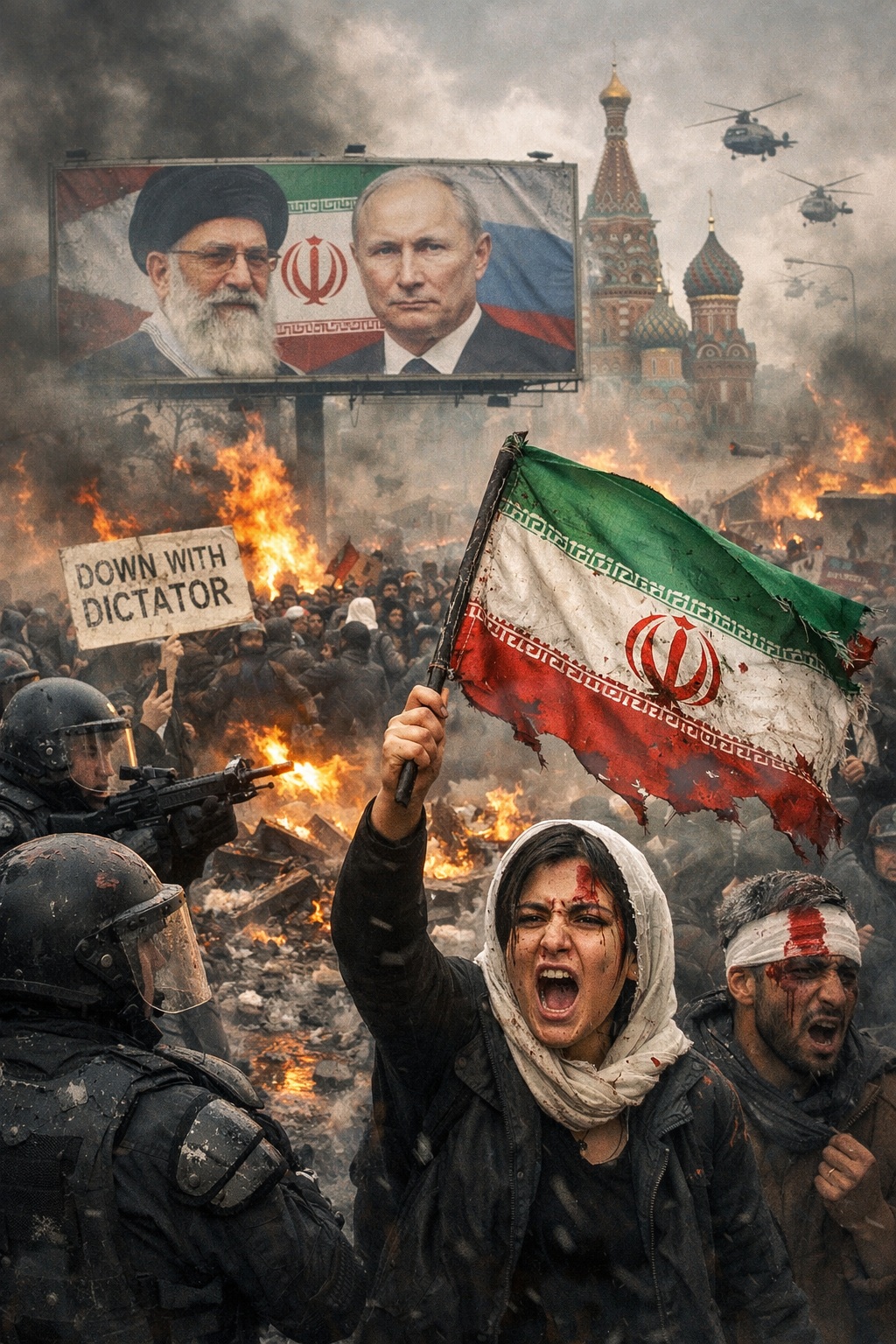
Across Iran, a new wave of nationwide protests has grown from economic anger into open rejection of the Islamic Republic—despite live-fire crackdowns, mass arrests, and a near-total communications blackout that appears designed to conceal the scale of repression.
What’s happening right now (latest status)
Protests: Demonstrations that began in late December 2025 have continued into January 2026, spreading beyond Tehran into many cities and provinces, with reports of strikes, market closures, and campus activity.
Internet blackout: Iranian authorities have sharply restricted or cut off internet and international connectivity—making it harder to document deaths, arrests, or abuses, and harder for families to locate detained relatives.
Crackdown: Multiple human rights organizations report lethal force, arbitrary detention, and intimidation tactics used against protesters and bystanders.
Because Iran’s communications have been disrupted, fatality and detention totals vary by source and can change quickly; reputable outlets and rights monitors consistently emphasize that confirmed figures may undercount the real toll.
The courage: why people are still rising up
Despite the risk of being shot, detained, or prosecuted under severe national-security charges, many Iranians have kept returning to the streets. The persistence itself is the story: protest in Iran often means betting your freedom—and sometimes your life—on the belief that silence guarantees nothing.
Even when the state “pulls the plug” on the internet, protesters have sought ways to get information out—an indication that the movement is not only about economic survival, but also about dignity and political agency.
The brutality: a totalitarian playbook in real time
Reports describe a familiar authoritarian pattern:
Information isolation (internet shutdowns, blocked communications) to reduce visibility and slow organizing.
Mass arrests and pressure on detainees, alongside intimidation of families.
Escalatory legal threats, including framing protesters as enemies of the state and using severe charges to justify extreme punishments.
This combination—force + fear + silence—signals a regime prioritizing control over legitimacy.
“Plan B” to Russia: what we know about alleged exit planning
In the last week, reporting citing intelligence claims has circulated that Supreme Leader Ali Khamenei may have an emergency contingency (“Plan B”) involving fleeing to Moscow if unrest overwhelms regime control or if elite/security cohesion fractures. These claims trace back to reporting attributed to The Times (UK) and have been repeated by other outlets summarizing that report.
Important context:
This is not independently confirmed in public evidence; it’s presented as intelligence-based reporting and should be treated as credible-but-unverified until corroborated.
The fact that such rumors are gaining traction is itself revealing: it reflects a growing perception—inside and outside Iran—that the regime feels unusually vulnerable.
Trump’s warning: “Don’t do mass killings”
President Donald Trump has publicly warned Tehran against violently killing peaceful protesters, saying the U.S. is “locked and loaded” and would “come to their rescue” if the regime shoots and kills demonstrators. Major outlets reported the warning as coming via his social media posts in early January 2026.
Meanwhile, Iranian officials have warned against foreign intervention and suggested retaliation if the U.S. or Israel strikes.
What comes next (the realistic near-term picture)
Iran now appears locked into a high-risk confrontation:
If protests spread and deepen, the regime faces the classic authoritarian dilemma: concessions can signal weakness, but harsher repression can ignite broader resistance.
If the state leans into mass punishment, it may create short-term control at the cost of longer-term legitimacy—especially as blackout tactics amplify suspicion of hidden atrocities.
Internationally, Trump’s public deterrent messaging raises the stakes, but also increases the risk of escalation and miscalculation on all sides.
References
Amnesty International. (2026, January 8). Iran: Internet shutdown hides violations in escalating deadly crackdown on protesters.
Amnesty International. (2026, January 9). Iran: Deaths and injuries rise amid authorities’ renewed cycle of protest bloodshed.
Associated Press. (2026, January 11). As protests rage, Iran pulls the plug on contact with the world.
Associated Press. (2026, January 11). Death toll in crackdown on protests in Iran spikes to at least 538, activists say.
BBC News. (2026, January 8). Internet service in Iran cut off or restricted as deadly protests reach a possible tipping point.
CBS News. (2026, January 2). Trump says if Iran “kills peaceful protesters,” the U.S. will “come to their rescue”.
Human Rights Watch. (2026, January 8). Iran: Authorities’ renewed cycle of protest bloodshed.
Center for Human Rights in Iran. (2026, January 6). Iranian authorities intensify crackdown on protests with live fire, arbitrary arrests, and attacks on hospitals.
Center for Human Rights in Iran. (2026, January 9). Grave concern that state massacre of protesters is underway in Iran amid internet blackout.
Reuters. (2026, January 2). Trump says U.S. will intervene if Iran violently suppresses peaceful protests.
Reuters. (2026, January 2). Trump threatens Iran over protest deaths as unrest flares.
Reuters. (2026, January 9). Amid mass Iran protests, Trump takes cautious approach.
Reuters. (2026, January 11). Israel on high alert for possibility of U.S. intervention in Iran, sources say.
The Guardian. (2026, January 2). Iranian officials warn Trump not to cross “red line” after threats to intervene in protests.
The Guardian. (2026, January 8). Iran plunged into internet blackout as protests over economy spread nationwide.
The Guardian. (2026, January 10). Protester pulls down national flag from Iranian embassy in London.
The Times. (2026, January 4). Ayatollah Khamenei plans to flee to Moscow if Iran unrest escalates, report says.
Al Jazeera. (2026, January 10). Iran’s army pledges to defend ‘national interests’ as protests continue.
Al Jazeera. (2026, January 11). Iran protests live: Tehran says it will hit back at U.S., Israel if attacked.
