
From a General’s Son to a Nation Builder: Kawthoolei President Ner Dah Mya outlines a vision of education, development, and self-governance amid Burma (Myanmar)’s decades-long conflict
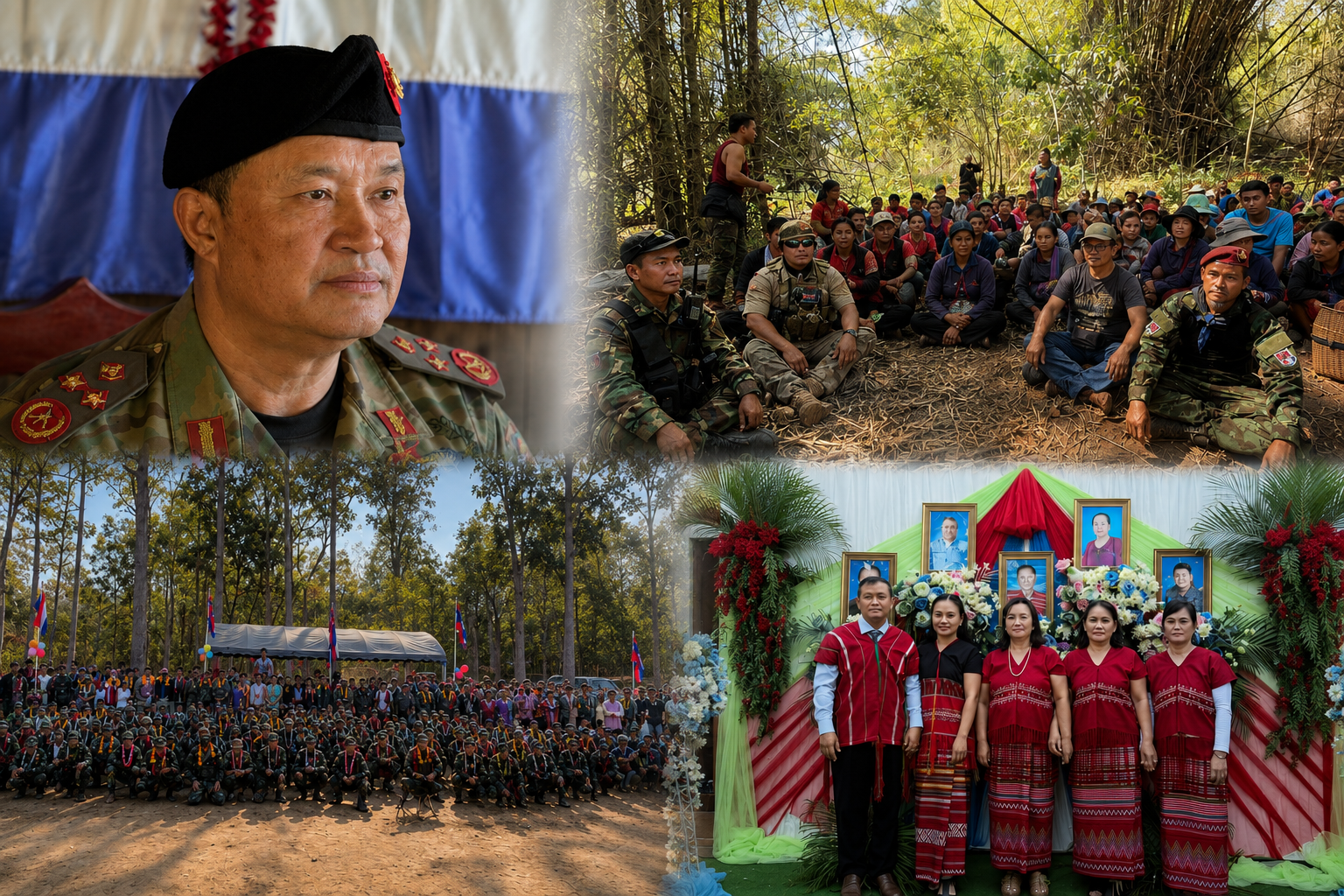
For more than 70 years, the Karen people have often been remembered through images of war, resistance, and conflict with the government of Burma (Myanmar). Yet for Ner Dah Mya, President of Kawthoolei and leader of the Kawthoolei Army (KTLA), the future he seeks to build does not begin on the battlefield—it begins with the concept of a nation.
“I do not want to build a Karen army. I want to build a country that Karen people around the world want to return to and help develop.”
This statement captures the essence of his vision.
For Ner Dah, Kawthoolei is not merely a political slogan. It is a vision of a homeland that many Karen people have long hoped for after generations marked by conflict, displacement, and loss.
Kawthoolei: A Land of Goodness
"Kawthoolei" is a term Karen people have used for generations to describe their homeland. According to Ner Dah’s interpretation, it means:
“A land where there are no bad things—only good things.”
For him, Kawthoolei is not limited to a small area within Karen State. Rather, it encompasses the historical homeland connected to Karen identity, history, and existence.
During the interview, Ner Dah unfolded a large map and pointed to major river systems including the Salween, Irrawaddy, and Mekong river basins to explain what he views as the historical origins of the Karen people.
He believes Karen ancestors migrated southward from southern China, particularly Yunnan Province, more than 2,700 years ago before settling throughout mainland Southeast Asia.
“We share similar languages, a common culture, and common roots.”
In his view, this shared history forms the basis of a distinct Karen identity and supports the Karen people's right to determine their own future.
From Bo Mya’s Son to a New Generation Leader
Behind Ner Dah’s current role is a life shaped by the Karen struggle.
He is the son of Bo Mya, one of the most influential leaders in Karen history and a former chairman of the Karen National Union (KNU).
Bo Mya became a legendary figure among Karen communities because of his leadership during decades of armed resistance.
Ner Dah explained that he grew up in a family of seven children—four sons and three daughters. Today, he is the only surviving son.
Unlike many ethnic armed leaders, however, his education extended well beyond conflict zones.
As a youth, he attended an international school in Bangkok’s Ekkamai district for approximately five to six years before continuing his education in the United States, focusing on political science, governance, and management.
These experiences profoundly shaped his worldview.
Throughout more than an hour of conversation, he spoke very little about military strategy or battlefield victories. Instead, he repeatedly emphasized:
Education
Leadership development
Governance
Economic growth
Investment
Institution building
For him, the future of Kawthoolei depends not on weapons but on the quality of its people and institutions.
The Turning Point After Bo Mya
Ner Dah believes the Karen movement experienced a major turning point following Bo Mya’s death in 2006.
According to him, the years that followed brought significant changes in both strategy and political direction.
After the signing of the Nationwide Ceasefire Agreement (NCA) in 2015, differences within the Karen movement became increasingly apparent.
While the KNU pursued a vision of federal democracy within Burma (Myanmar), Ner Dah concluded that such an approach would not adequately fulfill Karen aspirations.
“We have struggled for more than seventy years, yet we remain trapped in the same cycle.”
From KNDO to KTLA
Another pivotal moment occurred following events in Waw Lay near Myawaddy.
In 2022, Ner Dah was removed from his position within the Karen National Defence Organisation.
He subsequently founded the Kawthoolei Army, later expanding the concept into what he describes as a Kawthoolei administration and a future Kawthoolei state.
However, he acknowledges that Kawthoolei has not been recognized internationally as a sovereign state.
“We Want to Develop Like Singapore”
One of the themes Ner Dah returned to repeatedly was economic development.
“We want to develop like Singapore.”
In his view, Singapore’s success was not based on natural resources or geographic size but on:
Good governance
Strong education
Effective laws
Sound administration
“A small country can prosper if it has a good system.”
He also expressed opposition to economic models based on casinos, online gambling, and gray-market activities.
While such industries may generate short-term revenue, he questioned their long-term sustainability.
“We need a sustainable economy, not one built on gambling.”
Instead, he advocates investment in:
Agriculture
Infrastructure
Education
Local businesses
Value-added industries
Building a Nation Through People
Perhaps the most important aspect of Ner Dah’s vision is his belief that human capital matters more than military power.
He sees:
Schools
Universities
Technology
Knowledge
as the foundations of future prosperity.
He also views the global Karen diaspora as one of Kawthoolei’s greatest strengths.
Many Karen who settled in the United States, Canada, Australia, New Zealand, and Europe have become:
Doctors
Engineers
Academics
Entrepreneurs
Professionals
“One day, they will come back and help develop the country.”
For him, Kawthoolei’s future will be built through the combined expertise and commitment of Karen communities worldwide.
Inspiration from King Rama IX
One of the most revealing moments of the interview came when Ner Dah discussed his sources of inspiration.
He cited Bhumibol Adulyadej as an important influence on his thinking.
He explained that he has spent years studying the late king’s philosophy of grassroots development, community empowerment, and people-centered progress.
“I think like King Rama IX. We must develop the country. We must develop people.”
For him, national success is measured not by military power but by:
Opportunity
Education
Community development
Quality of life
The Four Pillars of Kawthoolei
Throughout the interview, Ner Dah repeatedly emphasized four foundational pillars:
1. Reviving Karen Identity and History
Preserving and strengthening Karen heritage and historical consciousness.
2. Building Political Institutions
Creating governance structures and state institutions.
3. Engaging the Global Karen Diaspora
Encouraging Karen people worldwide to contribute to the development of their homeland.
4. Building a Sustainable Economy
Developing an economy that does not rely on casinos or gray-market industries.
According to Ner Dah, nation-building is not a single event but a gradual process:
“Build people. Build leaders. Build education. Build the economy. Build good governance.”
“One Day, the World Will See Kawthoolei”
When asked what message he would like to send to the world, Ner Dah paused briefly before answering:
“One day, the world will see Kawthoolei.”
For him, success is not measured by the size of an army but by the number of people willing to return home and help build a better future.
Throughout the interview, the son of one of the Karen movement’s most influential figures spoke surprisingly little about military victories.
Instead, he focused on:
Education
Leadership
Constitutions
Investment
Economic opportunity
Institution building
Preparing future generations
In Ner Dah’s vision, the future of Kawthoolei will not be determined by guns or bullets, but by the quality of its people, the strength of its institutions, and its ability to become a place people are proud to call home.
His closing words reflected both his life experience and his philosophy:
“If you want to survive, you must fight. If you fight, you may die once. But if you never fight, you die every day.”
