

Federal Takedown Targets Mexican Mafia Network Across Southern California
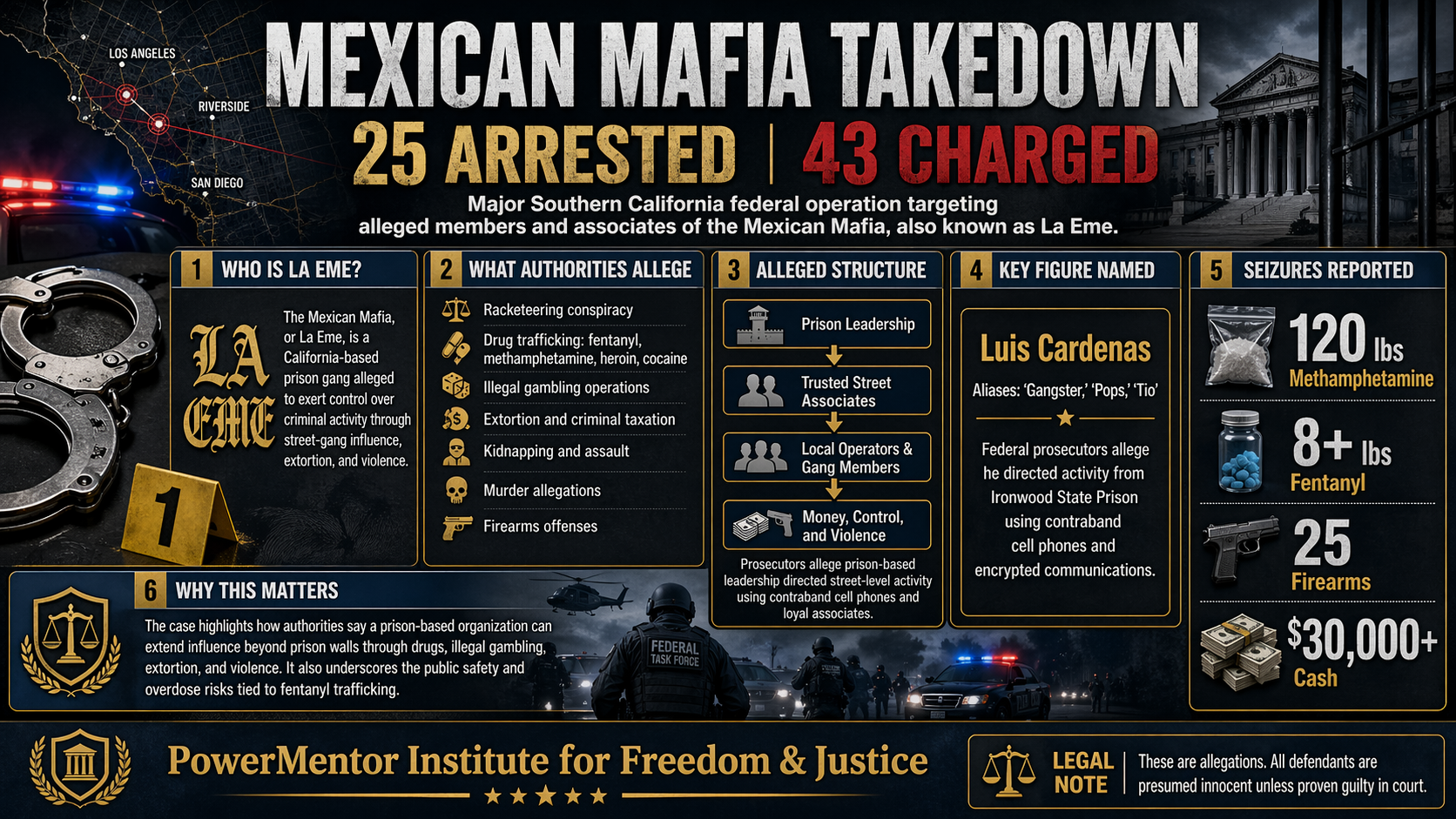
Federal authorities announced a major Southern California operation targeting alleged members and associates of the Mexican Mafia, also known as La Eme. The case resulted in 25 arrests as part of a larger federal prosecution involving 43 charged defendants across three indictments. The operation was reported by San Diego media and is part of a broader Southern California enforcement action connected to alleged racketeering, drug trafficking, illegal gambling, extortion, kidnapping, murder, and firearms offenses.
The Main Point
This was not a small street-level gang sweep. Federal prosecutors describe the case as an organized criminal enterprise allegedly directed by Mexican Mafia leadership from inside prison and carried out by associates on the street.
The public should understand the central issue clearly:
The Mexican Mafia is accused of using prison-based leadership, street-gang enforcement, illegal gambling houses, drug trafficking, and violence to generate money and control communities across Southern California.
How Many People Were Arrested?
Federal authorities reported that 25 people were arrested during the operation. The larger case involves 43 defendants charged in three federal indictments. According to federal reporting, many of the arrests and search warrants occurred across Southern California, with much of the alleged activity centered in Orange County and federal court proceedings tied to Los Angeles and Santa Ana.
Who Is the Mexican Mafia?
The Mexican Mafia, or La Eme, is a California-based prison gang. It is not the same as a Mexican drug cartel, although its criminal networks may overlap with drug trafficking organizations through the street-level narcotics trade.
La Eme has long been described by law enforcement as a prison-based organization that exerts control over Hispanic street gangs. Its power comes from fear, violence, discipline, and the collection of money from criminal activity outside prison.
The Alleged Leader
Federal prosecutors identified Luis Cardenas, also known as “Gangster,” “Pops,” and “Tio,” as a central figure in the case. Cardenas was incarcerated at Ironwood State Prison, but authorities allege he used contraband cellphones to direct Mexican Mafia activity from inside prison between June 2024 and April 2026.
That allegation is one of the most important parts of the case. Prosecutors are saying the command structure did not stop at the prison wall. Instead, they allege an incarcerated leader continued directing criminal activity on the streets through phones, encrypted communication, and trusted associates.
Crimes Alleged in the Case
The indictments include allegations of:
Racketeering conspiracy
Murder
Kidnapping
Assault
Extortion
Illegal gambling operations
Fentanyl trafficking
Methamphetamine trafficking
Heroin and cocaine trafficking
Firearms offenses
Authorities say the alleged network used violence and intimidation to protect money-making operations and enforce discipline.
Drug Trafficking Allegations
Federal authorities say the alleged organization was involved in trafficking some of the most dangerous drugs affecting communities today, including fentanyl, methamphetamine, heroin, and cocaine.
Law enforcement reported seizing approximately:
120 pounds of methamphetamine
More than 8 pounds of fentanyl
25 firearms
More than $30,000 in cash
The fentanyl allegation is especially significant because fentanyl is tied to the overdose crisis and has turned many drug-trafficking cases into both criminal justice and public health emergencies.
Illegal Gambling and “Slap Houses”
A major part of the case involves illegal gambling businesses, sometimes called “slap houses.” These underground gambling locations are often hidden in homes, storefronts, or commercial spaces.
Prosecutors allege these gambling operations were more than places to gamble. They were criminal revenue centers connected to drug sales, extortion, intimidation, and gang control. Authorities allege the Mexican Mafia collected money from these operations and used violence to enforce payment and loyalty.
Murder Allegation
One of the most serious allegations involves a killing at an Anaheim motel. Federal authorities allege the murder was tied to efforts to gain status within the Mexican Mafia. This type of allegation shows how violence can be used not only to eliminate threats, but also to prove loyalty and advance within a criminal organization.
Kidnapping and Assault Allegations
The case also includes allegations that Mexican Mafia-linked associates kidnapped and assaulted people connected to illegal gambling operations. Prosecutors allege these acts were part of the enforcement system used to protect criminal revenue and maintain fear-based control.
How the Alleged Structure Worked
The alleged structure can be understood in four layers:
Prison leadership allegedly gave orders from behind bars.
Trusted street associates allegedly carried out instructions.
Street gangs and operators allegedly handled gambling, drugs, collections, and intimidation.
Violence and fear allegedly kept the system running.
This is why prison gangs remain difficult to dismantle. The person giving orders may be incarcerated, but the network outside prison can continue operating.
Why This Matters to San Diego and Southern California
San Diego media reported the arrests because this is a regional public safety issue. Southern California gang networks do not stop at city or county borders. Drug trafficking, prison-gang influence, street-gang enforcement, and organized crime activity can move across communities, counties, and correctional systems.
For the public, the concern is not only the number of people arrested. The deeper concern is the alleged system behind the arrests: prison leadership, street enforcement, drug distribution, illegal gambling, extortion, and violence operating together.
Mexican Mafia vs. Mexican Cartels
It is important to separate the terms.
The Mexican Mafia is a U.S.-based prison gang rooted in California.
A Mexican drug cartel is a transnational drug-trafficking organization based primarily in Mexico.
They are not the same organization. However, street-level drug trafficking in Southern California can involve overlapping criminal networks, including prison gangs, street gangs, and cartel-linked supply chains.
Public Safety Takeaway
This case shows how organized crime can operate as a system. It is not just about one gang member, one drug dealer, or one gambling house. Prosecutors are describing an alleged criminal economy built around drugs, gambling, extortion, weapons, and violence.
The most concerning allegation is that leadership behind prison walls could still influence what happens on the street.
Legal Reminder
The charges are allegations. Every defendant is presumed innocent unless proven guilty in court.
Closing Thought
The Mexican Mafia takedown is not just a story about 25 arrests. It is a story about how a prison-based criminal organization allegedly reached into Southern California communities through drugs, gambling, extortion, firearms, and violence. The case exposes the challenge facing law enforcement and communities alike: organized crime does not always need a visible headquarters. Sometimes the command center is a prison cell, and the tools are contraband phones, loyal associates, fear, and money.
