

Christmas Under Oppression: China’s Intensified Crackdown on Christians (Oct–Dec 2025)
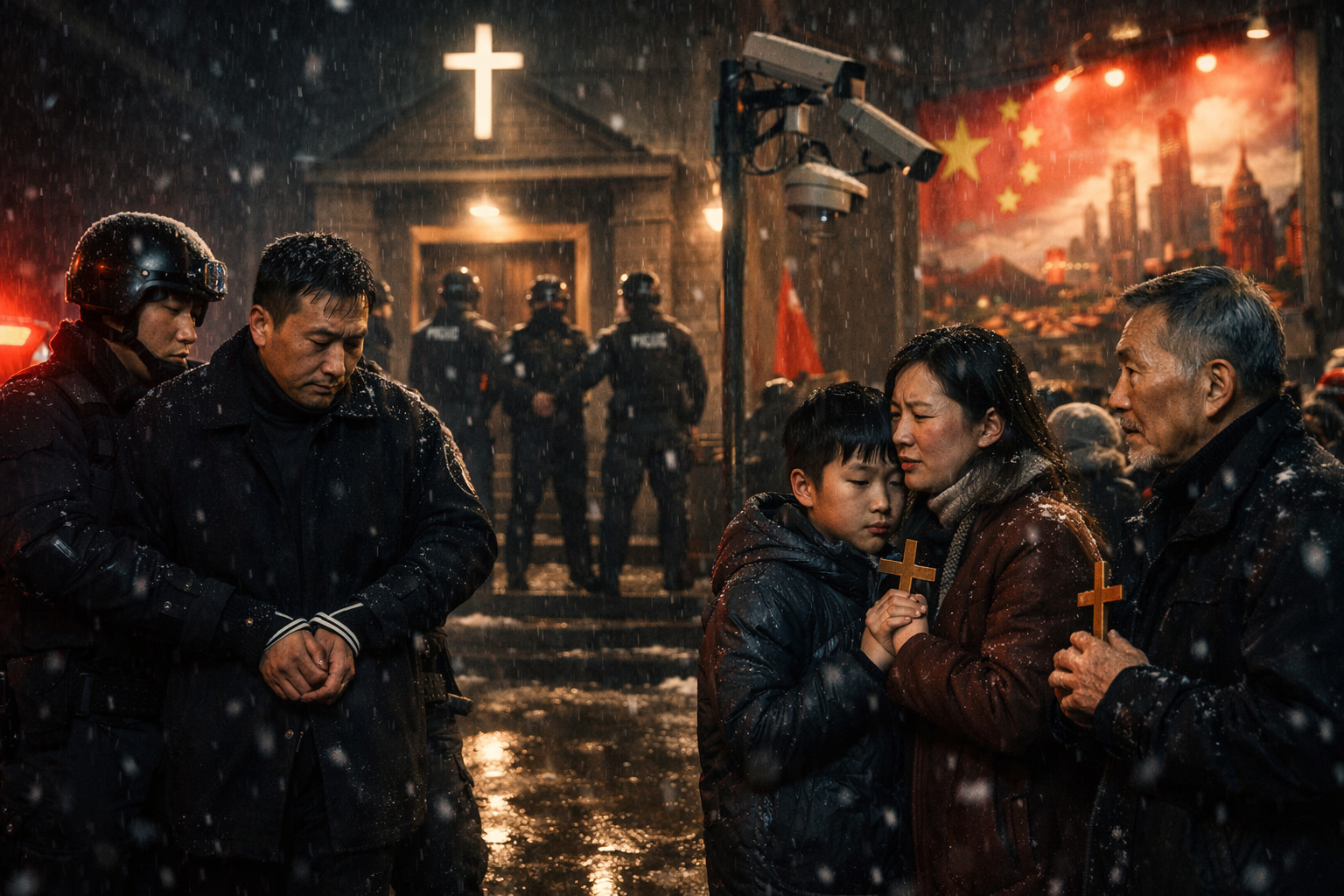
What’s been reported over the last few weeks is hard to read: pastors detained, church leaders formally arrested, families separating or fleeing, and worship pushed further into fear and hiding—right as Christians prepare for Christmas. The Guardian
This is a deep dive into what’s documented in recent reporting and human-rights monitoring.
1) The central event: a nationwide sweep hitting church leaders across multiple cities
What happened (dates and numbers that are consistently reported)
Oct 10–11, 2025: Chinese authorities carried out a coordinated operation detaining nearly 30 pastors, preachers, and members connected to Beijing Zion Church across multiple cities (reported as seven cities by Human Rights Watch). Human Rights Watch
Nov 19, 2025: 18 leaders were reported as formally arrested and could face up to three years in prison on a charge described as “illegally using information networks.” Reuters
Dec 23, 2025: Major reporting describes this as the most significant wave of pressure against independent Christian communities in years—with detentions continuing into the Christmas season and families describing terror and uncertainty. The Guardian
The people behind the headlines
Reporting identifies Pastor Jin Mingri (also known as Ezra Jin) among those targeted, with concern raised about his health needs while detained. Reuters
The Guardian’s reporting centers on Pastor Gao Yingjia’s detention and the anguish of his wife, who fled for safety. The Guardian
2) What “persecution” looks like on the ground in this wave
This crackdown isn’t just “a policy debate.” The documented pattern is police detentions + prosecutions + pressure designed to break communities apart:
A) Detain leadership, then keep the community unstable
Detentions began in October; then formal arrests followed in November, which is a major escalation because it moves cases deeper into the criminal process. Reuters
B) Criminalize normal church life using tech/network charges
Reuters and the Washington Post report charges framed around online/network activity (e.g., “illegally using information networks,” plus allegations like fraud in some reporting). Reuters
This matters because modern churches use messages, online teaching, coordination, donations, and livestream-style communication—and those normal functions become legal exposure under “network” enforcement. The Washington Post
C) Drive fear into families (flight, hiding, separation)
Christmas-week reporting describes spouses and children living under surveillance pressure, some fleeing as a direct consequence of detention campaigns. The Guardian
3) The policy engine behind the crackdown: control Christianity by controlling speech, space, and tech
Online religious restrictions tightened in fall 2025
A major feature of this 2025 escalation is the tightening clamp on online religious activity, with new or newly emphasized rules for clergy online conduct and digital religious content. China Law Translate
A plain-language summary of what these rules are used to do (as described in coverage and translations):
Restrict or prohibit online preaching/teaching outside approved channels
Restrict clergy from using online platforms to expand influence
Restrict religious content involving minors online (a recurring provision highlighted in analysis of the rules) China Law Translate
“Sinicization” is explicitly cited as the frame
Major reporting ties enforcement to the state’s campaign to bring religion under tight Party control (“Sinicization”). That means the pressure is not random—it’s part of an intentional program to ensure Christianity operates only in ways the state permits. The Washington Post
4) It’s not only one church: reports describe a widening net
While the Zion case is the most documented “last few weeks” story, recent reporting also describes pressure in other Christian communities and references other prosecutions used against church leaders (including fraud-type charges) as part of a broader pattern. The Guardian
Separately, NGO / rights monitoring has also reported new cases and sentences affecting Christian leaders (including charges such as “organizing illegal border crossing” and continued detention updates). The Dui Hua Foundation
5) Why this feels especially brutal right now
Because of timing. In the weeks leading into Christmas:
Churches are normally gathering more, serving communities more, and worshipping more openly.
Instead, the reporting describes detentions, raids, and families in fear.
It’s profoundly sad: people trying to worship are treated like criminals, pastors are taken, and children spend the holidays without a parent—because of faith. The Guardian
What to watch next (next 30–90 days)
Based on how these cases typically move (and what’s already reported), the key indicators will be:
Whether formal indictments follow the arrests (and in which courts)
Whether online enforcement expands into broader criminal cases tied to church communications
Whether detentions spread into new provinces/cities beyond the initial sweep Reuters
