
Christmas Under Fire: Nigeria’s Christians Targeted — and the U.S. Hits ISIS Camps on Christmas Day
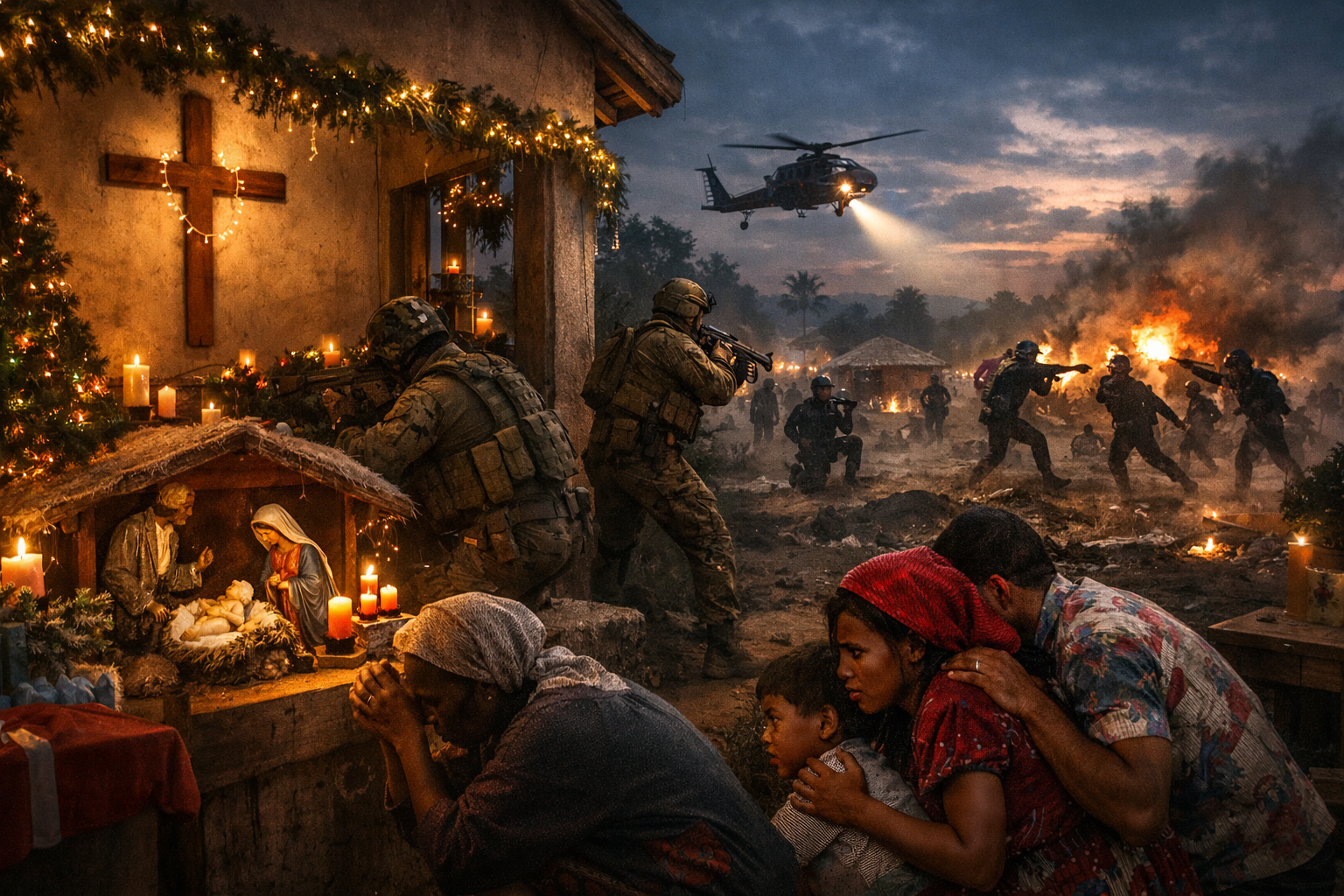
On December 25, 2025 (Christmas Day), the United States launched a major strike in northwestern Nigeria against ISIS-linked militants, after a string of attacks and abductions that have left many Christian communities fearing that the holiday season has become an open invitation for terror. The Washington Post Reuters AP News
For families trying to worship in peace, the pattern is brutally familiar: armed men arrive without warning, services are interrupted by gunfire, worshippers are dragged away, and entire communities are left to decide whether gathering to pray is worth risking their lives.
The violence Christians are facing right now
In the days leading up to Christmas, Nigeria saw fresh attacks on churches and churchgoers that sharpened international attention on Christian vulnerability in parts of the country.
Dec 14, 2025 — Kogi State (central Nigeria): Gunmen attacked a church service and abducted worshippers. Reuters reported at least 13 worshippers were taken in the assault. Reuters
These incidents fit a wider pattern in which worship gatherings—especially around major Christian holidays—become high-value targets for armed groups seeking fear, leverage, ransom money, or ideological “victory.” Reuters
Nigeria’s security crisis is not confined to one threat actor or one region. In the northeast, Boko Haram and its IS-affiliated offshoot ISWAP have waged a long insurgency marked by mass-casualty attacks on civilians. Even on Dec 25, Nigeria also suffered a suspected suicide bombing at a mosque in Maiduguri (Borno State) that killed worshippers—underscoring that extremist violence in Nigeria spills across communities. Reuters
ISIS is not “misunderstood.” ISIS is an evil terrorist machine.
Let’s be direct and factual: ISIS (the Islamic State) is a violent extremist terrorist organization that has built its brand on massacres, slavery, torture, forced “taxation,” kidnappings, and propaganda designed to intimidate entire populations. What ISIS and its affiliates do to civilians—Christians included—is not politics. It is terror. AP News Reuters
And it’s critical to be equally clear about this distinction: ISIS is not Islam, and it does not represent ordinary Muslims—many of whom have also been targets of terrorist violence in Nigeria. (That reality is visible even in this same news cycle.) Reuters
Christmas Day: what the U.S. strike did — and why it happened
According to Reuters, the U.S. conducted an airstrike in Sokoto State (northwest Nigeria) targeting Islamic State militants, and it was carried out at the request of the Nigerian government and in coordination with Nigerian authorities. A U.S. defense official said the strike hit multiple ISIS camps and resulted in multiple militant deaths. Reuters
President Donald Trump publicly framed the strike as a response to ISIS-linked attacks “primarily targeting Christians,” while Nigeria’s government pushed back on a strictly religious framing—saying the operation was part of broader counterterrorism efforts and that violence in Nigeria affects multiple communities. Financial Times Reuters AP News
Multiple outlets reported the strike as a significant escalation of U.S. kinetic action inside Nigeria’s northwestern theater—an area increasingly discussed in terms of ISIS-linked networks and cross-border militant activity. AP News The Washington Post
Who was being targeted in Sokoto — and what that implies
Reporting around the strike points to ISIS-linked elements operating in the northwest, including groups described as tied to the Islamic State Sahel/West Africa ecosystem. Reuters The Washington Post
This matters because northwest Nigeria has often been portrayed externally as “bandit country”—criminal violence, kidnappings, and cattle-rustling. The Christmas Day strike signals that U.S. and Nigerian partners are treating at least part of that operating picture as organized jihadist infrastructure worth hitting with precision munitions. Reuters AP News
The hard truth for Christians on the ground
For many Nigerian Christians—especially in rural communities—Christmas is not only a celebration. It is a calculated risk.
Because the terror strategy is simple:
Make worship dangerous.
Make public gathering terrifying.
Make families feel abandoned.
Make communities pay—through fear, ransom, displacement, or silence.
The Christmas Day strike may disrupt specific camps and planners. But it does not, by itself, solve the deeper problem: Nigeria is fighting multiple violent actors across multiple regions, and civilians—very often including Christians—keep paying the price. The Guardian The Washington Post
