
48 Hours Hunted: The Airman, the Mountain, and the Lie That Saved His Life
The Moment the Sky Turned Against Him
The sky didn’t just fail him—it turned on him. One moment he was in control inside a U.S. Air Force F-15E, executing his mission with precision. The next, everything was gone—shattered by a missile strike over hostile Iranian territory. Systems failed, alarms screamed, and within seconds he was forced to eject.
Ejection is not an escape—it’s violence. The force compresses the spine, tears through muscle, and disorients the mind. When he hit the ground, he wasn’t just alone—he was injured, disoriented, and deep behind enemy lines.
And within minutes, he realized something far more dangerous than the fall itself:
He was being hunted.
From Pilot to Prey
This was not a quiet crash in a remote area.
Iranian forces mobilized immediately. The IRGC deployed units. Civilians joined the search. Reports indicate a reward circulated for his capture. This wasn’t just military pursuit—it became a widespread manhunt.
An entire region, armed and motivated, was now searching for one injured American airman.
He knew what capture meant: interrogation, exploitation, propaganda, and leverage in a global conflict. There was no time to hesitate.
So he made the only decision that mattered:
Move. Hide. Survive.
The Decision That Saved His Life: Go Up, Not Down
Ahead of him rose jagged mountain ridges and narrow crevices—steep, unforgiving, and dangerous even for the uninjured.
Most people would move downhill.
He didn’t.
He went up.
Because he understood something critical:
People search valleys
Roads draw attention
But vertical terrain hides you
In that moment, injured and hunted, he made a strategic decision that would define the next 48 hours.
The 7,000-Foot Climb Through Pain
This was not just hiding.
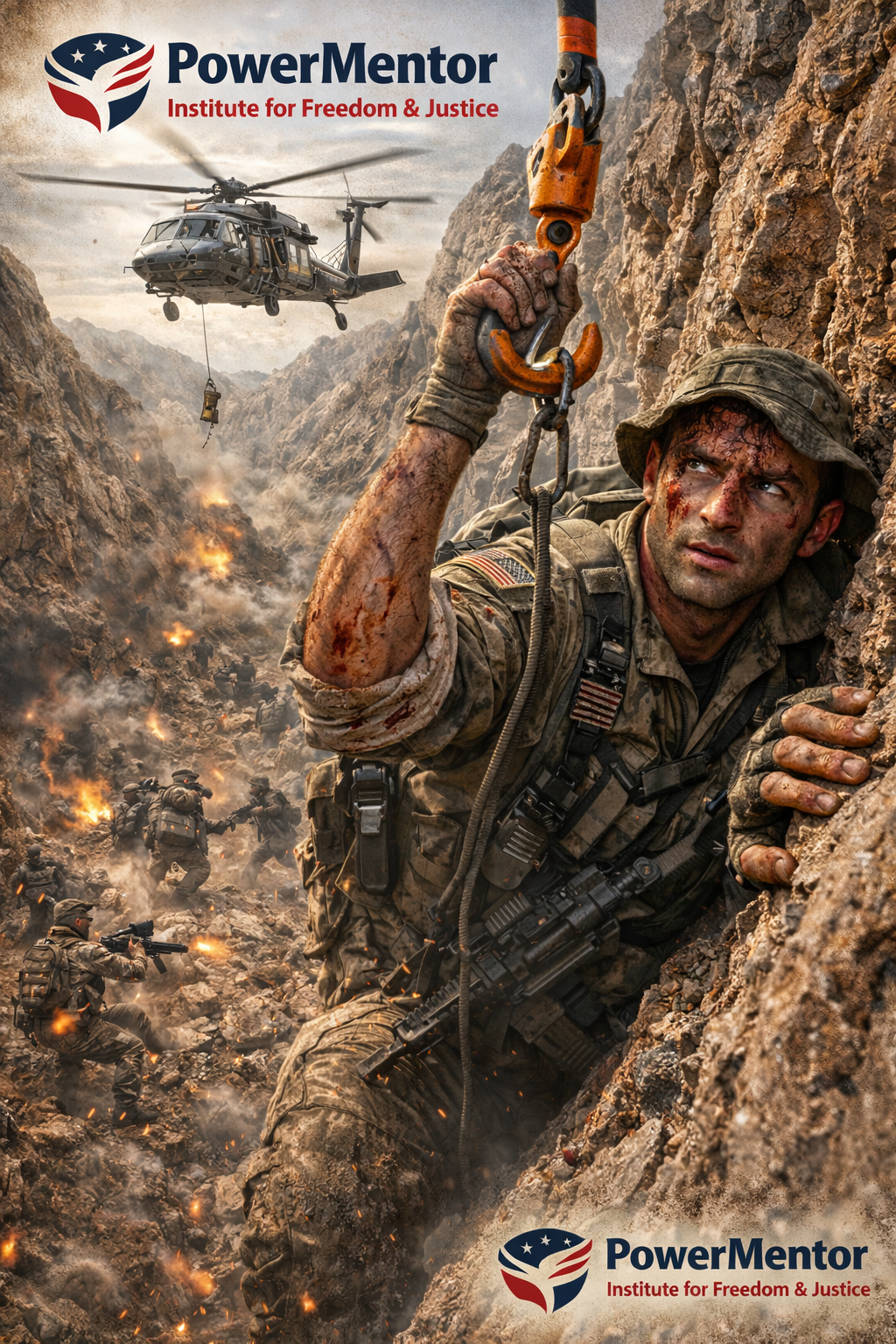
He climbed—thousands of feet upward through a narrow mountain crevice system, what has been described as roughly a 7,000-foot ascent.
There were no trails. No stability.
Loose rock shifted beneath him
Sharp edges cut into his hands
His ribs sent pain through his body with every breath
Oxygen thinned as elevation increased
His hands likely bled.
His legs trembled.
Every step risked noise—and noise meant death.
He wasn’t climbing fresh.
He was climbing injured, exhausted, and hunted.
And still—
He kept going.
Daylight: Absolute Stillness or Death
When the sun rose, the rules changed.
Movement meant exposure. Exposure meant capture.
He pressed himself into the rock—motionless, silent, controlling even his breathing.
Below him, search teams moved.
Voices echoed through the canyon. Boots scraped stone. At times, they were close enough that he could hear individual words.
He didn’t move.
Not a shift. Not a sound.
Because discipline—not strength—was what kept him alive.
Nightfall: When the Body Begins to Fail
Night brought no relief.
Temperatures dropped. Wind cut through him. Dehydration worsened. Sleep came in fragments, if at all.
Pain was constant.
But the greater battle became mental:
Isolation
Fear
Uncertainty
This is where most people break—not physically, but psychologically.
But this is exactly what SERE training prepares for.
He controlled what he could:
His breathing
His thoughts
His movement
And hour by hour—
He endured.
🔴 The Turning Point: The Lie That Saved His Life
While he was fighting for survival in that mountain crevice, something extraordinary was happening far away.
The CIA launched a deception operation inside Iran.
They pushed a false narrative:
The airman had already been found
He was being moved on the ground
Extraction was happening somewhere else
Iranian forces shifted their focus.
Search efforts redirected.
Pressure moved away from his actual location.
While enemies chased a ghost—
He remained hidden in the mountains.
At the same time, U.S. intelligence identified his real position and passed it to leadership. The decision was made at the highest level.
A rescue would be launched.
As the rescue operation unfolded, a broader strategy was quietly taking shape across the battlefield. U.S. and Israeli forces launched coordinated strikes designed to pull Iranian units away from the airman’s actual location, deliberately drawing attention toward false areas of engagement. At the same time, additional Israeli strikes disrupted Iranian search efforts, slowing their ability to locate him. Compounding the danger, Iran’s Revolutionary Guard had reportedly placed a bounty on the airman, triggering a surge of both military forces and civilian mobs racing through the terrain to find him first—turning the mountains into a chaotic and highly volatile hunt where every minute mattered.
The Rescue: Controlled Chaos Under Fire
Rescue in hostile territory is never clean.
Dozens of U.S. aircraft entered contested airspace. Special operations forces deployed. Surveillance tracked threats closing in.
As helicopters approached, they came under heavy gunfire.
Aircraft were hit. The situation turned chaotic and lethal in seconds.
This was not a recovery.
This was a fight.
The Most Dangerous Moment: Exposure
After nearly 48 hours of hiding, he had to do the one thing he had avoided the entire time:
He had to expose himself.
Injured. Exhausted. Vulnerable.
He moved toward the extraction point.
Gunfire echoed. Dust kicked up. Time collapsed into seconds.
The rescue line dropped.
Everything he had endured came down to this moment.
He reached it.
And under active fire—
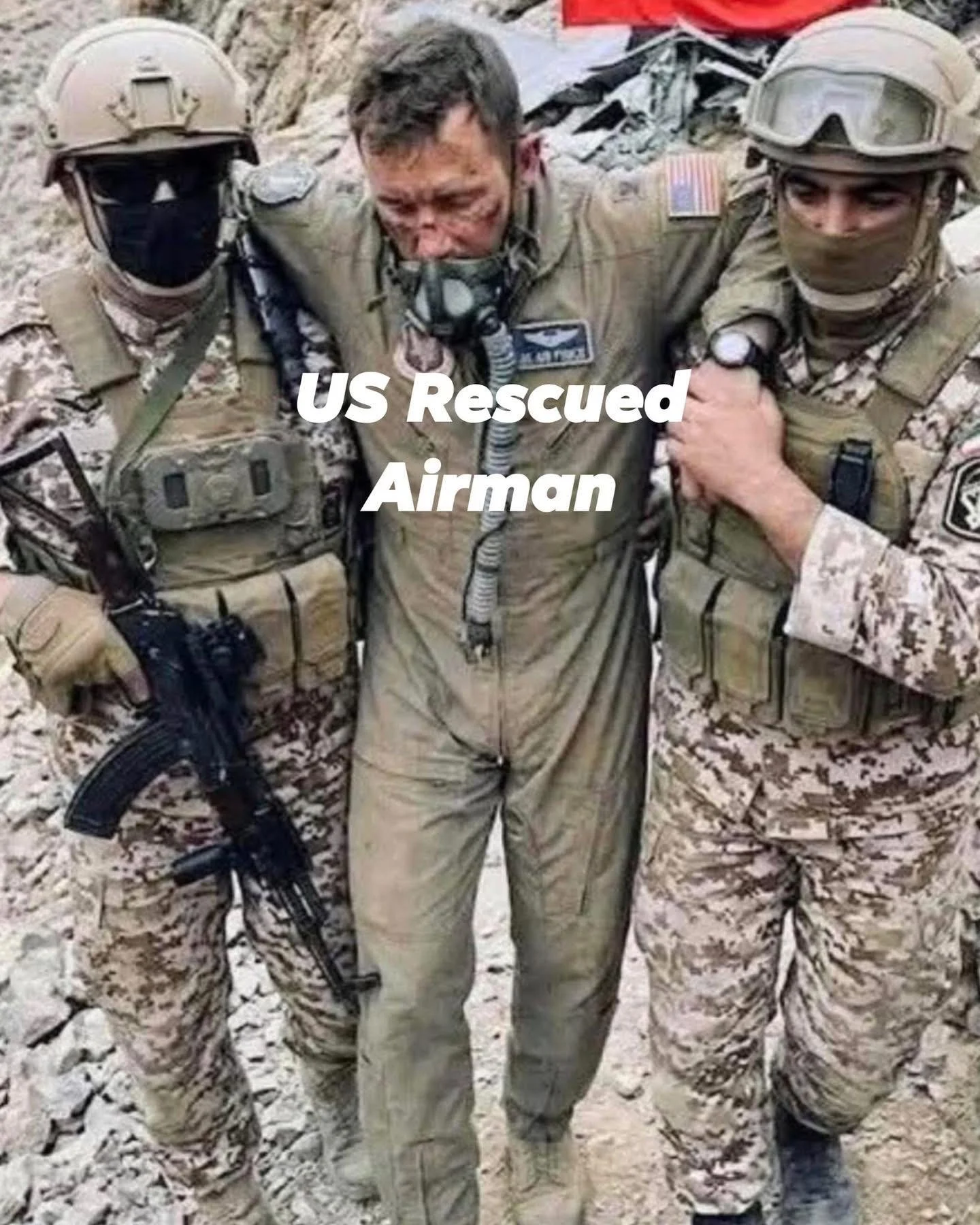
They pulled him out.
Alive Against Everything
Against:
Injury
Terrain
Exhaustion
Enemy forces
He survived.
Not because it was easy.
But because he didn’t break.
The Leadership Lesson Most People Miss
This story is not just about survival.
It is about self-leadership under pressure.
He had:
No team beside him
No guarantee of rescue
No room for error
And still:
He thought strategically
He controlled fear
He made disciplined decisions
He kept moving when everything said stop
That is leadership at its highest level.
Final Reflection: Keep Climbing
He didn’t just climb a mountain.
He climbed:
Pain
Fear
Isolation
Being hunted
And while the world chased a lie—
He stayed alive long enough to be found.
