
The “Convergence Window”: How Intelligence Creates a Single Moment When Multiple Top Leaders Can Be Hit
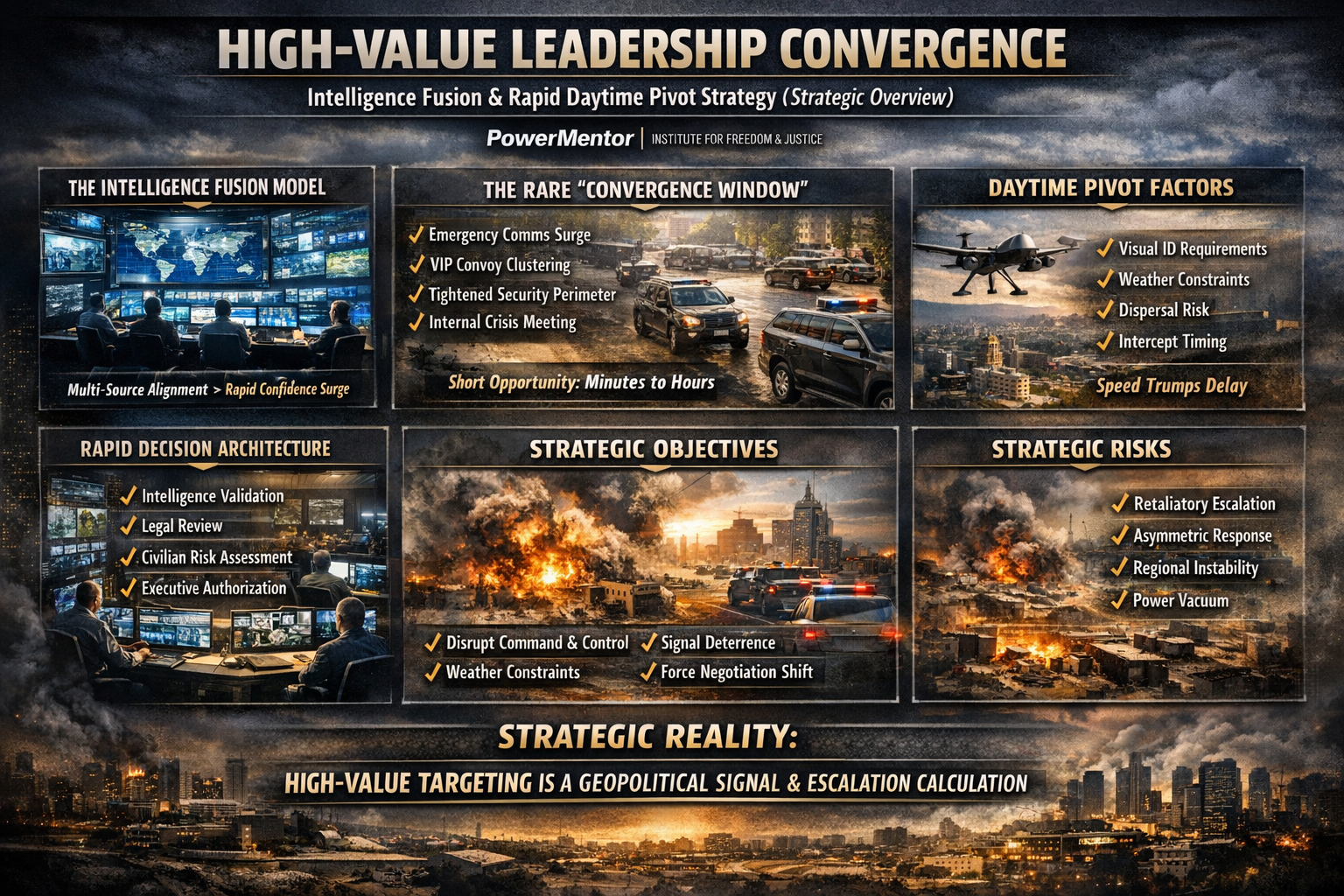
In modern conflict, decisive moments don’t usually come from brute force — they come from timing. One of the rarest timing opportunities is what intelligence professionals often describe as a leadership convergence window: a short period when multiple senior leaders are confirmed to be in the same place, at the same time, long enough for decision-makers to act.
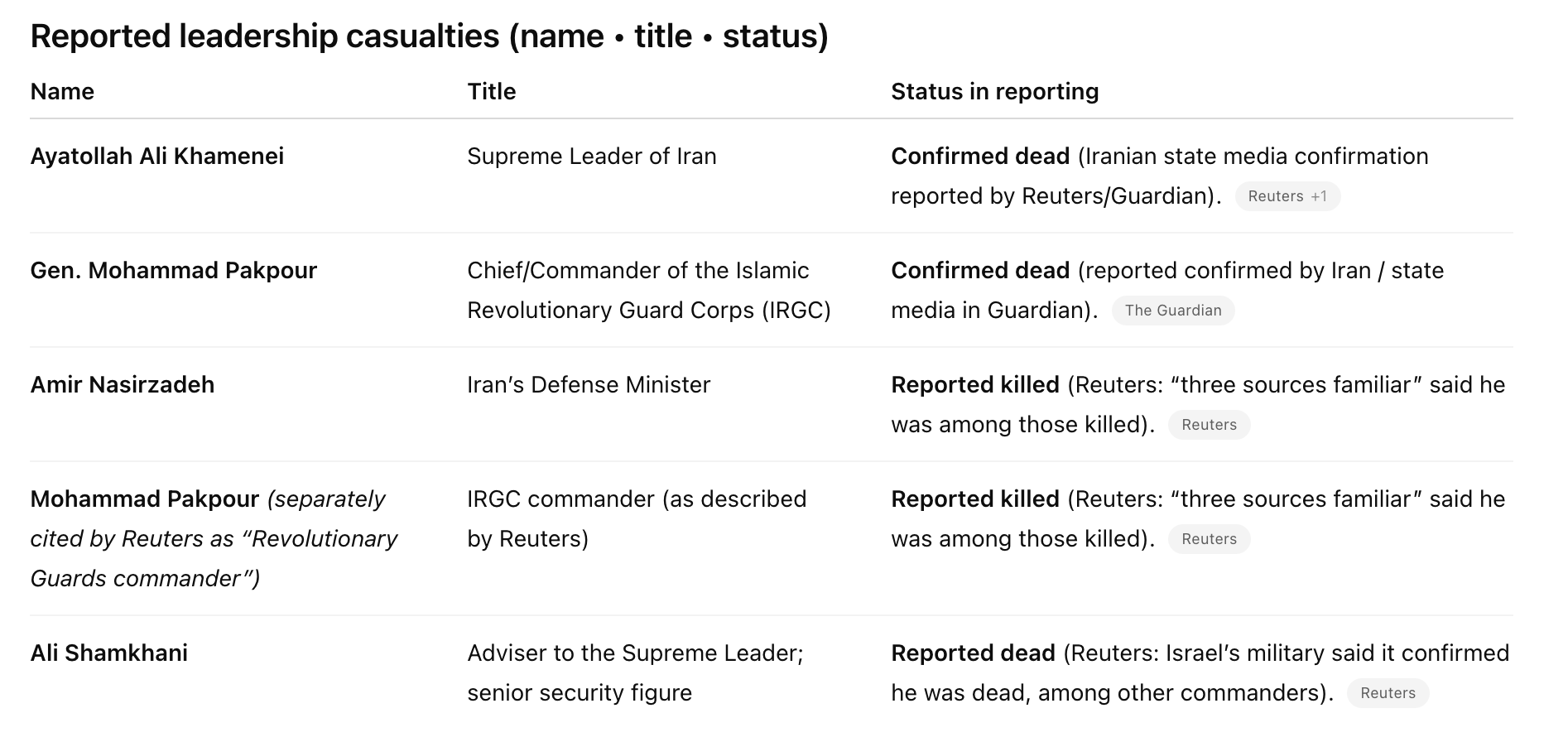
Over the weekend, global headlines focused on a shock outcome: Iran’s Supreme Leader Ayatollah Ali Khamenei was killed, with Iranian state media confirmation reported by major outlets. The same reporting also described additional senior leadership losses — including IRGC leadership and other high-ranking security figures — as part of a strike package designed to hit the regime’s command structure.
Why leadership convergence matters
Top regimes train to avoid “single point of failure.” That means senior leaders typically do not gather unless there is a crisis, a transition, or a critical decision that can’t be handled through intermediaries. When they do gather, it creates a strategic opening that may not repeat for months — or ever.
This is where intelligence fusion becomes decisive. Convergence windows are usually identified through multiple streams:
Persistent surveillance and reconnaissance patterns
Communications behavior changes (volume, routing, urgency)
Human-source corroboration
Pattern-of-life deviation from secure routines
When these signals align, decision-makers face a brutal truth: delay can mean losing the moment entirely.
The pivot problem: why daylight can suddenly become “the only option”
Many people assume operations prefer night. Often they do. But a convergence window can force a pivot — including to daytime action — for one overriding reason: certainty.
Daylight may provide better confirmation, reduce ambiguity, and compress the risk of the target dispersing. In a convergence scenario, the highest operational risk is not “acting too fast.” It’s acting too late, after key leaders separate and disappear back into hardened networks.
What happens next: a system tries to keep functioning
AP reporting indicates that after Khamenei’s death, a new leadership council began operating, with President Masoud Pezeshkian among the three officials named. This matters because decapitation strikes rarely “end” a conflict — they usually change its shape:
internal succession battles
retaliation pressure
fragmentation of command-and-control
increased risk of miscalculation
Strategic reality
High-value leadership strikes are never just tactical. They are geopolitical messaging, meant to disrupt a regime’s confidence, fracture internal control, and signal that even the most protected figures are reachable.
But they also carry escalation risk — because when a leadership core is hit, survival instincts take over, and rational restraint can weaken.
PowerMentor takeaway: In the modern era, wars can pivot in a single hour — not because armies move faster, but because intelligence can suddenly make the invisible visible.
