
Operation Epic Fury: U.S. and Israel Strike Iran, Middle East on Brink of Broader Conflict
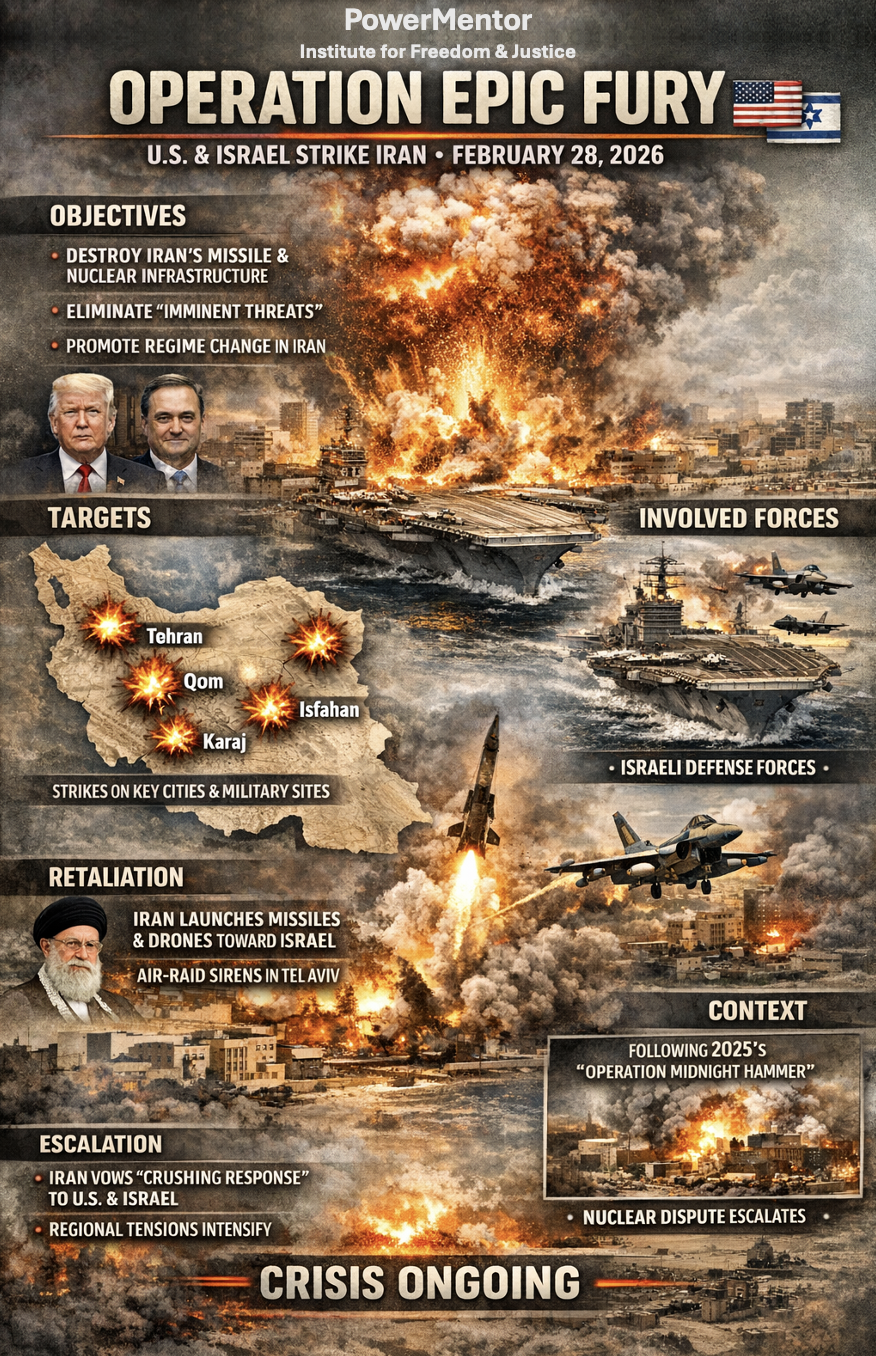
In a dramatic escalation of long-standing tensions over Iran’s nuclear program and regional influence, the United States and Israel launched coordinated military strikes against Iranian targets on February 28, 2026, in an operation the U.S. Pentagon has designated “Operation Epic Fury.”
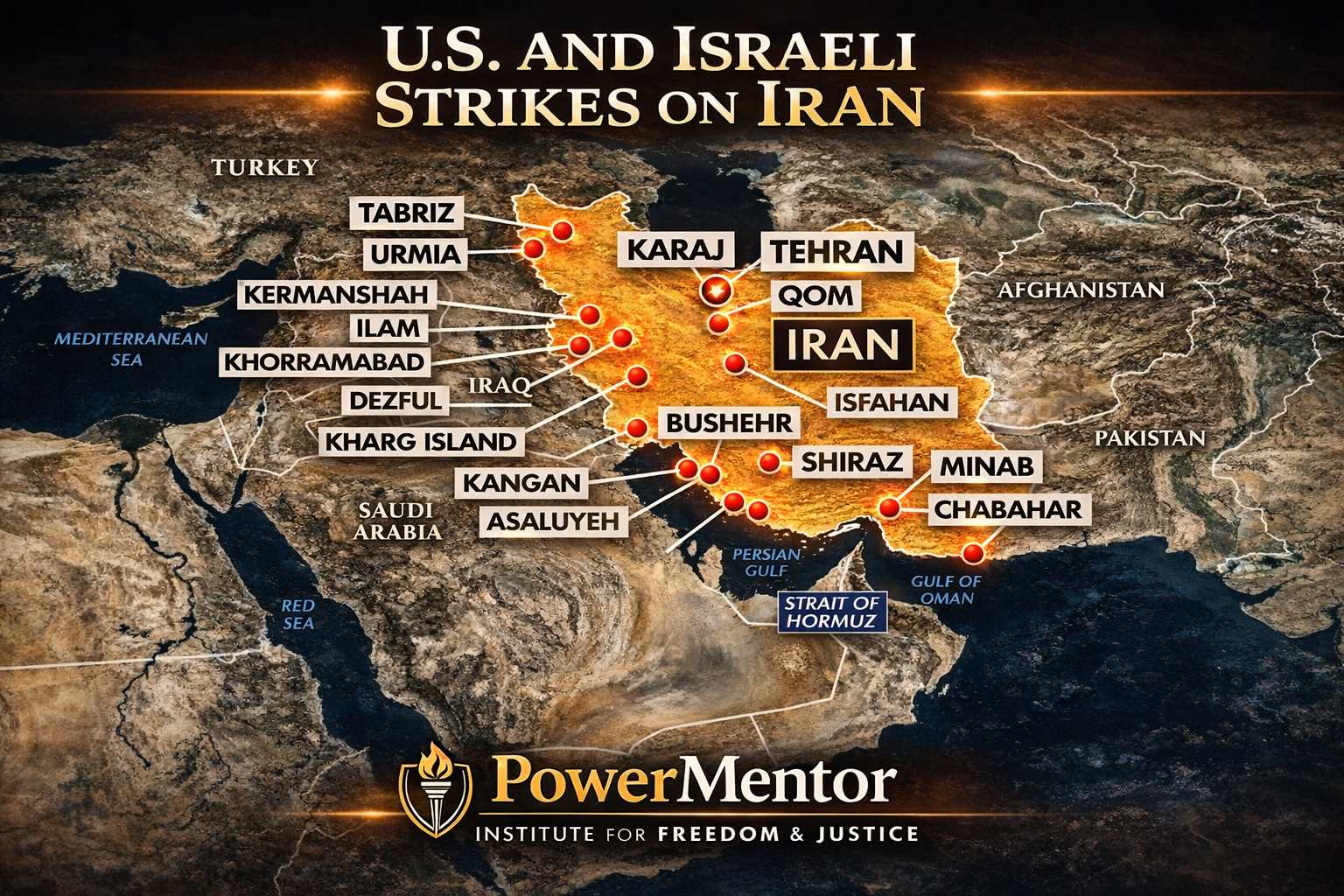
Early Saturday morning, explosions rippled across Tehran and other Iranian cities including Isfahan, Qom, Karaj, and Kermanshah, as American and Israeli aircraft and naval assets struck military installations, missile infrastructure, and other strategic sites.
A Pre-Emptive Strike
Israeli Defence Minister Israel Katz confirmed that the Israel Defence Forces had initiated a pre-emptive assault on Iranian territory, while U.S. officials said the Pentagon had launched simultaneous strikes from aircraft carriers and bases in the region as part of a broad daylight offensive.
The offensive comes amid fresh diplomatic efforts that had been underway in recent weeks to curb Iran’s nuclear development through negotiations — efforts that ultimately broke down without agreement on limitations to Tehran’s missile program or dismantling of nuclear infrastructure.
U.S. and Israeli Objectives
President Donald Trump described the joint operation as a necessary step to eliminate “imminent threats” posed by Iran’s missile and nuclear capabilities and to protect U.S. forces, citizens, and allies worldwide. In a video statement posted online, Trump urged Iranians to shelter in place as strikes continued and called on them to seize the moment to overthrow their government once the campaign concludes.
Israeli leaders echoed these themes, asserting that the strikes were essential to neutralize what they described as an “existential threat” posed by Tehran’s prolonged refusal to cease its nuclear ambitions and missile development programs.
Retaliation and Regional Fallout
Within hours of the strikes, Iranian state media reported that missiles were launched toward Israel, triggering air-raid sirens and prompting Israel to close its civilian airspace. Iranian leadership, including Supreme Leader Ayatollah Ali Khamenei, was reportedly moved to a secure location ahead of the assault.
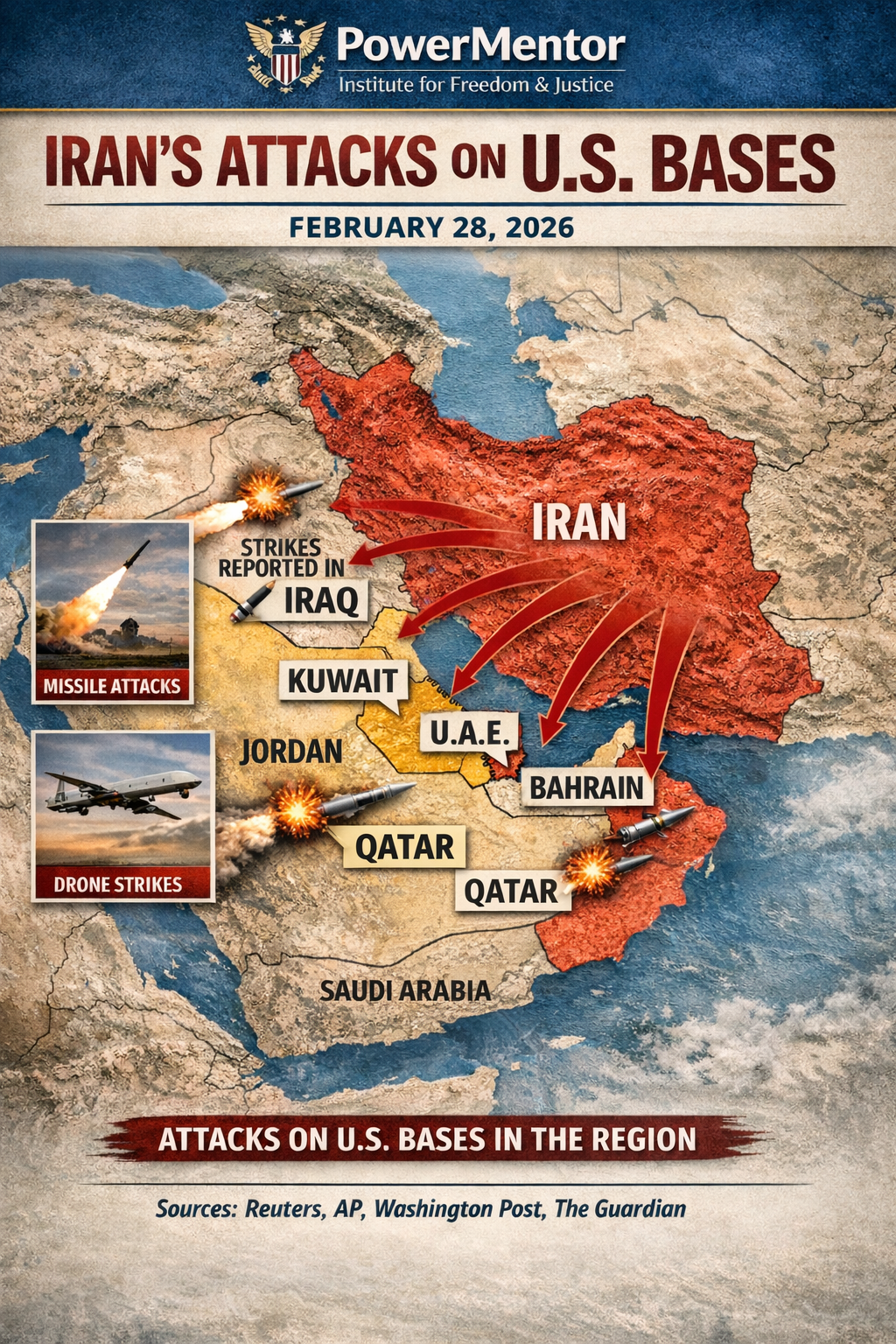
Iranian officials vowed a “crushing response” against both U.S. and Israeli targets, warning that American military bases in the region would be considered legitimate for retaliation if strikes continued.
Wider Diplomatic and Military Implications
The strikes have reverberated across the Middle East. U.S. embassies in Qatar, the United Arab Emirates, and Bahrain issued shelter-in-place warnings for their personnel, and regional governments scrambled to secure airspace and critical infrastructure.
Allied nations, including Poland, said they were aware of the impending strikes through established defense cooperation channels and are monitoring the situation closely.
Historical Context
Operation Epic Fury marks the most direct and significant U.S.–Israeli military action against Iran since Operation Midnight Hammer, a 2025 campaign targeting Iranian nuclear facilities with B-2 bombers and Tomahawk missiles.
That earlier offensive, although tactically impactful, failed to resolve core disputes and arguably set the stage for the renewed confrontation by hardening positions on all sides.
Outlook
As fighting continues, analysts warn that the conflict has the potential to draw in regional actors and reshape geopolitical alignments. With diplomatic channels strained and battlefield actions intensifying, the crisis that unfolded on February 28 could mark the beginning of a protracted and unpredictable phase in Middle Eastern conflict dynamics.