

Northern Syria Update: Displacement in Qamishli, Fighting Near Hasakah, and Why Kurdish Communities Fear What Comes Next
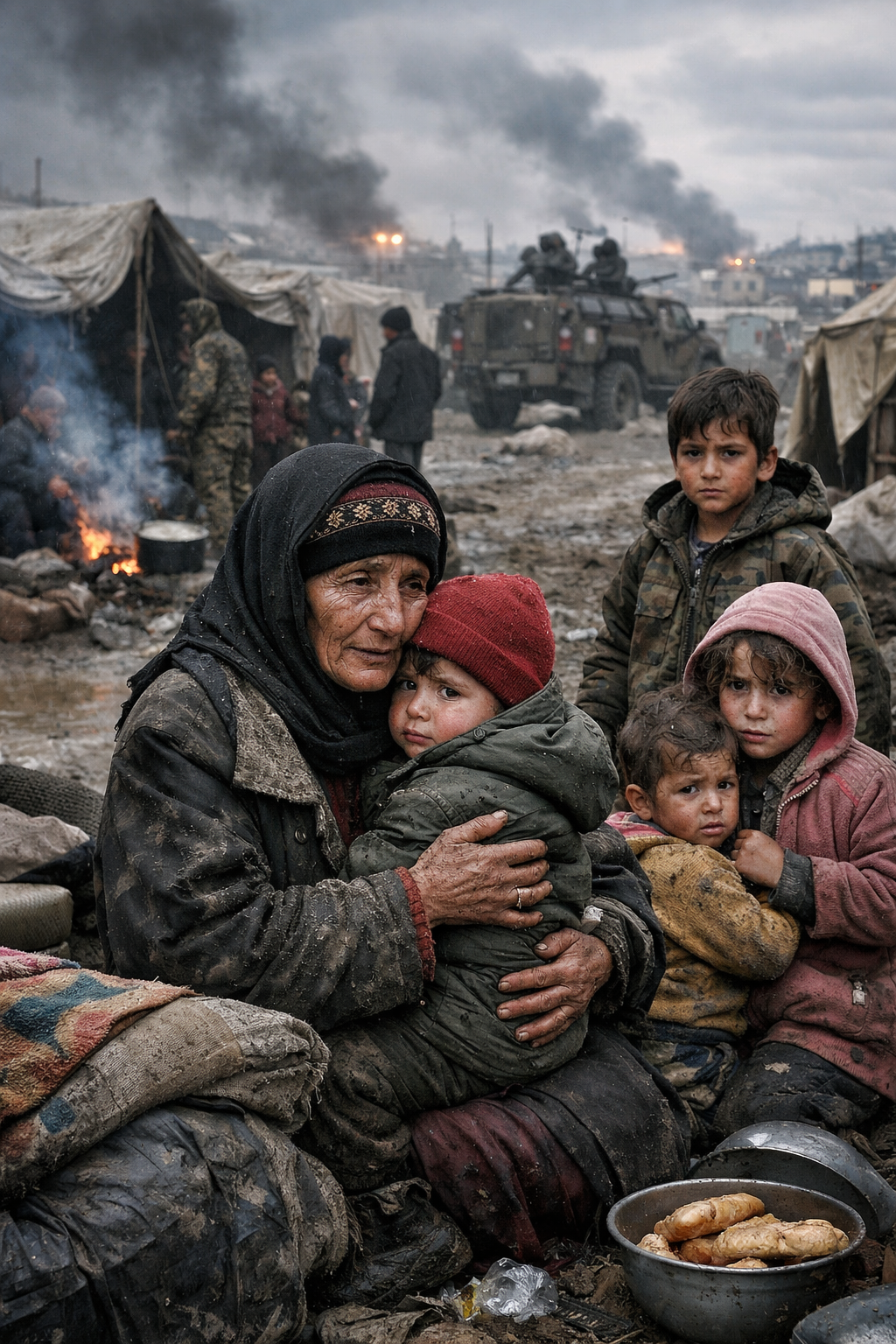
Humanitarian aid teams on the ground in Qamishli (northeastern Syria) says they’re now seeing thousands of Kurdish families displaced again—many for the third time—after fresh violence pushed people to flee with little more than what they could carry. In their update, the team frames what’s unfolding as more than a wintertime relief crisis: it’s a warning that if the fighting expands, the region could slide into revenge cycles, communal targeting, and mass atrocity risks—especially in a place where security is already stretched thin and memories of past trauma are raw.
That fear isn’t coming out of nowhere. Over the past week, international reporting and humanitarian updates have described a rapidly shifting security landscape across northeastern Syria, with displacement rising even amid ceasefire announcements.
A humanitarian emergency, in the worst possible season
Save the Children, citing UN reporting, said about 10,000 people were forced from their homes in northeastern Syria in recent days, including an estimated 5,000 children. Families have been arriving at camps and collective shelters already strained—some impacted by weeks of heavy rain and flooding.
UNICEF reporting in mid-January also described displacement pressures extending into Al-Hasakeh (Hasakah) and Qamishli, with mobile teams supporting families in collective shelters and partners assisting with basics like hygiene support, water trucking, and health consultations.
What’s happening around Hasakah—and why it matters
Hasakah governorate matters for two overlapping reasons:
It’s strategic terrain: key roads, border-adjacent routes, and corridors that connect Kurdish-populated towns—meaning violence there can quickly ripple into multiple communities.
It’s a security linchpin: the area is tied to long-running counter-ISIS infrastructure, including detention sites and nearby movement routes that have been central to holding ISIS-linked detainees and limiting extremist reorganization.
That’s why recent incidents have landed with such force. On January 21, 2026, Syria’s Defense Ministry said seven soldiers were killed in a drone attack in Hasakah province, highlighting how quickly clashes can escalate into wider confrontation.
At the same time, ceasefire efforts appear fragile. Major reporting has described a short truce between the Syrian government and the Kurdish-led Syrian Democratic Forces (SDF) after earlier arrangements broke down, with both sides accusing the other of violations.
Why this is bigger than “displacement”: the al-Hol factor and ISIS-related instability
One reason anxiety is spiking is that control of high-stakes detention infrastructure is changing hands.
In the last 48 hours, multiple outlets reported that Syrian government forces took control of al-Hol camp, which currently houses about 24,000 people, mostly women and children linked to the Islamic State, after SDF withdrawal amid clashes and political pressure.
Even when transitions are orderly, shifts like this can create volatile windows—fueling fears of:
reprisals as control changes,
breakdowns in camp security (and potential escape attempts),
and a renewed ISIS threat if detention and monitoring systems weaken.
Regional pressure is rising, too
Turkey has long treated the SDF as linked to the PKK, and on January 21, 2026, President Recep Tayyip Erdoğan publicly renewed pressure, saying Kurdish forces in northern Syria must lay down arms and disband, even as ceasefire/integration talks moved forward.
For Kurdish communities, that kind of language matters because it signals that—even if front lines shift—the political space for Kurdish self-security may narrow, raising fears that civilians could be caught between competing forces.
What aid teams say families in Qamishli are facing right now
The on-the-ground account from Qamishli centers on immediate survival needs:
Unreliable shelter for many families in winter conditions
Little to no food, and rapidly rising emergency needs
Large numbers of children needing urgent assistance
An urgent push to mobilize clothing, food, and emergency aid through trusted channels
This lines up with broader humanitarian winter reporting from the region warning that displacement shocks are colliding with harsh weather and already-overcapacity support systems.
Why many Kurds say this moment cuts especially deep
Kurdish-led forces—and Kurdish communities—paid a heavy price in the fight against ISIS. So when instability grows around detention sites, when alliances shift, and when civilians are displaced repeatedly, many Kurds interpret it not as “another bad week,” but as a potential turning point: the people who helped stop ISIS fear being left exposed to a new cycle of violence.
What you can do now
If you’re sharing this update with your audience, here are clear, actionable focuses that don’t overpromise:
Pray for protection over displaced families and children
Pray for provision: food, warmth, clothing, medical support
Pray for stability: a secure place to live without repeated forced displacement
If you’re mobilizing aid: prioritize winterization (blankets, coats, heaters/fuel), child-focused supplies, and support to credible partners already operating in the area
References
Alsayed, G. (2026, January 21). Syrian government takes control of camp housing Islamic State group families. AP News.
Al Jazeera Staff. (2026, January 21). Syrian army takes control of camp holding thousands linked to ISIL. Al Jazeera.
ACAPS. (2026, January 15). Syria: Escalation of conflict (Briefing note). ACAPS.
Free Burma Rangers. (2026, January 20). Our Free Burma Ranger team is currently in Qamishli city… [Video]. Instagram.
Free Burma Rangers. (2026). Thousands in Syria face annihilation [Video]. Facebook.
Free Burma Rangers. (2026). The Free Burma Rangers team is currently in Qamishli city… [Post]. Facebook.
Reuters. (2026, January 21). Where are Islamic State detainees in Syria? Reuters.
Reuters. (2026, January 21). Turkey’s Erdogan says Kurdish forces in Syria must lay down arms and disband now. Reuters.
Reuters. (2026, January 21). Syria says seven soldiers killed in a drone attack by Kurdish forces. Reuters.
Save the Children. (2026, January 19). North East Syria: Thousands of children flee violence in freezing temperatures and in desperate need despite tentative ceasefire. Save the Children.
