

Allegations of Chinese Military Presence in Burma (Myanmar): What Is Being Reported—and Why It Matters
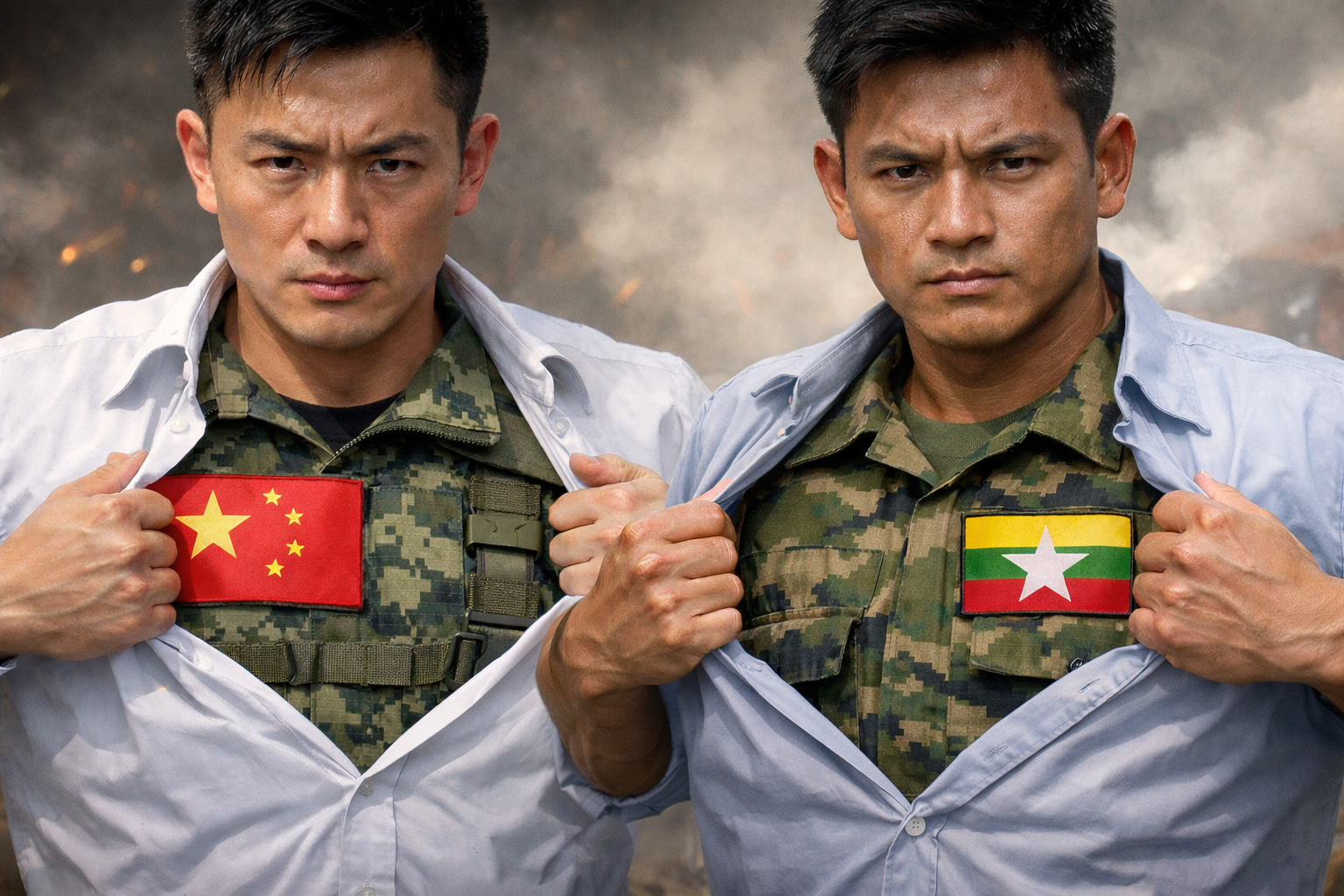
Reports emerging from Burma (Myanmar) have intensified concerns across the region, alleging that as many as 100,000 Chinese soldiers have been deployed inside the country in non-traditional forms, including operating in civilian clothing and embedded roles rather than overt military formations. While these claims have not been independently verified by international monitoring bodies, they are being widely discussed by local sources, regional observers, and communities living near contested areas. The Burmese military (Tatmadaw) also has a documented history of deploying soldiers in civilian clothing, a practice frequently reported by local communities and conflict monitors as a means of concealment, intimidation, and operational deniability.
This article outlines what is being alleged, why such a deployment—if accurate—would be strategically significant, and how it fits into the broader Burmese and Chinese relationship.
The Claim: Large-Scale, Covert Presence
According to reports circulating within Burma (Myanmar), Chinese and Burmese soldiers are said to be present across multiple locations, particularly in border regions and conflict-affected zones. The defining characteristics of the allegation include:
Civilian attire rather than standard military uniforms
Dispersed deployment, not concentrated in visible bases
Operational roles that may include logistics, intelligence, training, security, or coordination
Integration with local structures, making attribution and verification difficult
If accurate, this would represent a gray-zone strategy—activities conducted below the threshold of declared military intervention.
Why Civilian Clothing Matters
Operating in civilian clothes is not a trivial detail. It has major implications:
Plausible deniability: Avoids formal acknowledgment of troop deployment
Reduced visibility: Complicates monitoring by journalists, NGOs, and international observers
Legal ambiguity: Blurs the line between civilian and combatant status
Psychological impact: Creates uncertainty among local populations and resistance groups
Such tactics are commonly associated with hybrid warfare or proxy stabilization strategies, especially in fragile states.
Strategic Context: Burma (Myanmar) and China
China has long viewed Burma (Myanmar) as strategically vital. Key interests include:
Border stability along China’s southwestern frontier
Energy and trade corridors linking the Indian Ocean to inland China
Infrastructure investments, including pipelines, roads, and ports
Containment of instability that could spill across borders
From Beijing’s perspective, chaos in Burma (Myanmar) threatens economic projects and regional security. From the Burmese perspective, any undeclared foreign military presence—especially one operating covertly—raises profound sovereignty concerns.
Regional and Local Implications
If large numbers of Chinese soldiers are indeed operating inside Burma (Myanmar):
Ethnic regions may face increased militarization and surveillance
Armed resistance groups may alter tactics, escalating conflict
Civilian trust in institutions may erode further
International norms regarding non-intervention could be challenged
For communities already living under conflict conditions, even the belief that foreign troops are present can reshape daily life, movement, and security calculations.
Verification Challenges
It is important to state clearly:
These reports remain allegations
Independent verification is difficult due to restricted access, active conflict, and information control
Conflicting narratives exist from state actors, resistance groups, and external analysts
However, the consistency of similar reports from different regions has fueled serious debate and warrants careful attention.
Why This Cannot Be Ignored
Even unverified, the scale described—100,000 personnel—is far beyond rumor-level significance. If substantiated, it would represent one of the largest covert foreign military involvements in Southeast Asia in recent history, with implications for:
Regional security
International law
The future of Burma (Myanmar)’s internal conflict
China’s evolving approach to power projection
Conclusion
The reports of Chinese soldiers operating in civilian clothes inside Burma (Myanmar) sit at the intersection of conflict, geopolitics, and modern warfare tactics. Whether ultimately confirmed or not, the allegations themselves underscore how opaque the situation inside Burma (Myanmar) has become—and how deeply regional powers are entangled in its future.
As with all matters of this gravity, continued scrutiny, independent investigation, and transparent international engagement are essential. Silence or dismissal risks allowing gray-zone activities—real or perceived—to redefine sovereignty and security in the region without accountability.
References
International Crisis Group. (2024, March 27). Scam centres and ceasefires: China-Myanmar ties since the coup (Asia Report No. 179). International Crisis Group.
Reuters. (2025, April 22). China sends team to Myanmar to monitor ceasefire, foreign ministry says. Reuters.
Associated Press. (2025). China says it brokered a ceasefire between Myanmar army and an ethnic rebel group. Associated Press.
National Consortium for the Study of Terrorism and Responses to Terrorism (START). (2021, December 12). Escalation management in the gray zone (Report). University of Maryland.
Sukin, L. (2025). Implausible deniability and escalation in the gray zone. Oxford University Research Archive.
Cormac, R. (2018). Grey is the new black: Covert action and implausible deniability (Working paper). University of Nottingham Repository.
Atwell, K., Portzer, J. M., & McCurdy, D. (2021). Negotiating [Im]plausible deniability: Strategic guidelines for U.S. engagement in modern indirect warfare. PRISM, 9(2). National Defense University Press.
